Français
 Español
 Deutsch
303 / 304 / 316 Stainless Steel Oil Plug
303, 304, and 316 stainless steel oil plugs are designed for applications requiring high corrosion r...


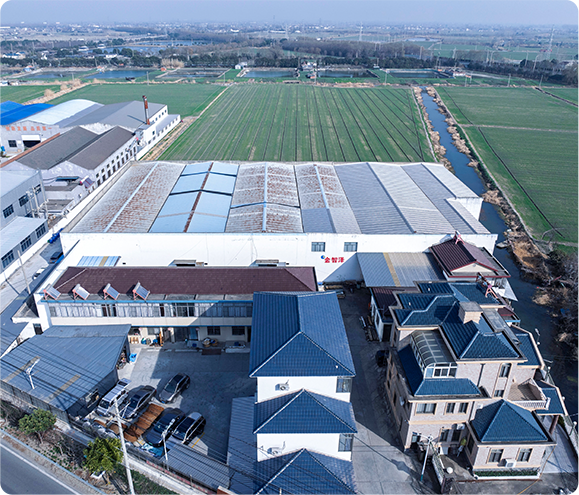
-- Steady & Reliable Manufacturer --
303, 304, and 316 are the three most widely used austenitic stainless steel grades in general fastener manufacturing, covering bolts, nuts, screws, washers, and studs. Although all three fall under the same austenitic family and share a similar 18 percent chromium base, each grade is formulated for a different balance of machinability, general corrosion resistance, and resistance to aggressive chemical or saltwater environments, which is why fastener suppliers typically stock and sell all three side by side rather than offering a single "stainless" option.
303 stainless steel is a free-machining grade, meaning a small amount of sulfur is added to the alloy to make it easier and faster to cut on CNC lathes and screw machines. This makes 303 the preferred choice for fasteners with complex machined features, such as custom studs, precision screws, or parts with tight tolerances, where machining speed and tool life matter more than maximum corrosion resistance. The trade-off is that the sulfur content slightly reduces 303's corrosion resistance and weldability compared with 304, so it is not typically recommended for parts that will be welded or exposed to continuous moisture.
304 stainless steel is the general-purpose grade and by far the most common stainless fastener material in everyday use. It offers a good balance of corrosion resistance, strength, formability, and cost, which is why it shows up in kitchen equipment, architectural hardware, general machinery, electronics enclosures, and countless other indoor and light outdoor applications. Unless a project specifically calls for better machinability (303) or better chemical and saltwater resistance (316), 304 is usually the default stainless grade specified.
316 stainless steel contains an added 2 to 3 percent molybdenum, which significantly improves resistance to pitting and crevice corrosion, particularly in chloride-rich environments such as seawater, de-icing salt, and many industrial cleaning chemicals. This makes 316 the standard choice for marine hardware, coastal construction, chemical processing equipment, and medical or pharmaceutical applications where both hygiene and long-term corrosion resistance are required. 316 fasteners generally cost more than 304 of the same size, so it is typically reserved for applications where the added corrosion resistance is actually needed rather than used as a default upgrade.
Fasteners across all three grades are commonly available as hex bolts, socket head cap screws, self-tapping screws, hex nuts, flange nuts, flat and lock washers, threaded rod, and studs, in both metric and inch thread series. Standard finishes are typically passivated or pickled and passivated to remove surface iron contamination and maximize corrosion resistance, and most items are non-magnetic to slightly magnetic depending on the amount of cold working during manufacture.
Buyers choosing between the three grades generally start with the environment the fastener will see. Indoor or dry-climate applications with no strong exposure to salt or chemicals typically do well with 304 at a lower cost than 316. Outdoor, coastal, marine, or chemical-processing environments usually justify the higher cost of 316. Machined or turned parts with tight tolerances, or high-volume production runs where machining speed drives cost, often favor 303 where its slightly lower corrosion resistance is an acceptable trade-off.
Mechanically, all three grades are broadly comparable in the annealed condition, with tensile strength typically in the 500 to 800 MPa range depending on cold working, and fasteners are commonly produced to recognized standards such as ASTM F593/F594, DIN 933/934, or ISO 4014/4032, so parts from different suppliers can generally be cross-referenced by standard and property class. Property class markings such as A2-70 or A4-80 indicate the material family and approximate tensile strength after cold working, and are often stamped on bolt heads to help identify material and strength grade after installation.
Because the three grades share similar dimensions and thread standards, many distributors and manufacturers stock all three side by side in common sizes, letting a purchasing team switch grades on a purchase order without switching part numbers or suppliers. This is particularly useful for projects that use 304 for the bulk of an assembly but need 316 for a handful of externally exposed fasteners, or that need a small batch of 303 for a custom machined bracket alongside standard-catalog 304 hardware for the rest of the build.
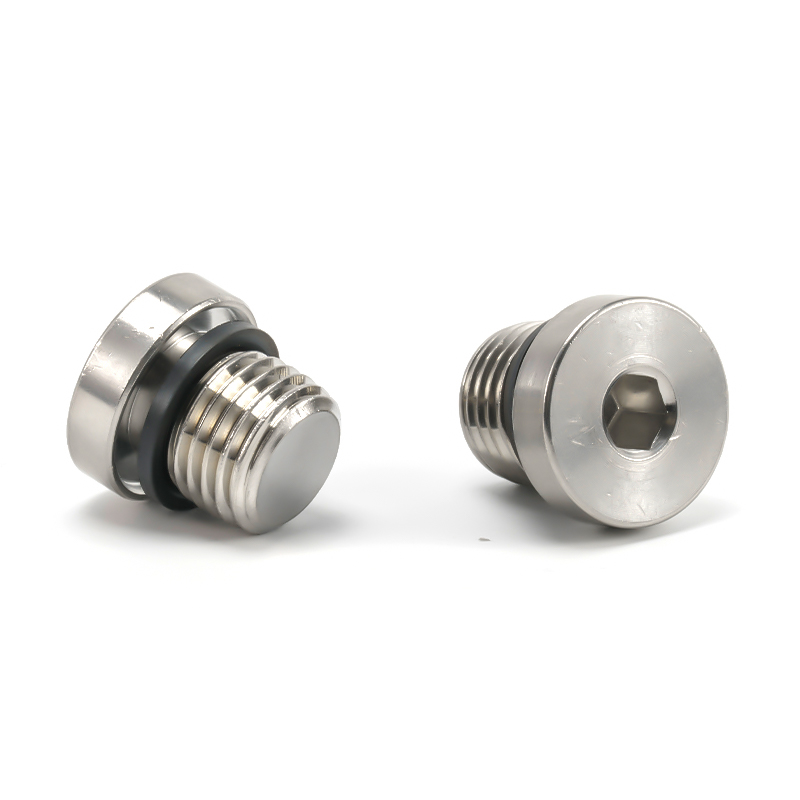
303, 304, and 316 stainless steel oil plugs are designed for applications requiring high corrosion r...
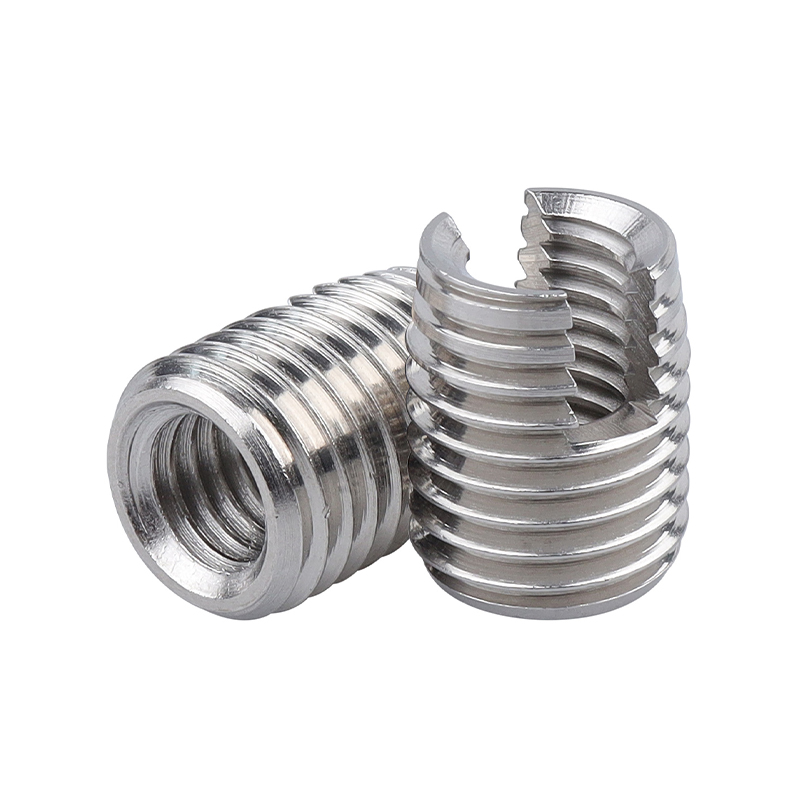
Stainless steel self-tapping thread inserts are fasteners designed to strengthen threaded connection...
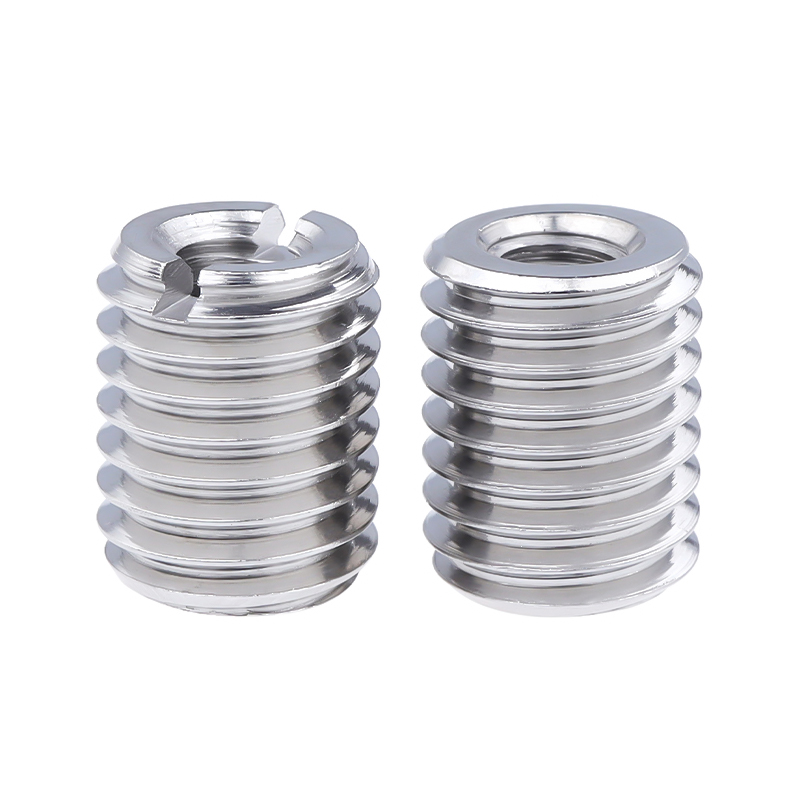
Stainless Steel Internal-external Thread Conversion Nut(also known as stainless steel thread sdapter...
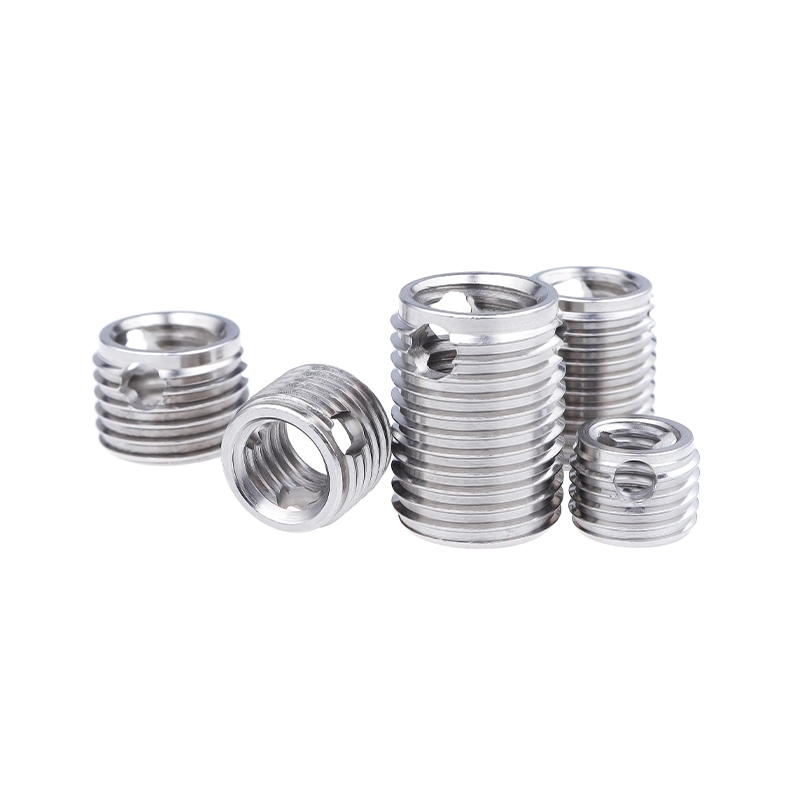
Stainless Steel Three-Hole Insert is a threaded insert with three evenly distributed positioning hol...
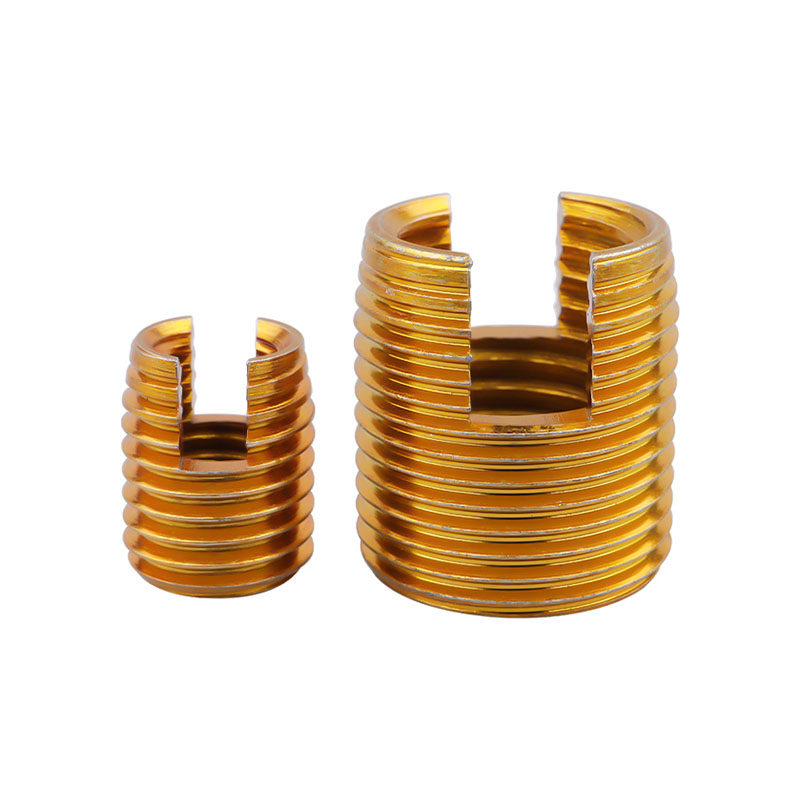
Carbon steel self-tapping thread inserts are made of high-strength carbon steel, offering mechanical...
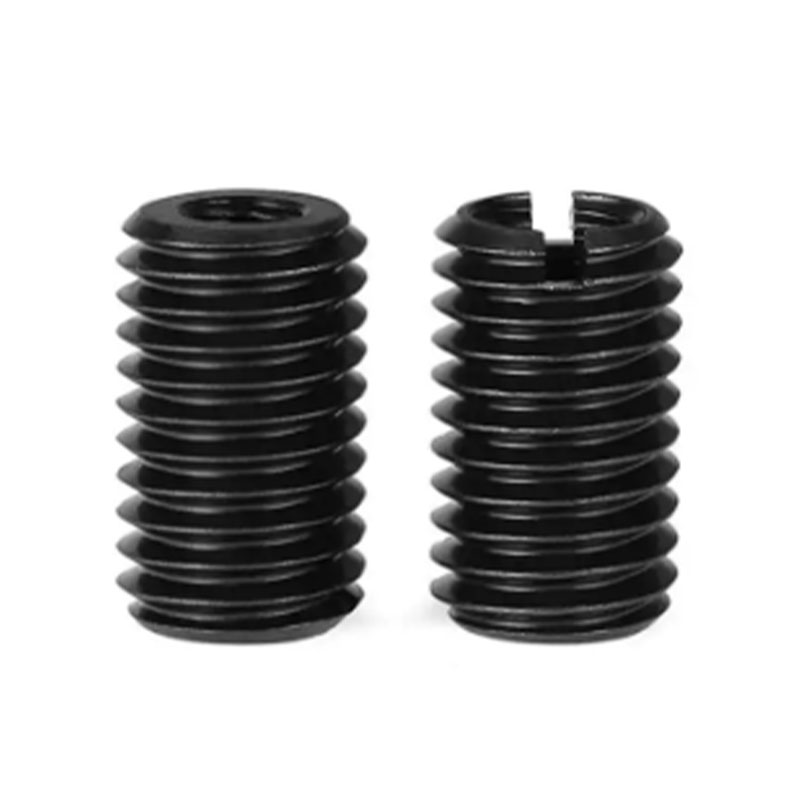
Carbon steel internal-external thread conversion nut is manufactured from carbon steel. This adapter...
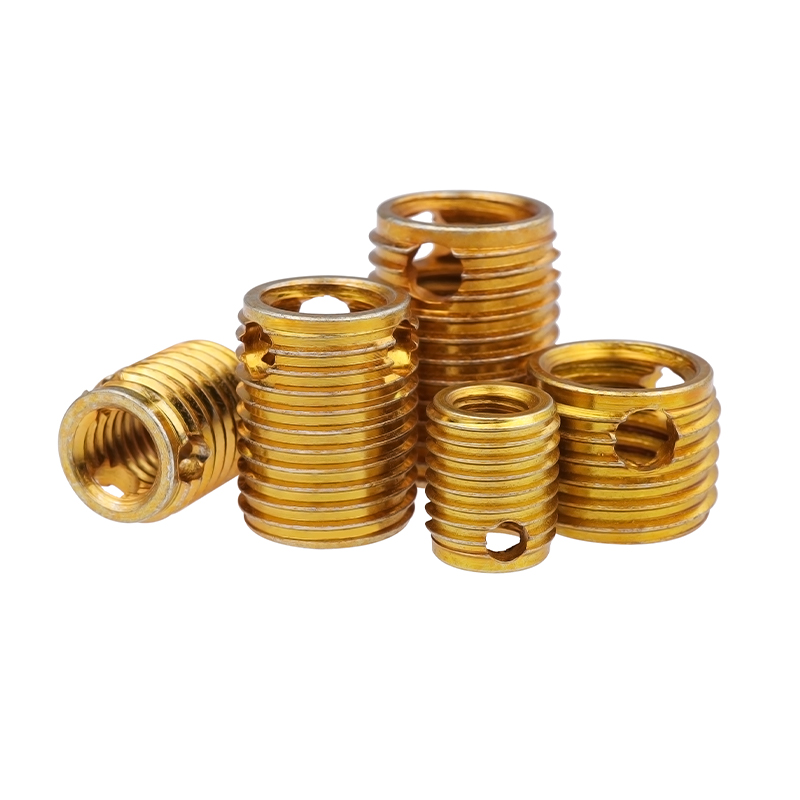
Carbon Steel Three-Hole Insert is a carbon steel threaded insert featuring three positioning holes. ...
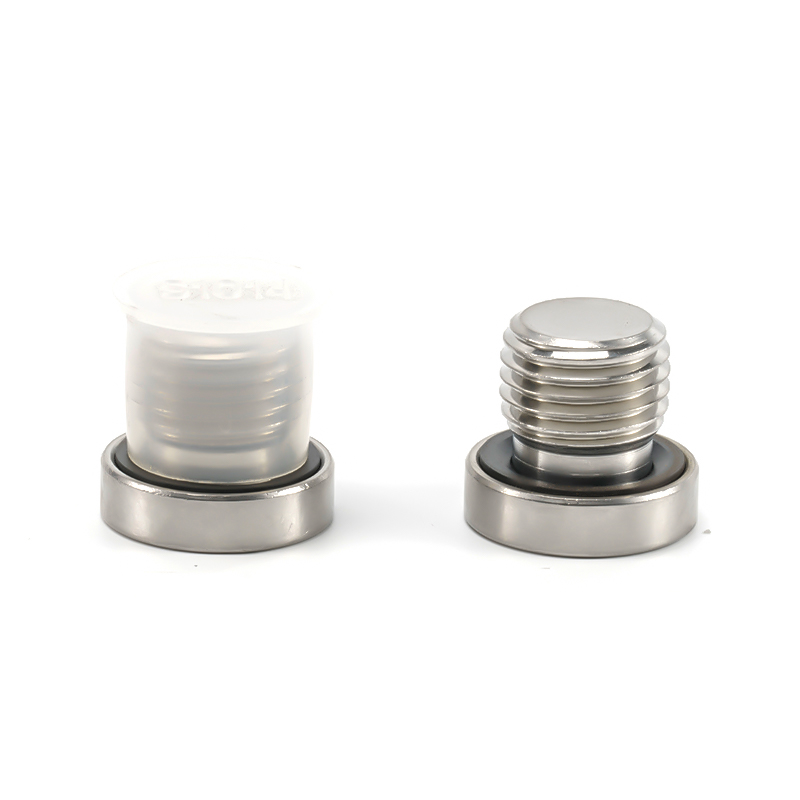
Features excellent pressure resistance and good corrosion resistance. Widely used in automotive, mac...
Austenitic stainless steel fasteners are produced from chromium-nickel alloys that stay in the austenite crystal structure at room temperature, which is what gives this fastener family its combination of corrosion resistance, toughness, and non-magnetic or weakly magnetic behavior. The 300-series designation covers a range of related alloys, and 303, 304, and 316 are the three grades most commonly converted into commercial fasteners because they offer a practical balance of cost, availability, and performance across a wide range of industries.
303 is technically a modification of 304 with sulfur, and sometimes selenium, added specifically to improve machinability. The sulfur forms manganese sulfide inclusions in the microstructure that act as chip-breakers during machining, letting tools cut faster and last longer, at the cost of creating small sites where corrosion can start more easily than in a cleaner 304 microstructure. For this reason, 303 is normally specified by part geometry — a machined stud or a custom screw with a hex feature cut on a lathe — rather than by environment, and is generally avoided for welded assemblies or continuously wet applications.
304, sometimes referred to by its older designation 18-8, reflecting roughly 18 percent chromium and 8 percent nickel, is produced without the sulfur additive, giving it better weldability and a cleaner surface for passivation. It responds well to cold forming, which is how most bolts, screws, and washers get their final shape, and it accepts a range of finishes from a dull mill finish to a bright polished or electropolished surface for appearance-critical applications.
316 builds on the 304 composition by adding molybdenum, typically 2 to 3 percent, along with a slightly adjusted nickel content. Molybdenum stabilizes the passive oxide layer against chloride ions, which is the specific mechanism that lets 316 resist the pitting and crevice corrosion that would eventually damage 304 in a marine or heavily salted environment. A low-carbon variant, 316L, is also available and is preferred for welded fasteners or applications where carbide precipitation during welding could otherwise reduce corrosion resistance near the weld.
Fastener types produced in these grades cover the full range used in general assembly and construction: hex head, socket head, and button head cap screws; self-tapping and self-drilling screws; hex and nylon-insert lock nuts; flat, spring, and fender washers; threaded rod and studs; and specialty items such as U-bolts and eye bolts. Thread standards typically follow ISO metric coarse and fine pitch series or ANSI/ASME inch series, and property classes such as A2-70 or A4-80 indicate the approximate tensile strength after manufacturing, following the ISO 3506 fastener standard.
Surface treatment matters as much as the base alloy for real-world corrosion performance. Fasteners are normally pickled and passivated after machining to remove embedded iron particles and free-cutting residue left on the surface by tooling, restoring the continuous chromium-oxide passive film that the alloy depends on for corrosion resistance. Skipping or under-performing this step is a common reason a "stainless" fastener rusts prematurely even though the underlying alloy is correct, which is why passivation testing per ASTM A967 is a standard quality check requested by buyers in marine and food-grade applications.
Bolt heads and screw drive faces are frequently marked with the property class, such as A2-70 or A4-80, and sometimes a manufacturer's identification symbol, which lets a technician confirm material grade after installation without needing paperwork on hand. This marking convention, defined in ISO 3506, is one of the simplest ways to verify that the correct grade was actually installed on a finished assembly during a quality audit or a field inspection, and it is worth checking for on any fastener where grade confirmation matters after the fact.
303, 304, and 316 stainless steel fasteners are used across nearly every industry that assembles metal, plastic, or composite parts, with the specific grade chosen based on machining requirements, budget, and how corrosive the operating environment is. Common application areas include:
Selecting between grades for a specific application usually comes down to matching the fastener's expected environment against each grade's known weak point. 303 should generally be avoided in continuously wet, welded, or chloride-exposed applications despite its machining advantages, since its sulfur content makes it more prone to localized corrosion than 304 or 316. 304 performs well in most indoor and moderate outdoor environments but can develop surface staining or pitting over time in coastal air, chlorinated water, or where de-icing salt is used nearby. 316 is the most broadly corrosion-resistant of the three and is the default recommendation whenever a project's environment is uncertain or the fastener will be difficult or expensive to replace later, such as in structural or embedded applications.
It is also worth considering assembly method alongside environment. Fasteners that will be welded into a larger structure are usually specified in 304L or 316L rather than standard 304 or 316, since welding can cause carbide precipitation at grain boundaries in standard grades, creating a condition called sensitization that reduces corrosion resistance near the weld. For bolted, non-welded assemblies this is not a concern, and standard 304 or 316 fasteners are the normal choice. When stainless fasteners are used to join dissimilar metals — for example a 316 bolt through an aluminum bracket — some designers add an isolating washer or sealant at the joint to reduce galvanic corrosion risk in wet or outdoor conditions.
Original equipment manufacturers typically specify grade, thread standard, and property class directly on the engineering drawing, referencing ASTM F593/F594 for inch-series fasteners or ISO 3506 for metric, so that any qualified supplier can quote and produce an equivalent part without ambiguity. Distributors and MRO buyers, by comparison, often stock all three grades in common sizes side by side, since maintenance technicians frequently need to match an existing fastener on hand rather than specify one from a drawing.
A practical way to sanity-check a grade choice before ordering is to look at how the existing fastener on a similar product has held up in the field. If a 304 fastener on a comparable product has shown early rust or pitting in a coastal or heavily washed-down location, that is usually a sign the application needs 316 rather than a coating fix or a different finish on 304. Conversely, specifying 316 across an entire indoor product where 304 would perform just as well adds cost without a corresponding benefit, which is why many engineering teams reserve 316 specifically for the fasteners that are externally exposed, in contact with water, or difficult to access for future replacement.
| Grades Available | 303 (free-machining), 304 (general purpose), 316 (marine / chemical grade) |
| Fastener Types | Hex bolts, socket cap screws, self-tapping screws, hex nuts, flange nuts, washers, threaded rod, studs |
| Thread Standard | ISO metric coarse/fine, ANSI UNC/UNF |
| Property Class | A2-50 / A2-70 (304), A4-70 / A4-80 (316), per ISO 3506 |
| Reference Standards | ASTM F593/F594, DIN 933/934/912, ISO 4014/4032/4762 |
| Surface Finish | Pickled & passivated, plain mill, polished on request |
| Magnetic Properties | Non-magnetic to weakly magnetic (austenitic, cold-work dependent) |
| Tensile Strength | Approx. 500–800 MPa depending on grade and cold work |
| Certification | Mill test certificate / material test report available |
| Packaging | Bulk carton, small counted box, custom labeling on request |