Français
 Español
 Deutsch
Carbon Steel Self-Tapping Thread Insert
Carbon steel self-tapping thread inserts are made of high-strength carbon steel, offering mechanical...


-- Steady & Reliable Manufacturer --
Carbon steel threaded inserts are metal fastening components installed into a host material — typically plastic, wood, aluminum, or die-cast alloy — to create a strong, wear-resistant internal thread. Unlike their stainless steel counterparts, carbon steel inserts are valued primarily for mechanical strength and cost efficiency rather than corrosion resistance, making them a common choice for indoor, dry, or otherwise protected applications where high pull-out and torque performance matter more than resistance to rust.
Because plain carbon steel corrodes readily when exposed to moisture, these inserts are almost always finished with a protective coating before use. Zinc plating, clear or yellow chromate, is the most common finish, offering basic corrosion protection at low cost, while black oxide finishing provides a thin, low-friction coating suited to dry indoor environments. Where slightly higher corrosion protection is needed without moving to stainless, some suppliers offer zinc-nickel or Dacromet-type coatings, which extend salt-spray resistance well beyond standard zinc plating.
The main advantage of carbon steel over stainless steel in this product category is mechanical strength. Carbon steel can be heat-treated to a higher hardness and tensile strength than austenitic stainless steel, which matters for applications with high installation torque, heavy vibration, or repeated high-load assembly cycles — automotive components, heavy machinery, power tools, and structural furniture hardware are common examples. For the same insert geometry, a heat-treated carbon steel insert will typically outperform a stainless insert on pull-out and torque-to-failure numbers, though it will not match stainless steel's corrosion resistance in a wet or outdoor environment.
Like their stainless counterparts, carbon steel threaded inserts are available in several installation styles: self-tapping inserts that cut their own thread into a pre-drilled pilot hole, press-in inserts installed with an interference fit for high-volume automated assembly, helical coil inserts used mainly for thread repair in cast or machined metal parts, and heat-set inserts designed for installation into thermoplastic housings using heat and pressure. Thread sizes generally follow the same metric and inch standards used across the fastener industry, from small M2 or #4-40 sizes up to M20 or larger for heavy-duty applications.
Typical buyers of carbon steel threaded inserts include automotive parts manufacturers, appliance and power tool producers, furniture and cabinetry hardware suppliers, and machinery builders — essentially any application where the assembly stays dry or is only briefly exposed to moisture, and where cost and mechanical strength outweigh the need for stainless-level corrosion resistance. Original equipment manufacturers often specify carbon steel inserts on internal or hidden components that are never exposed to weather, reserving stainless steel for externally visible or wet-environment parts on the same product.
Sourcing considerations are similar to other threaded insert types: buyers typically look for confirmed thread tolerances, a suitable protective coating for the expected environment, and packaging matched to how the parts will be used, whether bulk cartons for an assembly line or smaller boxes for maintenance and repair kits. Custom lengths, thread pitches, drive styles, and coating types can generally be produced against a drawing, and hardened variants are available where maximum strength is required.
Quality control typically includes thread gauge inspection, coating thickness verification measured in microns for zinc or zinc-nickel coatings, and hardness testing to confirm heat treatment has been applied correctly where a hardened insert has been specified. Salt-spray testing per ASTM B117 is also commonly used to verify that a plated coating meets the corrosion-resistance hours required for a given application, since coating quality, not just coating type, determines real-world performance.
Standard sizes in common coatings are usually available from stock or a short production run, while a specific hardness target, a non-standard length, or a less common coating such as zinc-nickel may add lead time for tooling or coating line scheduling. As with other insert types, it is common practice to request first-article samples for torque and pull-out testing on the actual host material before committing to a full production quantity, particularly when a new hardness or coating specification is being introduced.
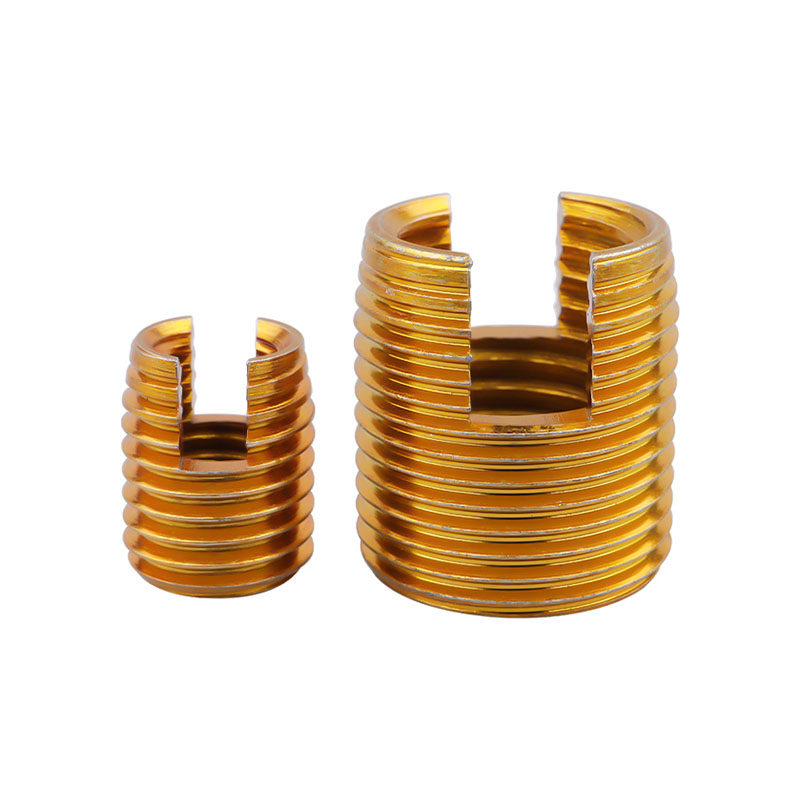
Carbon steel self-tapping thread inserts are made of high-strength carbon steel, offering mechanical...
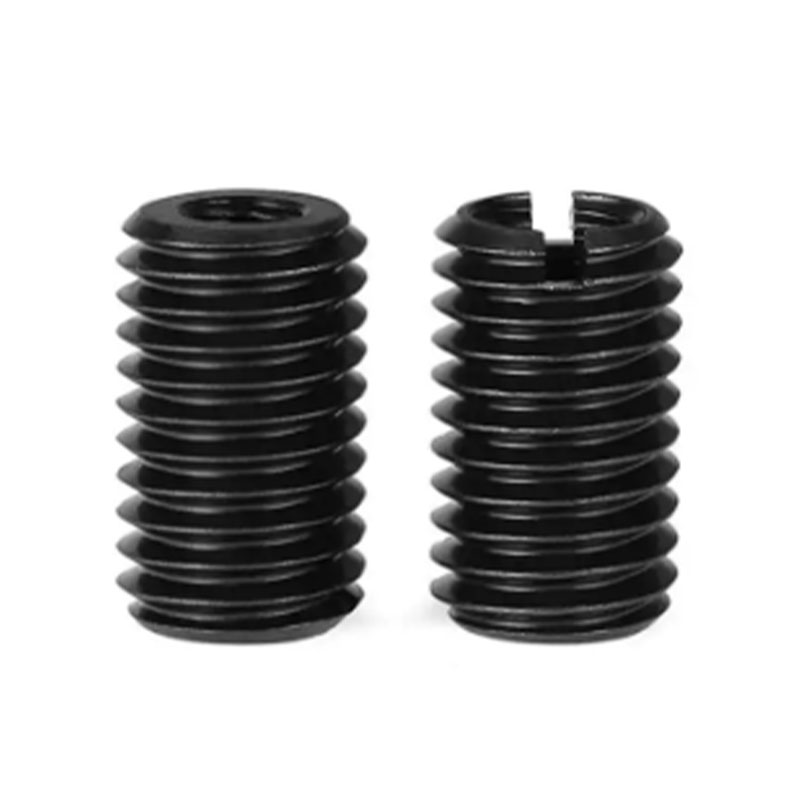
Carbon steel internal-external thread conversion nut is manufactured from carbon steel. This adapter...
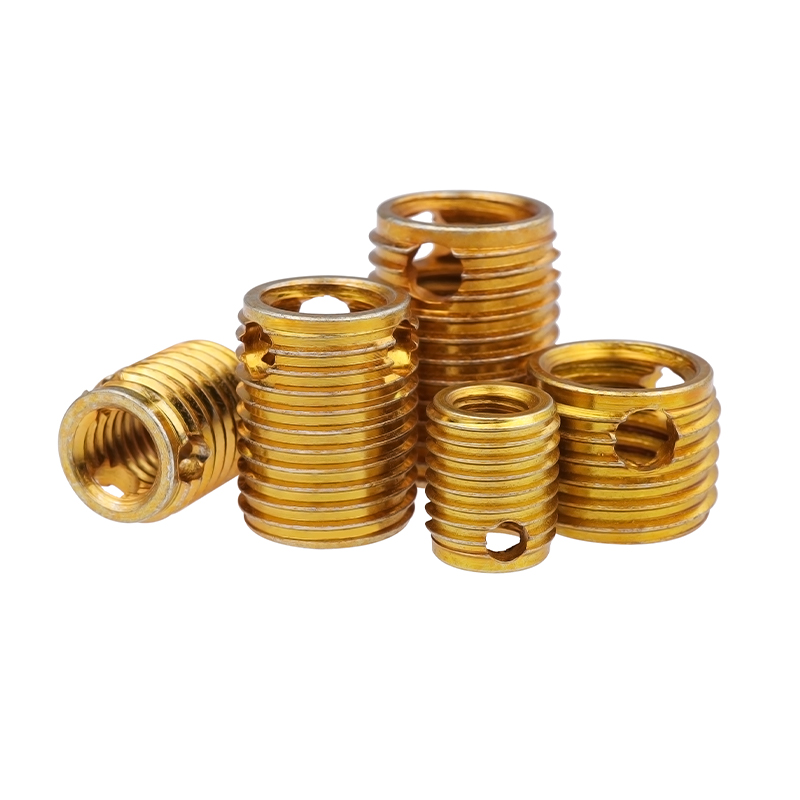
Carbon Steel Three-Hole Insert is a carbon steel threaded insert featuring three positioning holes. ...
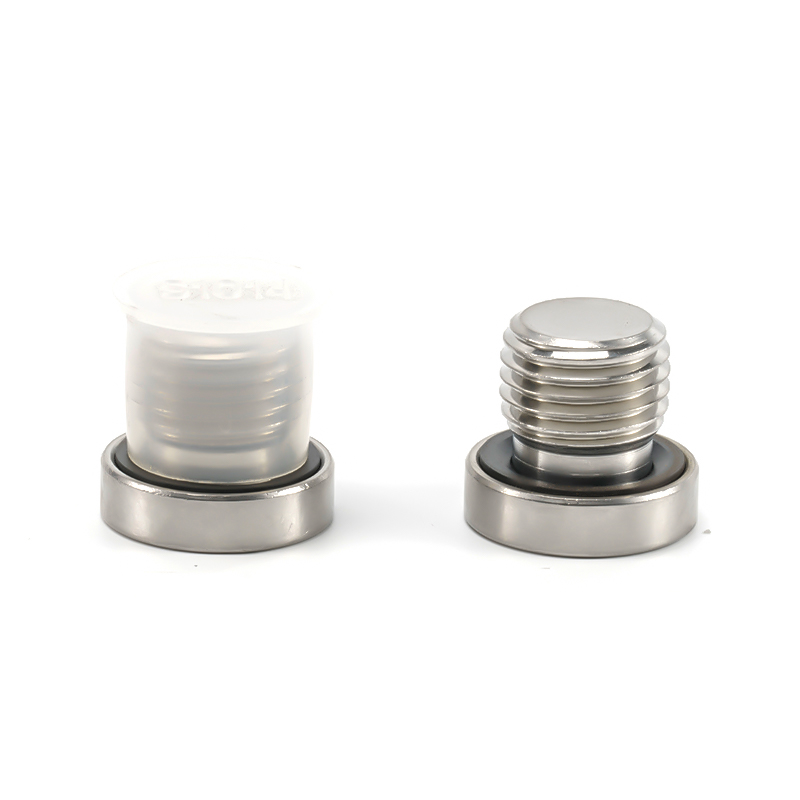
Features excellent pressure resistance and good corrosion resistance. Widely used in automotive, mac...
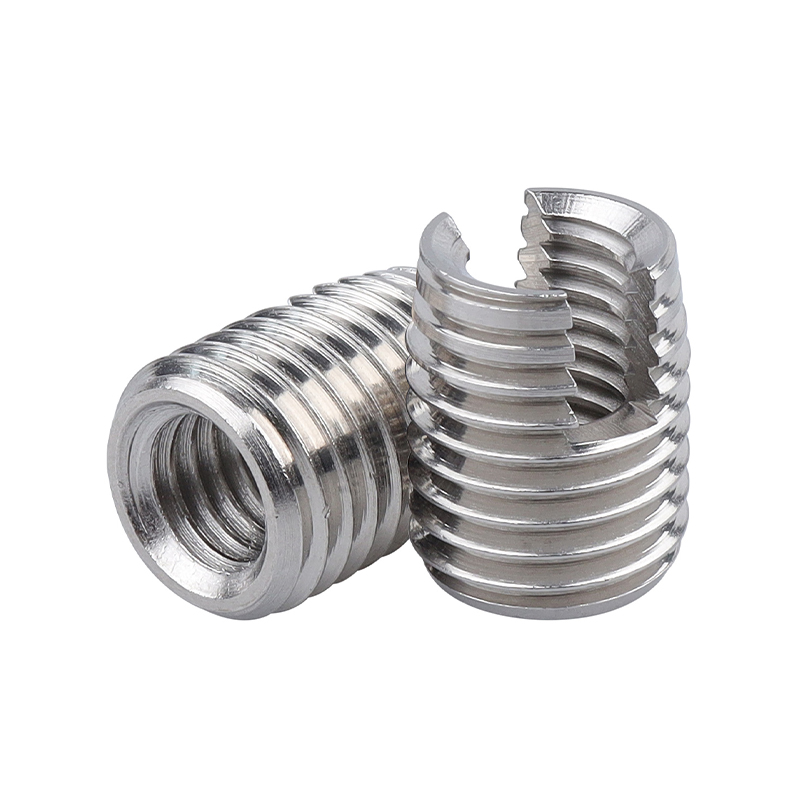
Stainless steel self-tapping thread inserts are fasteners designed to strengthen threaded connection...
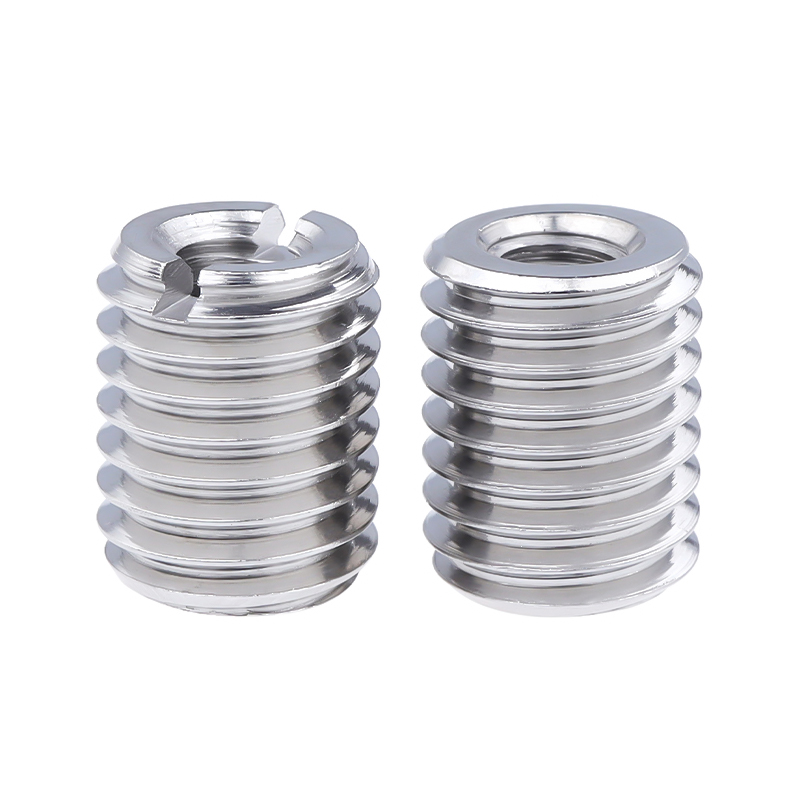
Stainless Steel Internal-external Thread Conversion Nut(also known as stainless steel thread sdapter...
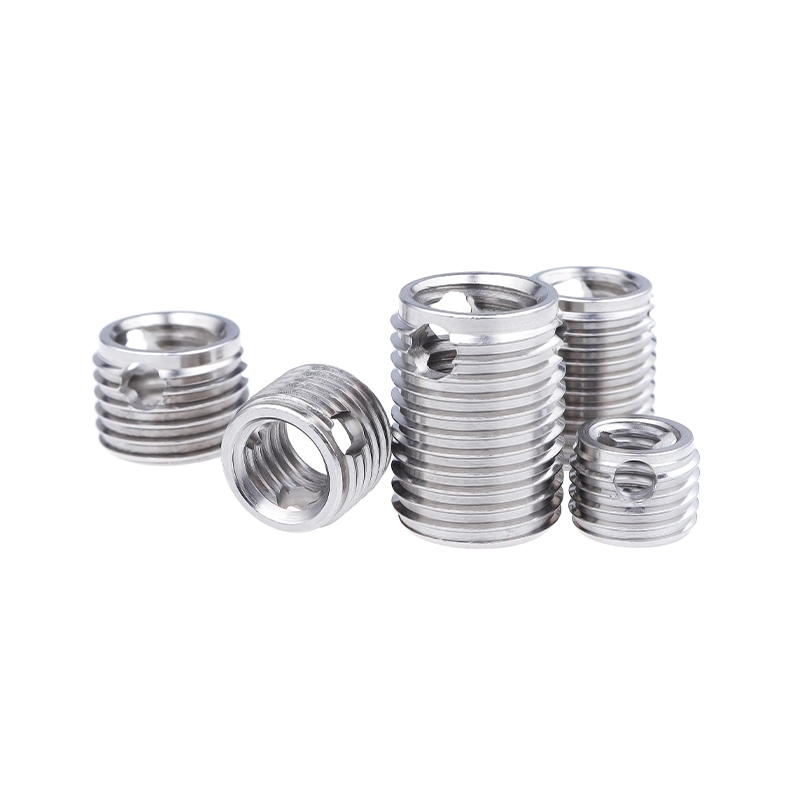
Stainless Steel Three-Hole Insert is a threaded insert with three evenly distributed positioning hol...
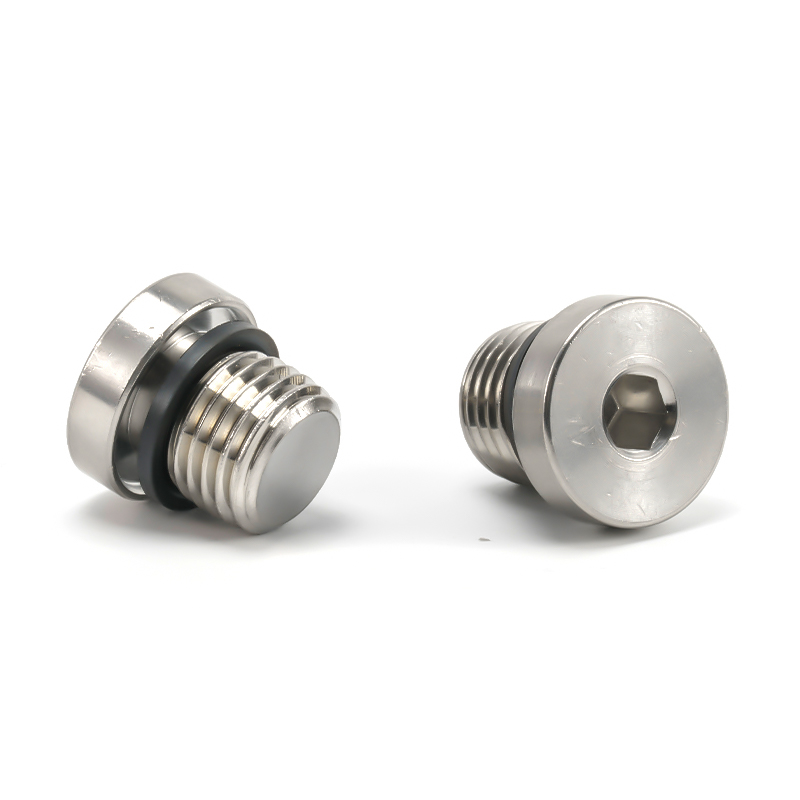
303, 304, and 316 stainless steel oil plugs are designed for applications requiring high corrosion r...
A carbon steel threaded insert is a small formed or machined sleeve, coil, or bushing with an internal thread that provides a durable mating surface for a screw or bolt, installed into a host material that is too soft, brittle, or worn to hold a strong thread on its own. The insert body is produced from carbon steel — typically a medium-carbon grade such as C1018 or C1045, or a low-alloy steel where higher strength is required — rather than stainless steel, which keeps material cost down and allows for a wider range of heat-treated hardness levels.
Construction styles follow the same general categories used across the threaded insert industry. Self-tapping and thread-forming inserts have a cutting or forming lead and coarse external threads that engage a pre-drilled pilot hole as they are driven in with a hex key or screwdriver. Press-in inserts use a straight or barbed knurled exterior and are installed with an interference fit using an arbor press, relying on friction and mechanical interlock rather than a threaded connection to the host material. Helical coil inserts are wound from diamond-shaped carbon steel wire and are screwed into a matching tapped hole, most often to repair a stripped thread in a cast iron or steel part; a tang at one end of the coil allows the installation tool to drive it in before being removed.
Heat treatment is a key differentiator for carbon steel inserts compared with stainless steel versions. Because carbon steel responds well to quenching and tempering, inserts can be hardened to specific ranges, commonly in the HRC 30 to 45 range, to significantly increase pull-out strength, torque resistance, and wear resistance under repeated assembly cycles — an advantage that is difficult to replicate in austenitic stainless steel, which does not harden through heat treatment in the same way. This makes hardened carbon steel inserts a common choice where an assembly will be taken apart and reassembled many times under high torque, such as engine covers, gearbox housings, or industrial equipment access panels.
Because bare carbon steel corrodes quickly in the presence of moisture, a protective coating is applied after forming and heat treatment. Zinc electroplating, in clear, yellow, or black chromate, is the standard finish for general indoor use, offering a modest barrier against surface rust. Black oxide provides a thinner, low-friction finish often used where dimensional tolerance is tight and a thicker plated coating would interfere with fit. Where a higher level of corrosion protection is needed without the cost of stainless steel, zinc-flake coatings, sold under names such as Dacromet or Geomet, or zinc-nickel plating can extend salt-spray resistance considerably beyond standard zinc plating, though still not to the level of 304 or 316 stainless steel.
Thread sizing follows the same metric (M2–M20 and larger) and inch (UNC/UNF) standards used throughout the fastener and insert industry, and lengths are typically specified as a multiple of the nominal thread diameter to balance holding strength against available material thickness. Outer diameter, drive style, and knurl pattern can generally be matched to an existing drawing, tap drill chart, or a part already in use on a production line.
Because carbon steel is easier and cheaper to machine and heat-treat in volume than stainless steel, this product category is well suited to both large production runs and custom tooling for non-standard sizes. Sample parts are typically available for a design team to verify installation torque, pull-out strength, and coating adhesion before committing to a full production order, and material or coating test reports can usually be provided for quality documentation.
Coating thickness is normally specified in microns rather than a general descriptive term, since a thin, cosmetic zinc layer offers far less protection than a properly specified coating build. A typical general-purpose zinc plating runs in roughly the 5 to 12 micron range, while zinc-flake coatings used for extended corrosion protection are often applied in multiple thin layers to reach a combined thickness that performs well in salt-spray testing without adding excess material to the thread profile, which could otherwise affect fit against the mating screw.
Carbon steel threaded inserts are best suited to dry or only briefly damp environments, where high mechanical strength and lower material cost outweigh the need for long-term corrosion resistance. Typical applications include:
The deciding factor for carbon steel over stainless steel is almost always environment and load rather than cost alone. If a part will be exposed to rain, washdown, high humidity, or salt, even occasionally, a coated carbon steel insert will eventually show surface rust at the coating's weak points — cut edges, thread roots, or scratches from installation — whereas a stainless insert resists corrosion through the base alloy itself. For that reason, carbon steel inserts are typically specified for internal or hidden components that stay dry throughout the product's life, while stainless steel is reserved for externally visible parts or anything with direct weather exposure on the same product. Where higher torque or pull-out strength is the primary requirement and some corrosion protection is still needed, a heat-treated, zinc-nickel or zinc-flake coated carbon steel insert can offer a middle ground between standard zinc-plated carbon steel and full stainless steel, at a cost between the two.
Original equipment manufacturers commonly specify carbon steel inserts at the design stage for components that will be assembled and serviced many times under high torque — engine covers, transmission access panels, and industrial equipment housings are typical examples — where a hardened insert measurably reduces warranty claims related to stripped threads. Maintenance and repair buyers frequently keep an assortment of helical coil carbon steel inserts on hand specifically for restoring stripped threads in cast iron or steel engine and machinery parts, since this is one of the most common thread-repair scenarios in automotive and industrial maintenance work.
In wood and particleboard furniture applications, carbon steel inserts are typically installed with a screw-in or hammer-in style rather than a self-tapping metal-cutting thread, since the insert's coarse outer threads are designed to bite into wood fiber rather than metal or rigid plastic. Selecting the correct pilot hole size for the wood density in use is important here — a hole that is too small can split the wood during installation, while a hole that is too large reduces pull-out strength.
A simple way to decide between a coated carbon steel insert and a stainless steel insert for a borderline application is to ask how the part would be affected if the coating eventually wore through. On a hidden internal bracket that is never seen or touched after final assembly, a small amount of surface rust years down the line rarely matters. On a fastener near a visible seam, a door hinge that sees daily handling, or anything positioned where condensation can collect, the same worn coating can lead to a stuck or corroded fastener that is difficult to service — a strong signal to specify stainless steel instead, even at a higher unit cost.
| Material | Carbon steel (C1018 / C1045 or equivalent low-alloy steel) |
| Thread Type | Metric coarse & fine (M2–M20), UNC, UNF |
| Insert Style | Self-tapping, press-in, helical coil (wire thread), heat-set |
| Length Options | 1D, 1.5D, 2D, 2.5D, 3D (D = nominal thread diameter) |
| Surface Finish | Zinc plated (clear/yellow), black oxide, zinc-nickel, zinc-flake (Dacromet-type) |
| Drive Style | Hex socket, slotted, tanged, tangless |
| Hardness | HRC 30–45 (heat-treated variants) |
| Corrosion Protection | Salt-spray rated per ASTM B117, coating dependent |
| Certification | Material and coating test report available on request |
| Packaging | Bulk carton, reel pack for automatic feeders, counted small box |