Français
 Español
 Deutsch
Stainless Steel Self-Tapping Thread Insert
Stainless steel self-tapping thread inserts are fasteners designed to strengthen threaded connection...


-- Steady & Reliable Manufacturer --
Stainless steel threaded inserts are precision-formed fastening components installed into a host material to create a durable, corrosion-resistant internal thread. They are used in plastic, aluminum, die-cast alloys, wood, and composite panels to give a soft or brittle substrate the same holding power as a solid metal part. Because the insert body is stainless steel rather than plain carbon steel or brass, it resists rust, oxidation, and chemical attack even in humid, marine, or washdown environments where an unprotected fastener would corrode within months.
The category covers several installation methods, including self-tapping inserts that cut their own thread as they are driven in, press-in inserts that are pushed into a pre-drilled bore with knurled or barbed exteriors for pull-out resistance, helical coil (wire thread) inserts that are screwed into a tapped hole to restore or reinforce an internal thread, and heat-set or ultrasonic inserts designed for thermoplastic housings. Each style suits a different combination of substrate hardness, wall thickness, and assembly volume, so the right choice depends on the material being fastened and how many times the joint will be assembled and disassembled over the product's life.
Most inserts in this line are produced from 303, 304, or 316 austenitic stainless steel, with 316 reserved for applications exposed to saltwater, de-icing salts, or aggressive cleaning chemicals. Threads are typically cut to metric (M2 to M20), UNC, or UNF standards, and inserts are available in standard and oversized outer diameters to match repair or original-equipment tap drill charts. Surface finishes are generally passivated or electropolished to remove free iron contamination left over from machining, which is what actually gives stainless steel its long-term corrosion resistance rather than the alloy content alone.
Threaded inserts are commonly specified wherever a fastener will be removed and reinstalled multiple times, such as access panels, electronic enclosures, battery compartments, and service covers, because a bare plastic or aluminum thread wears out quickly under repeated torque. They are equally useful for thread repair, letting a technician rescue a stripped bolt hole in an engine cover, gearbox housing, or furniture fitting without replacing the entire part. Industries that rely on this type of insert include marine equipment, outdoor lighting, medical device housings, food and beverage processing equipment, and consumer electronics — anywhere corrosion resistance and repeatable clamp load both matter.
Buyers sourcing stainless steel threaded inserts typically look for consistent thread tolerances, verified material certification, and packaging suited to automated assembly lines, such as bulk bags, reel packs for automatic feeders, or small counted boxes for MRO and repair kits. Custom lengths, drive styles, and thread pitches can usually be produced to match an existing drawing or a competitor's part number, and small trial orders are generally available before committing to a full production run.
Quality control for this product line generally includes thread gauge inspection with go/no-go gauges, salt-spray corrosion testing for critical marine parts, and hardness verification to confirm the insert has been properly heat-treated where a hardened variant is required for high-torque installation. Mill test certificates or material composition reports can typically be provided for projects that require full material traceability, such as medical or marine-grade assemblies.
Lead time and order size vary with the level of customization involved. Common catalog sizes in 304 stainless are often available from stock or with a short lead time, while 316 material, non-standard lengths, or a specific drive style may need a production run with a longer turnaround. For new designs, most suppliers will work from a 2D drawing, a 3D model, or a physical sample of the mating tap drill hole to confirm fit before quoting a full order, and it is common practice to request a handful of first-article samples for torque and pull-out testing before the design is locked in for mass production.
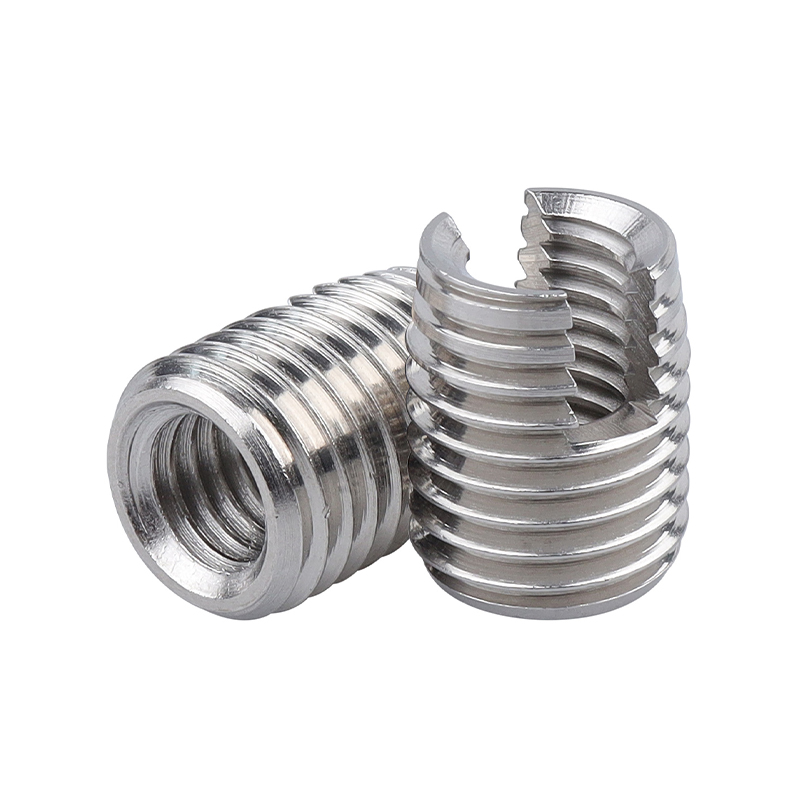
Stainless steel self-tapping thread inserts are fasteners designed to strengthen threaded connection...
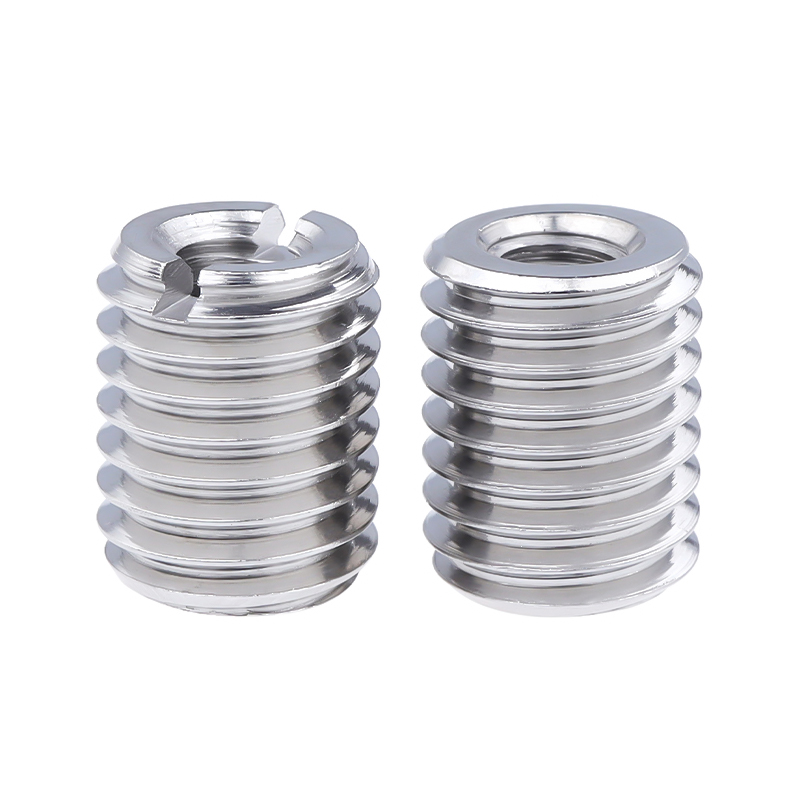
Stainless Steel Internal-external Thread Conversion Nut(also known as stainless steel thread sdapter...
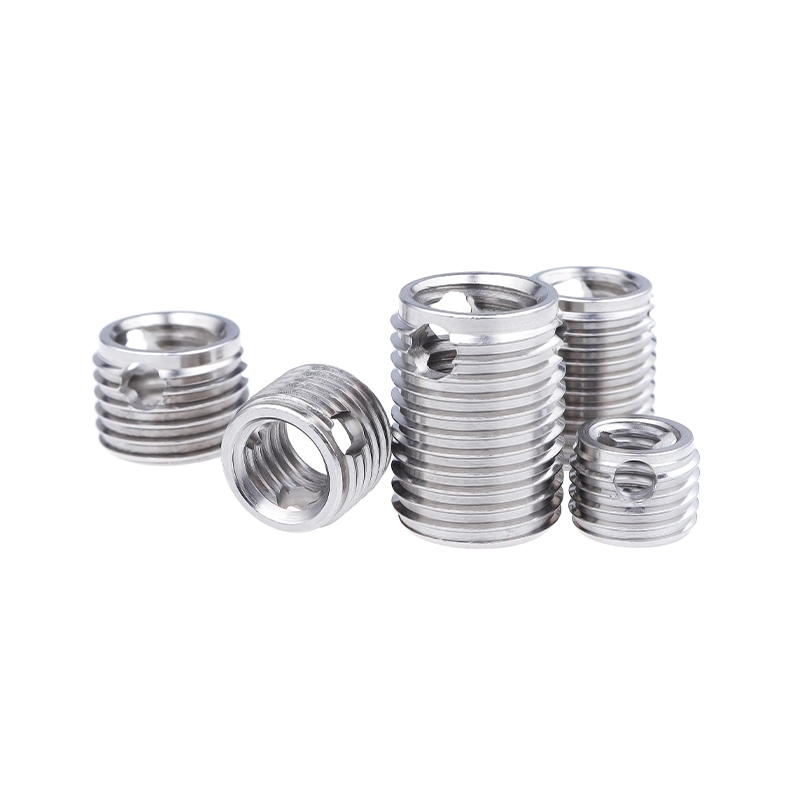
Stainless Steel Three-Hole Insert is a threaded insert with three evenly distributed positioning hol...
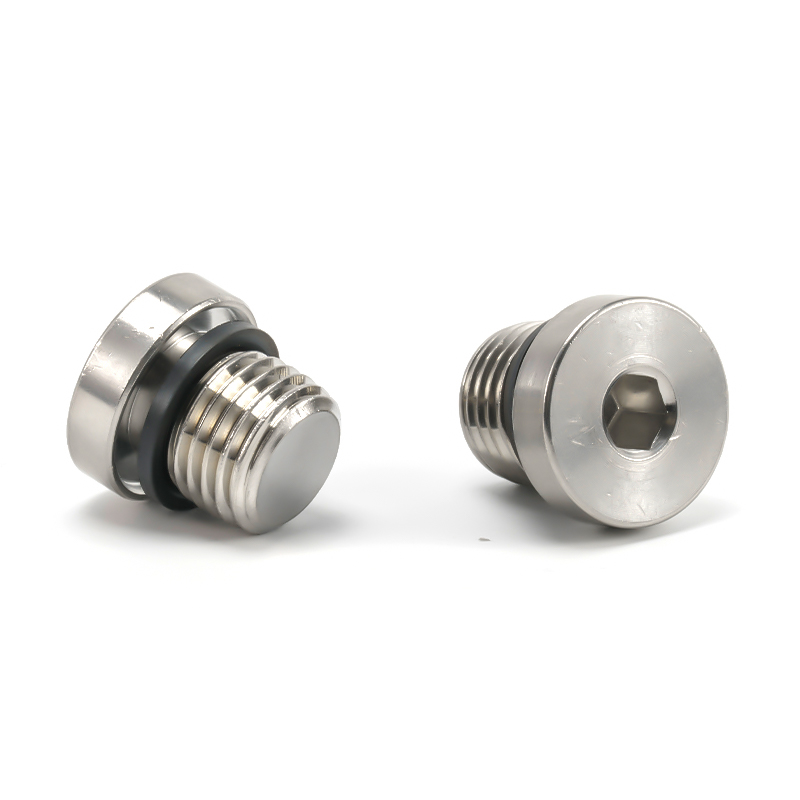
303, 304, and 316 stainless steel oil plugs are designed for applications requiring high corrosion r...
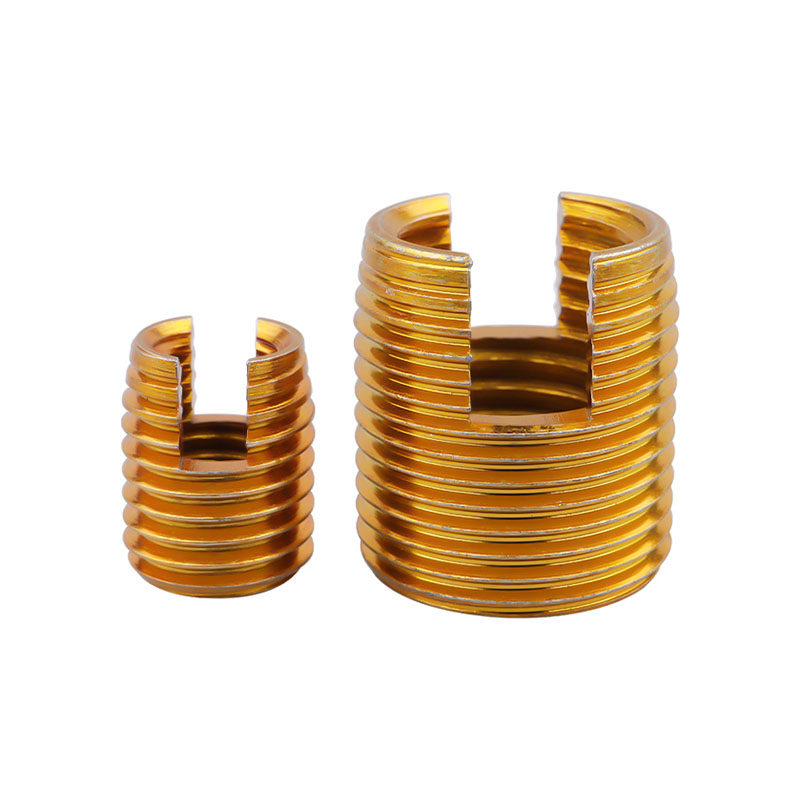
Carbon steel self-tapping thread inserts are made of high-strength carbon steel, offering mechanical...
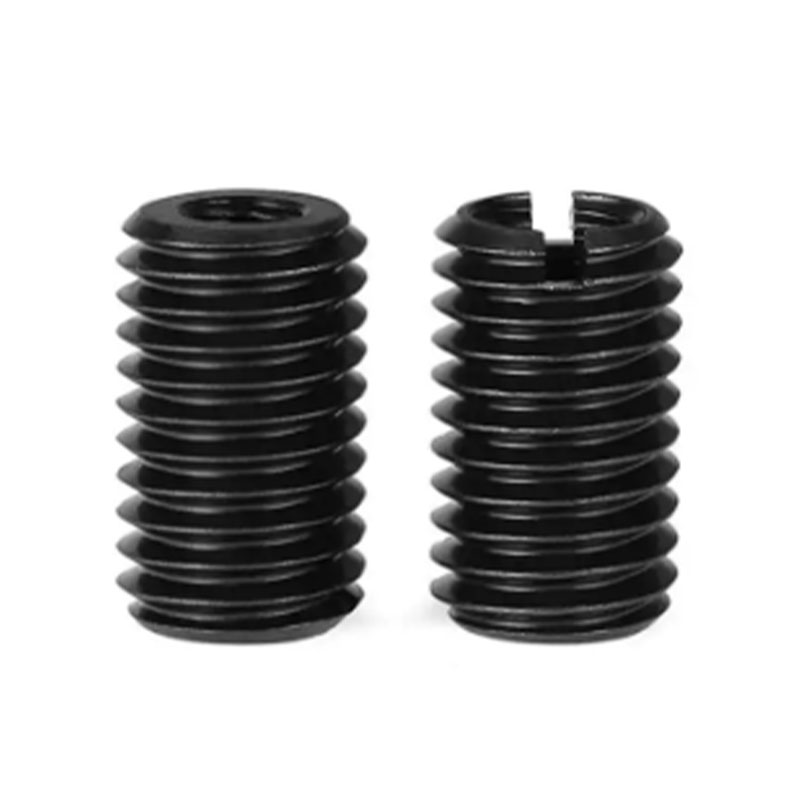
Carbon steel internal-external thread conversion nut is manufactured from carbon steel. This adapter...
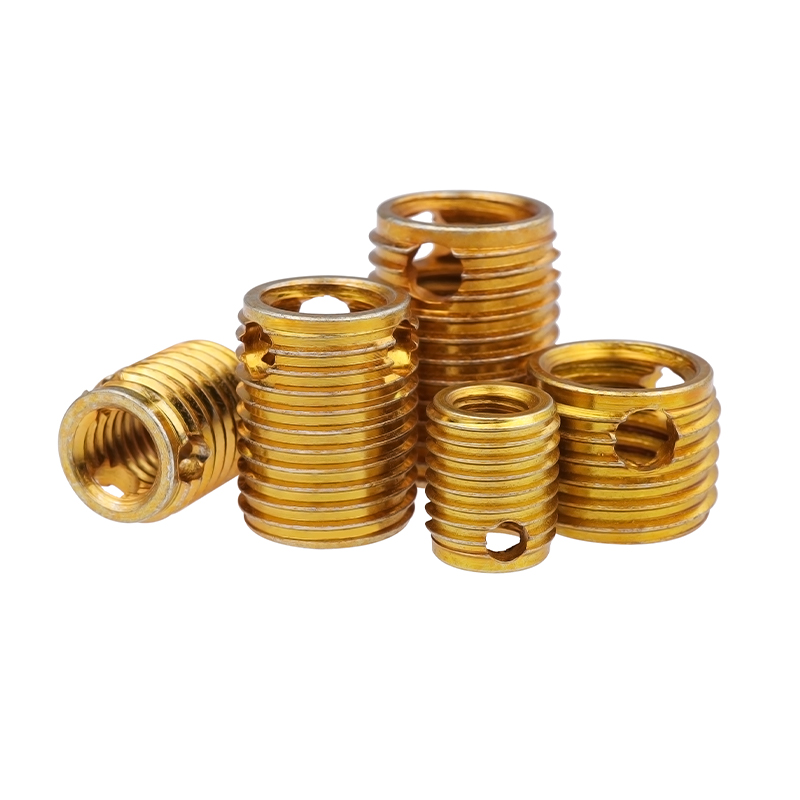
Carbon Steel Three-Hole Insert is a carbon steel threaded insert featuring three positioning holes. ...
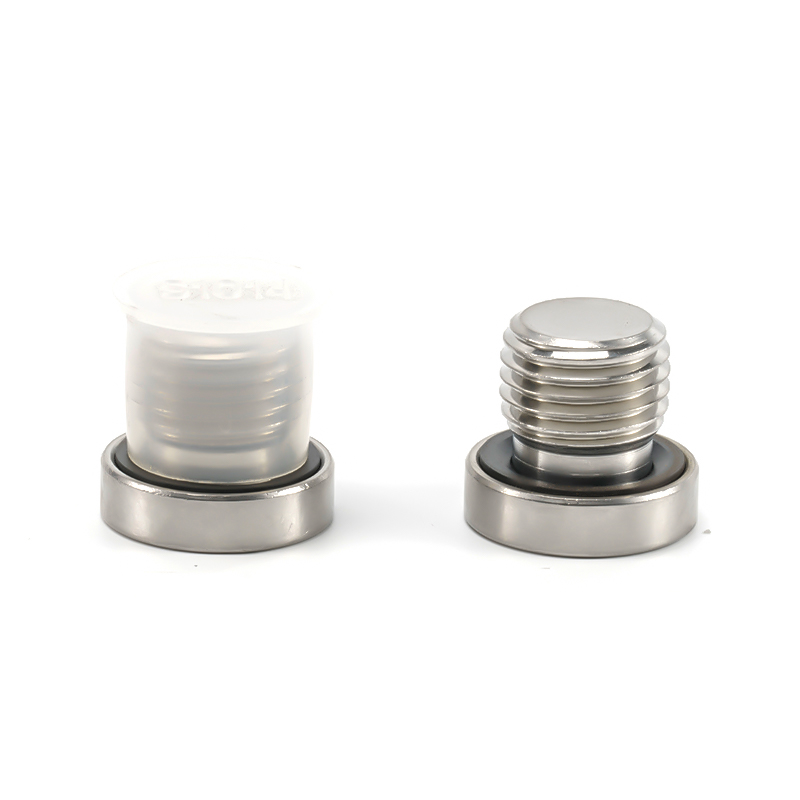
Features excellent pressure resistance and good corrosion resistance. Widely used in automotive, mac...
A threaded insert is a small metal sleeve, coil, or bushing with an internal thread on one side and an external feature — such as coarse buttress threads, barbs, knurling, or a helical coil shape — on the other side that locks it into the host material. Once installed, the insert becomes a permanent or semi-permanent part of the assembly, and the mating screw or bolt threads into the insert rather than directly into the surrounding plastic or soft metal. This separates the wear surface from the base material, so the joint can be assembled and disassembled far more times than the base material could withstand on its own.
Self-tapping and thread-forming inserts have a cutting or forming lead at the tip and coarse external threads that displace or cut into the wall of a pre-drilled pilot hole as the insert is driven in with a screwdriver or hex key. Press-in inserts rely on an interference fit and are pushed into place with an arbor press or hand tool; knurls, barbs, or diamond-knurl patterns on the outer diameter resist both rotation and pull-out once seated. Helical coil inserts are wound from diamond-shaped stainless steel wire and are threaded into a matching tapped hole using an installation tool with a tang that is removed after installation; this style is the most common method for repairing stripped threads in cast metal parts.
Thread sizes generally follow common metric coarse and fine pitch series (M2 x 0.4 through M20 x 2.5 and beyond), along with inch-series UNC and UNF sizes from #4-40 up to 3/4-16, so inserts can be matched to standard tap drill and thread charts without custom engineering. Overall length is usually specified as a multiple of the nominal thread diameter — common options include 1D, 1.5D, 2D, and 2.5D — giving designers a way to balance holding strength against material thickness. Outer diameters, drive styles, and knurl patterns can typically be adjusted to match an existing drawing, a legacy part number, or a specific tap drill size already used on the production line.
Production typically starts from 303, 304, or 316 stainless steel wire or bar stock, which is cold-formed, machined, or coiled to shape and then heat-treated where a harder finished insert is required for high-torque or repeated-assembly applications. After forming, parts are cleaned and passivated in line with ASTM A967 or a similar specification to dissolve free iron from the surface and restore the passive chromium-oxide layer that gives stainless steel its corrosion resistance. Threads are checked against go/no-go thread ring and plug gauges, and critical dimensions are verified with optical comparators or CMM inspection before packaging.
Because threaded inserts are a relatively simple geometry produced in high volume, they are well suited to both stock ordering and custom production. Standard catalog sizes typically ship from inventory, while non-standard lengths, thread pitches, drive features, or material grades — such as 316 for a marine project — can be produced against a drawing with a tooling lead time. Sample parts and small trial batches are usually available so an engineering team can verify fit, torque, and pull-out performance before releasing a full production order.
Installation reliability depends heavily on matching the insert to the correct pilot hole diameter and depth for the chosen substrate; an oversized hole reduces pull-out strength, while an undersized hole can crack a brittle plastic or thin-walled aluminum boss during installation. Reputable manufacturers publish a hole-size and torque chart for each insert size and substrate type, and many will review a customer's drawing or a sample part before quoting to flag potential installation issues in advance rather than after tooling is committed.
Packaging is generally selected to match how the insert will be used downstream — bulk cartons or reel-and-tape packaging for automated assembly lines, and smaller resealable bags or boxes for maintenance, repair, and prototyping. Where required, certificates of conformance, material test reports, and RoHS or REACH compliance statements can be issued alongside the shipment to support quality documentation on the buyer's side.
Stainless steel threaded inserts are used anywhere a soft, brittle, or thin-walled material needs a strong, reusable, corrosion-resistant thread. Typical use cases include:
Across these applications, the deciding factor is usually a combination of two things: how many times the joint will be taken apart and reassembled, and how aggressive the surrounding environment is. A single-assembly indoor product rarely needs a stainless insert, but anything serviced repeatedly, exposed to moisture or chemicals, or expected to last more than a few years outdoors is a strong candidate. Substrate compatibility is also worth checking before ordering: self-tapping and press-in inserts work well in aluminum, zinc die-cast, and rigid plastics such as ABS, nylon, and polycarbonate, while helical coil inserts are most often used in cast iron, aluminum, magnesium, and other metals that need thread reinforcement or repair rather than a brand-new thread in a soft plastic wall.
OEM design teams typically specify threaded inserts at the drawing stage, choosing insert type, length, and drive style to match automated installation equipment on the assembly line, along with a target pull-out and torque-to-failure specification validated during product testing. Maintenance and repair buyers, on the other hand, usually need a small assortment of common sizes on hand to fix a stripped thread in the field or during a service call, and often prefer a drive style that installs with common hand tools rather than a dedicated pneumatic press. In either case, it is worth checking the host material's hardness and wall thickness against the manufacturer's installation guidelines, since forcing an insert into a wall that is too thin can crack the surrounding material instead of creating a secure joint. When stainless inserts are installed into aluminum or other dissimilar metals, some designers also add a barrier coating or sealant at the joint to reduce the risk of galvanic corrosion in a wet or salty environment, particularly for marine and coastal installations.
A useful way to think about application fit is to compare a stainless insert against the two most common alternatives: tapping the thread directly into the base material, or using a self-tapping screw with no insert at all. Direct tapping works for a first assembly but tends to wear out after repeated cycles in plastic, aluminum, or magnesium, since the base material itself is doing the load-bearing work. A self-tapping screw without an insert saves part cost initially but usually strips the surrounding material faster, particularly in thin-walled enclosures. A stainless steel insert costs more than either alternative up front but is generally the better choice whenever the joint will be serviced more than a handful of times, when the part is expensive or time-consuming to replace, or when the assembly will spend its service life outdoors or in a washdown environment.
| Material | 303 / 304 / 316 austenitic stainless steel |
| Thread Type | Metric coarse & fine (M2–M20), UNC, UNF |
| Insert Style | Self-tapping, press-in, helical coil (wire thread), heat-set / ultrasonic |
| Length Options | 1D, 1.5D, 2D, 2.5D, 3D (D = nominal thread diameter) |
| Surface Finish | Passivated per ASTM A967; natural or electropolished on request |
| Drive Style | Hex socket, slotted, tanged, tangless |
| Hardness | HRB 70–95 (annealed); HRC 30–40 for hardened variants |
| Working Temperature | -40°C to 400°C (grade dependent) |
| Certification | Material test report / mill certificate available on request |
| Packaging | Bulk carton, reel pack for automatic feeders, counted small box |