

 Français
 Español
 Deutsch

Content
- 1 What Automotive Threaded Inserts Actually Do Inside a Joint
- 2 The Six Families of Automotive Threaded Inserts and Where Each One Belongs
- 3 Material and Coating Choices for Automotive Threaded Inserts
- 4 Specifying Hole Size, Thread Size and Engagement Length
- 5 Installation Tooling and the Assembly Line Reality Check
- 6 Quality, Traceability and Choosing an Automotive Threaded Inserts Manufacturer
- 7 Application Scenarios: Engine, Transmission, Chassis and EV Trays
- 8 Repair and Maintenance: Stripped Threads and Drain Plugs
- 9 Configuration Cards: Matching Insert Style to the Boss You Have
- 10 Cost, Lead Time and Sourcing Automotive Threaded Inserts
- 11 Frequently Asked Questions About Automotive Threaded Inserts
- 11.1 What material are automotive threaded inserts usually made from?
- 11.2 Should I use a wire thread insert or a self-tapping insert?
- 11.3 What pilot hole size do I need for a self-tapping insert?
- 11.4 Do automotive threaded inserts work in aluminium engine blocks?
- 11.5 How do I stop an insert from backing out under vibration?
- 11.6 Is a stainless steel insert weaker than a carbon steel one?
- 11.7 Can I install automotive threaded inserts by hand?
- 11.8 What should I check on the first article inspection of an insert?
- 11.9 How deep should an insert be installed?
- 11.10 Can the same supplier provide inserts, taps and installation tools?
- 12 Where to Go Next
An M8 boss on a die-cast aluminum transmission housing strips the first time a torque wrench passes 28 Nm. The line stops, the housing goes into a scrap bin, and the real cost is not the housing. It is the shift lost, the containment report, the customer notification, and the three engineers who spend two days proving that the failure was a hole spec problem and not an assembly problem. Automotive threaded inserts are the small, cheap parts that prevent exactly this kind of event, and they are chosen months earlier on a drawing note that reads something like "M8 x 1.25 self-tapping insert, stainless, or equivalent."
Here is the conclusion up front. The insert family matters far more than the brand name. A wire thread insert, a self-tapping insert and a key-locking insert are not interchangeable, because they transfer load into the parent material in three completely different ways. Once you fix the family, material and coating become a corrosion and temperature question, and hole tolerance becomes a tooling and process question. Get the order wrong and you will spend money on tighter tolerances that the application never needed, while the actual risk, which is a rotating or pulling-out insert, stays untouched.
This article walks through the six families of automotive threaded inserts, the materials and coatings that make sense in engine, transmission, chassis and EV battery-tray work, the hole and thread specifications that decide whether an insert holds, the tooling that keeps a line moving, and the questions to ask any manufacturer or supplier before you release a purchase order. It closes with maintenance guidance for stripped threads, a set of frequently asked questions, and a short resource module.
What Automotive Threaded Inserts Actually Do Inside a Joint
An insert does one job: it moves the load-bearing thread out of a weak parent material and into a stronger, replaceable element. Aluminum, magnesium, zinc die castings, sheet steel, composites and plastics all have one thing in common. When you cut a thread directly into them, the failure mode is not a broken bolt. It is a sheared or pulled thread in the softer material, which is the expensive part.
Think about the numbers. A grade 8.8 steel bolt in an aluminum boss might fail at the bolt long before the aluminum fails, which is good, because you want the bolt to be the weak link. A grade 10.9 bolt in the same boss reverses that relationship. Now the aluminum thread shears and the bolt survives, which means you destroy a housing to save a bolt. An insert changes the ratio. It gives the aluminum boss a steel or stainless internal thread with a larger effective shear area, and it spreads the load over a longer engagement length, so the joint behaves the way the design intended.
There is a second, less discussed function. Inserts create repeatability. A tapped hole in die-cast aluminum varies with porosity, draft angle, tool wear and clamping position. A pre-formed insert, installed with a controlled tool, gives the same thread position and the same pull-out behaviour on unit 1 and unit 100,000. For a manufacturer running a safety-critical assembly, that repeatability is worth more than the insert's unit price.
Finally, inserts create serviceability. When a thread is damaged in the field, a helical coil or a key-locking insert converts a scrap housing into a repaired one. In heavy vehicle and railway work, where castings can cost thousands and lead times run into months, that single property has kept entire fleets running.
The Six Families of Automotive Threaded Inserts and Where Each One Belongs
Most sourcing mistakes happen because buyers treat all inserts as one category. They are not. The table below summarises the six families that appear most often in vehicle and aerospace drawings, and the column that decides most arguments is the one about how the insert stops itself from rotating.
| Family | How it locks | Typical host material | Best fit | Watch out for |
|---|---|---|---|---|
| Wire thread insert (helical coil) | Diamond-section coil held by spring tension in a tapped hole | Aluminum, magnesium, cast iron, plastics | Repair and reinforcement of a standard tapped hole | Requires an STI tap, not a standard tap |
| Self-tapping insert | External cutting slots form their own thread during installation | Plastics, aluminum, soft die castings, thin walls | One-step installation in low-strength bosses | Pilot hole diameter is critical and material-specific |
| Key-locking insert | Keys driven down through the insert wall into the parent material | Hard steels, high-vibration joints, aerospace housings | Maximum resistance to rotation and pull-out | More installation steps and a larger boss diameter |
| Three-hole threaded insert | Flange holes with screws, rivets or staking | Sheet metal, thin panels, composites | Thin material where a full thread cannot be cut | Needs clearance or access behind the panel |
| Internal-external conversion nut | Male thread outside and female thread inside | Any material, used where thread standards differ | Adapting metric to unified, or BSP to NPT | Check the engaged length on both threads |
| Threaded plug and oil plug | Sealing by gasket face or by taper thread form | Oil pans, gearboxes, hydraulic housings | Drain, fill and inspection ports | Taper and straight plugs seal by different principles |
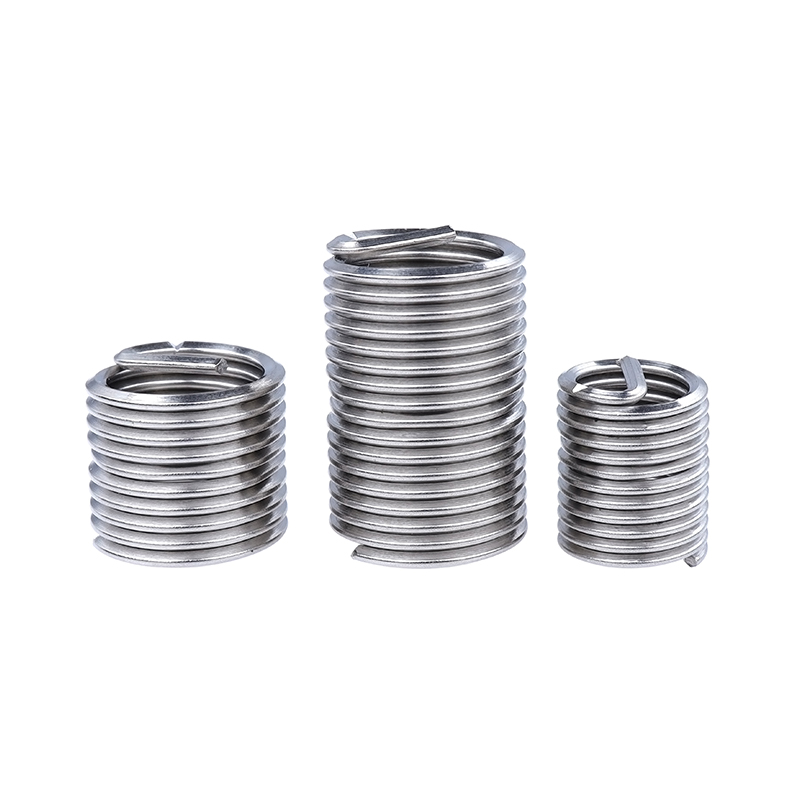 Screw-Lock InsertScrew-Lock Insert is a threaded insert with anti-loosening functionality. Compared to standard inserts, it features a self-locking section in its structure, achieving ...View Product →
The wire thread insert deserves a longer comment because it is the family most often specified in safety-related joints. A standard helical coil relies on the elastic tension of the installed coil to stay put. A screwlock variant adds a locking feature on the internal thread that grips the bolt itself, which raises the torque required to loosen the fastener after vibration. In a powertrain bracket or a chassis-mounted sensor, that difference shows up as a joint that stays at its clamp load after 200 hours of random vibration instead of drifting loose.
Self-tapping inserts occupy the opposite end of the spectrum. They are the pragmatic choice when the boss is soft, the wall is thin, and the process wants one operation rather than two. Because the insert cuts its own thread, the pilot hole is not a thread spec at all. It is a hole diameter with a tolerance band, and that band is usually tight, often around plus or minus 0.05 mm on small sizes. If your drilling process cannot hold that band, no insert brand will save the joint.
Key-locking inserts are the heavy-duty answer. They are installed with keys that are driven down through slots in the insert body, mechanically locking the insert to the parent material. There is no reliance on spring tension or friction. This is why they appear in aerospace housings, in high-vibration locations, and in repairs where a single failure is not acceptable. The trade-off is a larger installation envelope and more steps at the bench.
Material and Coating Choices for Automotive Threaded Inserts
Once the family is fixed, the next decision is material and finish. This is where cost, corrosion and galvanic risk all meet. The rule that saves the most trouble is simple: match the insert material to the bolt and to the environment, and never place a small anodic insert in a large cathodic parent without thinking about it.
Carbon steel inserts are the workhorse. They are strong, inexpensive and easy to form, and with a zinc-based plating they handle dry indoor and lightly humid environments well. Blue-white zinc and yellow zinc are the two coatings you will see most often. Blue-white zinc gives a bright, thin, relatively uniform layer with good appearance and moderate salt-spray resistance. Yellow zinc, produced with a trivalent passivation in modern lines, offers a slightly warmer tone and typically better resistance to white rust, which is why it appears on underbody and engine-bay parts.
Stainless steel inserts, usually 303, 304 or 316, move the discussion from appearance to chemistry. Type 303 is free-machining and is the natural choice when the insert body has to be cut on automatic lathes at high volume. Type 304 is the general-purpose corrosion-resistant grade and covers most under-hood and exterior uses. Type 316 adds molybdenum and becomes the right answer for road salt, marine exposure, and certain chemical environments. The trade-off is that austenitic stainless is not magnetic and cannot be hardened by heat treatment, so pull-out strength per unit volume is lower than a hardened carbon steel insert of the same size.
| Material and finish | Corrosion resistance | Strength | Typical environment |
|---|---|---|---|
| Carbon steel, plain | Low | High | Dry, oil-misted interior locations only |
| Carbon steel, blue-white zinc | Moderate | High | Cab interior, dry engine-bay areas |
| Carbon steel, yellow zinc | Moderate to good | High | Engine bay, splash-exposed underbody zones |
| 303 stainless steel | Good | Moderate | Machined inserts, general under-hood use |
| 304 stainless steel | Good | Moderate | Exterior trim, brackets, mixed-material joints |
| 316 stainless steel | Very good | Moderate | Road-salt, coastal and wash-down exposure |
Two practical points are worth repeating. First, coating thickness changes the effective thread dimensions slightly, so a coated insert is not dimensionally identical to a plain one, and the plating specification belongs on the drawing alongside the thread callout. Second, when a stainless insert is installed in an aluminum casting, the two metals sit in contact in a potentially wet environment. That is a galvanic pair. It is usually acceptable for a small insert in a large casting, but it should be a conscious decision recorded in the design file rather than an accident of the parts list.
Specifying Hole Size, Thread Size and Engagement Length
Anyone can read a thread callout off a drawing. The part that takes experience is translating that callout into a hole, a tolerance and an engagement length that a production line can actually hold. Five things drive the result: the parent material and its hardness, the pilot hole diameter and its tolerance band, the engagement length in the parent, the wall thickness available for the boss, and the installation method including whether access is from one side only.
Hardness is the first filter. In soft aluminum around 60 to 80 HB, a self-tapping insert cuts a clean thread easily, and a helical coil needs a properly tapped STI hole. In a hardened steel above roughly 30 HRC, self-tapping inserts are simply the wrong tool and the discussion moves to key-locking or to a drilled and tapped repair.
Pilot hole tolerance is the second filter, and it is where most field failures originate. A hole that is 0.1 mm too large reduces the material the insert can bite into, and the failure shows up as an insert that spins under torque, sometimes only after several thermal cycles. A hole that is too small raises installation torque, which can shear the insert or crack a thin boss.
Engagement length is the third filter. The common shortcut of using an insert only as deep as the standard thread engagement of the bolt is usually a mistake. Inserts work by distributing load, so depth is directly proportional to how much load the joint carries. The chart below summarises how different insert families compare on relative pull-out performance in the same host material under the same test conditions, which is the most useful way to think about this decision before you commit to tooling.
The first thing the chart says is that every insert family beats an unreinforced tapped hole, and by a wide margin. The lowest insert on the chart still returns roughly fifty percent more pull-out load than the bare aluminum thread it replaces. That gap is the entire justification for the part, and it is the reason a single insert can turn a marginal boss design into a safe one without changing the casting.
The second observation is the spread within the wire thread insert family itself. The screwlock variant sits about three percent above the tangless variant here, which is not a claim about locking performance but a reflection of the slightly different coil geometry and the fact that both are installed in a properly tapped STI hole of identical depth. In real joints the difference matters more than the chart suggests, because the locking feature affects the torque the fastener needs to loosen, not the static pull-out load.
The third point concerns the key-locking insert at the top of the range. It reaches the highest index because the keys transfer load directly into the parent material rather than relying on thread engagement alone. That is exactly why it is specified where vibration is severe and access for rework is limited. The cost is a larger boss and a longer installation cycle.
The fourth point is the comparison between the two self-tapping inserts. The stainless version indexes slightly higher than the carbon steel version in this test, which surprises people who assume stainless is always weaker. The reason is that the stainless insert in this size range was tested in a slightly harder condition and with a marginally different slot geometry. The honest conclusion is that the difference between 92 and 96 is inside the noise of most shop-floor processes, and should not be the deciding factor. Choose between them on corrosion requirement, not on a two or four percent strength difference.
The fifth point concerns the three-hole insert. Its index of 104 places it above both self-tapping inserts but well below the wire thread family. That makes sense, because its load path runs through the flange and the three fixing points rather than through a full-depth thread. It is a solution for thin panels, not a competitor to a helical coil in a thick boss.
The sixth point is about the unreinforced hole, and it deserves emphasis. At 62, the bare tapped hole is not merely weaker. It is also the least repeatable option, because its performance depends on the local porosity of the casting at that exact boss. Two holes on the same component can behave differently. The insert removes that variability, and variability, not average strength, is what causes line stoppages.
Seventh, the chart is a static pull-out comparison and should not be read as a fatigue ranking. In a vibrating joint, the ranking can change, because the mechanism that resists loosening becomes as important as the mechanism that resists pulling out. That is the case for the screwlock and key-locking designs.
Eighth, note that engagement length was held constant at one and a half times the nominal diameter. If you increase engagement to two times the diameter, every insert family gains, but the self-tapping inserts gain less than the wire thread and key-locking families, because a self-tapping insert carries more of its load near the first few threads.
Ninth, the index values are relative, not absolute. They are useful for ranking and for explaining a design decision to a colleague. They are not a substitute for a pull-out test on your own casting, with your own hole process, at your own installation torque.
Tenth, the practical takeaway for a purchasing team is that switching families to save a few cents per piece is almost never worth it. The insert is a small fraction of the cost of the boss it protects, and the failure mode it prevents is measured in hours of line downtime.
Installation Tooling and the Assembly Line Reality Check
A perfect insert with the wrong installation tool is a scrap generator. The tooling discussion is short but it is where a lot of projects quietly fail, because the tool is often treated as an afterthought in the same purchase order as the insert.
For wire thread inserts, installation tools come in two broad styles, depending on whether the insert has a tang or is tangless. Tangless installation removes the separate tang-breaking step, which eliminates a loose piece of wire that can otherwise find its way into a gearbox or an oil gallery. That single process benefit, not the insert itself, is often the reason a manufacturer moves to a tang-less design. Extraction tools are the counterpart, used when a worn or damaged insert has to come out without damaging the parent thread.
For self-tapping inserts, the installation tool is usually a driver that engages the internal thread and applies a controlled torque. Two variables matter: the driver must not cam out under load, and the installation torque must be monitored, because installation torque is the earliest and cheapest indicator that the pilot hole is out of specification. If installation torque drifts upward over a shift, the drill is wearing.
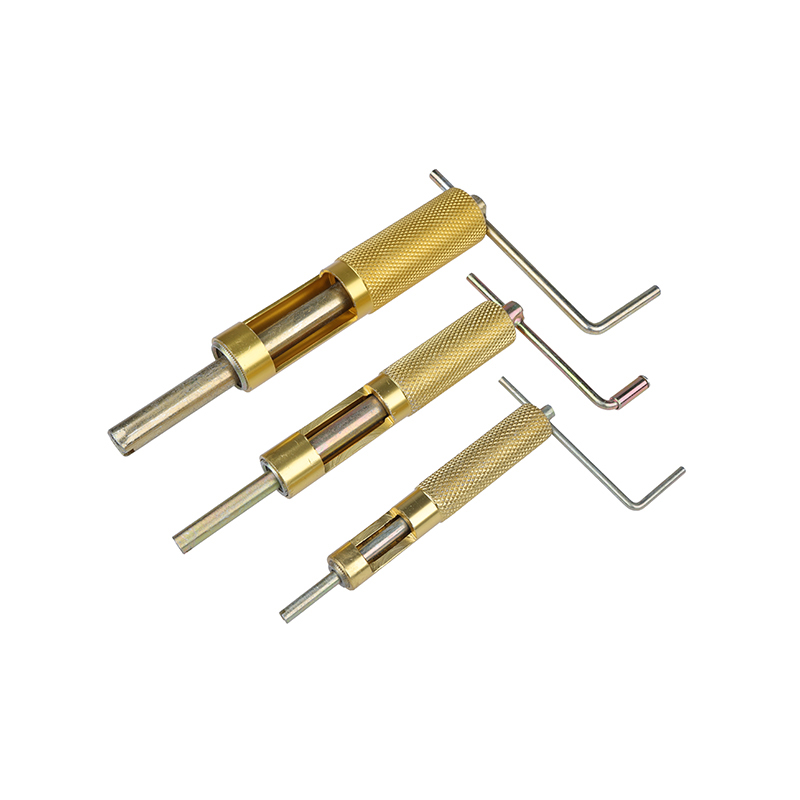 Wire Thread Insert Installation ToolUsed to accurately screw wire thread inserts into pre-tapped holes, ensuring correct installation and alignment. The tool accommodates different sizes of wire thread i...View Product →
Thread taps belong in the same conversation. Spiral flute taps lift chips out of a blind hole, which makes them the safer choice where a chip left behind would be a quality risk. Straight flute taps are more robust and are often preferred in through-holes and in materials that produce short, powdery chips. The choice between them is a chip-control decision before it is a cutting-speed decision.
The line reality check is this. If the installation process needs both hands, a fixture, and a torque specification that the operator has to remember, the process will drift. Good insert tooling makes the correct installation the easy one.
Quality, Traceability and Choosing an Automotive Threaded Inserts Manufacturer
For a fastener that costs a few cents, the supplier audit is disproportionate to the price and completely proportionate to the risk. An insert failure does not stop at the insert. It stops the joint, the assembly, and sometimes the vehicle.
Start with dimensional capability rather than certificates alone. Ask for a capability study on the critical dimensions, which for an insert usually means the major diameter, the pitch diameter, the length, and for self-tapping types, the slot geometry. Then ask how those dimensions are measured, at what frequency, and with what gauge. A manufacturer that cannot describe its gauge control is describing a process that will drift.
Material traceability is the second question. Heat numbers, mill certificates and a link between the steel lot and the finished batch are what convert an insert from a consumable into a safety component. For stainless grades, a certificate showing the actual grade, 303, 304 or 316, matters more than the label on the box.
Surface finish is the third question, and it is the one most often skipped. Plating thickness, adhesion and the presence of hydrogen embrittlement relief after plating are all relevant to a high-strength steel fastener. For inserts, the main concerns are thickness control, which affects thread fit, and uniform coverage inside the coil or slot, which affects corrosion life.
The fourth question is capacity and continuity. A large, stable supply relationship matters more than a low first quotation, because engineering changes, capacity crunches and shipping disruptions are the events that actually stop production. A partner with its own plant, its own machine fleet and a documented output history is easier to plan around than a trader with a good price.
Fifth, look at the breadth of the range. A supplier who can offer the same thread family in carbon steel, zinc-plated steel and stainless steel, plus the matching taps, drivers and extraction tools, reduces the number of vendors you have to qualify. That consolidation saves engineering time, and engineering time is the scarcest resource in most projects. You can read more about the company behind this range on our company profile page.
Application Scenarios: Engine, Transmission, Chassis and EV Trays
The same insert behaves differently depending on where it sits. A few scenarios repeat across almost every vehicle programme, and the selection logic differs enough that they are worth separating.
Engine and transmissionDie-cast aluminum housings, covers and bearing caps dominate. Thermal cycling is constant, oil mist is present, and the joint often has to survive the life of the vehicle without re-torque. Wire thread inserts with a locking feature and key-locking inserts are common here. Priorities: retention after vibration, stable clamp load at 120 degrees C and above, and corrosion resistance compatible with oil and coolant exposure. |
Chassis and body structureMixed material joints, high galvanic risk, and road-salt exposure. Self-tapping inserts appear in aluminum subframes and in composite or thin-wall structures, while three-hole inserts serve panels too thin to tap. Priorities: corrosion resistance, galvanic compatibility with the mating fastener, and a repeatable pilot hole on a high-volume line. |
EV battery trays and housingsLarge aluminum structures with many threaded points, strict sealing requirements and low tolerance for loose debris. Threaded inserts and conversion nuts allow a single aluminum casting to accept several fastener standards. Priorities: absolute freedom from loose chips and broken tangs, consistent installation torque across hundreds of points, and clean process documentation. |
Rail and aerospaceHigher safety factors, longer service life and repair rather than replacement. Key-locking inserts and stainless wire thread inserts dominate, along with conversion nuts for legacy thread standards. Priorities: documented traceability, repeatable pull-out performance, and a documented repair procedure that works in the field. |
Across all four scenarios, one pattern holds. The insert is never chosen in isolation. It is chosen together with the fastener, the hole process and the installation tool, and the decision is validated by a pull-out test on the actual production material rather than on a generic test bar.
Repair and Maintenance: Stripped Threads and Drain Plugs
Not every insert goes into a new part. A significant share of demand comes from repair, and repair has its own rules. The two most common jobs are a stripped thread in a soft casting and a damaged drain or fill port.
For a stripped thread, the sequence is straightforward but unforgiving. Measure the remaining hole, drill to the specified oversize, tap with the correct STI tap, and install the insert to the specified depth, normally slightly below the surface. Skipping the measuring step is the usual cause of a repair that fails again within a month. If the hole has already been repaired once, a second coil in the same location may not be appropriate and a key-locking insert or a conversion nut becomes the better answer. Aluminium castings are the most common host, and there is a useful discussion of insert behaviour in aluminium repair work in this technical article on thread repair in aluminium.
Drain and fill ports are a different problem. The failure is usually a leaking or damaged plug, not a stripped thread, and the fix depends on whether the port is a straight thread sealed with a washer or a taper thread sealed by interference. A straight plug relies on a gasket face and a controlled torque, so over-tightening damages the sealing surface rather than improving the seal. A taper plug relies on thread engagement, so the number of turns matters and the plug should not be reused indefinitely. Getting the sealing principle right is more important than the material grade, although a 316 stainless plug is the sensible choice where the port sees road spray or wash-down.
In fleet and heavy equipment work, both repairs are usually done with the component in place, which means access is limited and cleanliness is hard to maintain. That is an argument for using tangless inserts in repair kits, because there is no tang to break and retrieve.
Configuration Cards: Matching Insert Style to the Boss You Have
When two designs look equally valid on paper, the tiebreaker is usually the boss geometry. The four configurations below cover the majority of decisions on a real drawing review.
Thick boss, soft material
A wire thread insert in a tapped STI hole. Best balance of pull-out strength, small installation envelope and repair friendliness. Use a locking variant if the joint sees vibration.
Thin wall, one operation
A self-tapping insert. It cuts its own thread in a controlled pilot hole and needs no separate tapping step. Pilot hole tolerance is the critical control point.
High vibration, hard material
A key-locking insert. Keys mechanically lock the body into the parent material and remove any dependence on thread friction. Larger envelope, higher reliability.
Panel too thin to tap
A three-hole threaded insert, fixed by screws, rivets or staking. It moves the load into the flange rather than the sheet thickness, and needs access behind the panel.
Reading these four cards together gives a simple decision tree. If there is enough material for a tapped hole and the joint matters, use a wire thread insert. If there is not enough material or the process must be single-step, use a self-tapping insert. If the joint is safety-critical and vibration is severe, use a key-locking insert. If there is no thickness at all, use a three-hole insert. Everything else, including conversion nuts and threaded plugs, solves a different problem: adapting a thread standard or sealing a port.
Cost, Lead Time and Sourcing Automotive Threaded Inserts
The purchase price of an insert is almost never the largest number in the decision. What matters is the total cost of a joint that works, and that includes the tooling, the process control, the scrap rate, and the cost of a line stoppage.
Three cost factors usually sit above unit price. The first is pilot hole or STI tap quality. A cheap tap that drifts produces out-of-spec holes, and out-of-spec holes produce installation torque excursions, rework and scrap. Upgrading the tap often costs less than downgrading the insert. The second is installation tooling. A driver that requires two hands slows the line and increases the chance of a misaligned installation. The third is part variety. Every additional insert size that a plant stocks adds inventory, obsolescence risk and picking errors. Consolidating to a small number of thread sizes, with a supplier who can cover carbon steel, zinc-plated and stainless variants of the same size, reduces the tail of slow-moving stock.
On lead time, the questions worth asking are about buffer, not about averages. What is the standard production lead time, what is the minimum order quantity, and what buffer exists for the sizes that are consumed weekly? A supplier who can hold consistent stock on the fast-moving sizes is more valuable than one who quotes three days shorter on a size you order twice a year.
For buyers working with an international wholesaler or distributor, the same logic applies one level up. The distributor's ability to trace a batch to a mill certificate depends on the manufacturer's own records. That is why it is worth understanding the factory behind the part, not only the entity issuing the invoice. Consistency across a large monthly volume, a documented inspection routine and a stable machine park are the properties that keep a supply line quiet.
Frequently Asked Questions About Automotive Threaded Inserts
These are the questions that come up most often in design reviews, quality meetings and early supplier conversations. Each answer is short and practical, and each one assumes you are working with a real drawing and a real production process.
What material are automotive threaded inserts usually made from?Carbon steel with a zinc-based coating is the most common, followed by 303, 304 and 316 stainless steel. Carbon steel gives higher hardness and strength at lower cost, while stainless steel is chosen for corrosion resistance. The right answer depends on the environment and on the bolt material. |
Should I use a wire thread insert or a self-tapping insert?Use a wire thread insert when the boss is thick enough for a tapped hole and the joint needs maximum pull-out performance with a small installation envelope. Use a self-tapping insert when the material is soft, the wall is thin, and the process should be a single step. Pilot hole control is critical in both cases. |
What pilot hole size do I need for a self-tapping insert?It is material and size specific and is usually quoted to a band of roughly plus or minus 0.05 mm on small metric sizes. Never estimate it. Request the recommended hole from the insert manufacturer for your exact material and hardness, and verify it with a pull-out and installation torque check on the production casting. |
Do automotive threaded inserts work in aluminium engine blocks?Yes, and this is one of their most common uses. Aluminium is soft relative to steel, so a direct thread in the casting is the weak point. An insert relocates the load-bearing thread into steel or stainless and spreads the load over a longer engagement length, which raises pull-out resistance well above a bare tapped hole. |
How do I stop an insert from backing out under vibration?Three approaches work. Use a locking wire thread insert that grips the bolt, use a key-locking insert that is mechanically locked into the parent material, or correct the joint design so the bolt retains clamp load. Random vibration testing with torque-loss measurement is the only reliable way to confirm the choice. |
Is a stainless steel insert weaker than a carbon steel one?In the same size and condition, austenitic stainless has lower hardness and cannot be through-hardened, so its pull-out performance per unit volume is generally lower. The practical difference is often small compared with the effect of hole quality and engagement length. Choose stainless for corrosion, not for strength. |
Can I install automotive threaded inserts by hand?For a single repair, yes, with the correct driver and a torque wrench. For production, no. Hand installation introduces variation in depth, alignment and torque, and that variation is what causes insert failures. Production installation should use a controlled driver with monitored torque. |
What should I check on the first article inspection of an insert?Check the major and pitch diameters, the length, the slot or key geometry if applicable, the coating thickness, and the material certificate. Then check installation torque and pull-out on the production casting. Dimensional checks alone will not catch a mismatch between the insert and the parent material. |
How deep should an insert be installed?Normally flush to slightly below the surface, following the manufacturer's instruction. Depth affects both the installed thread position and the load distribution. Too shallow reduces engagement and pull-out; too deep can interfere with the fastener or leave the insert protruding into a sealing face. |
Can the same supplier provide inserts, taps and installation tools?It is preferable. A single source for inserts, taps, drivers and extraction tools reduces the number of variables when a joint underperforms, and it removes the situation where the insert supplier and the tool supplier point at each other during a quality investigation. |
Where to Go Next
If you are at the point of choosing a family, the fastest path is to describe the joint in four lines: parent material and hardness, thread size, available wall thickness, and whether the joint sees vibration or thermal cycling. From those four lines, the family narrows to one or two candidates, and the remaining work is a pull-out test on the production casting.
If you are at the point of sourcing, the questions in this article map directly onto a supplier questionnaire. Ask about dimensional capability, material traceability, coating control, installation torque monitoring and stock policy on fast-moving sizes. The answers will separate a manufacturer who can support a long programme from one who can only fill a purchase order.
Two resources on this site are worth opening next. The company and factory profile covers the manufacturing base, the machine fleet and the quality approach behind the threaded connection product range. From there, the product sections are organised by family, so you can move straight from a wire thread insert to its installation tool, or from a self-tapping insert to the matching tap, without leaving the same supply chain.
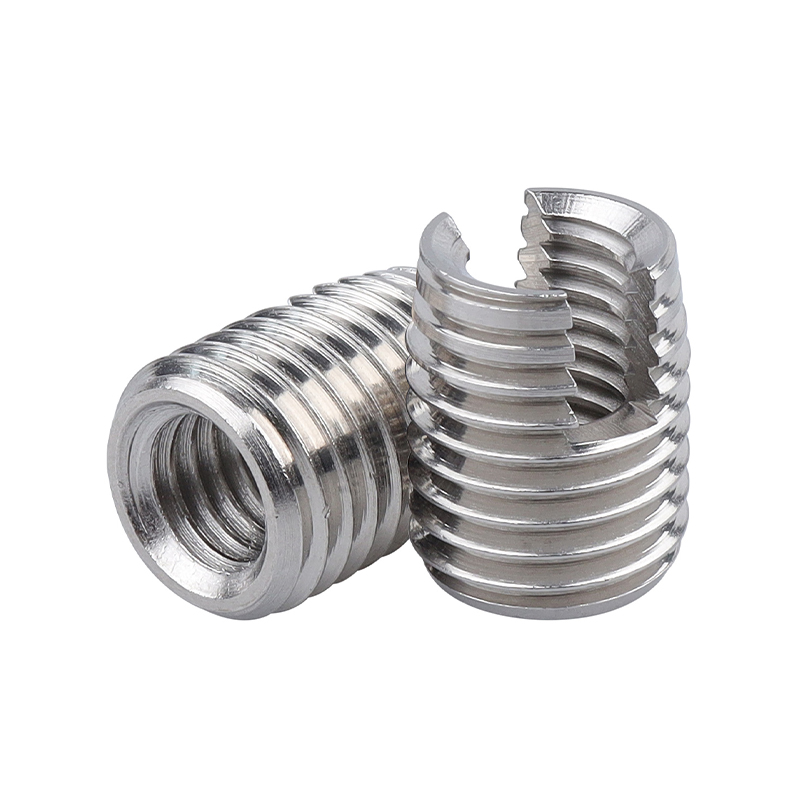 Stainless Steel Self-Tapping Thread InsertStainless steel self-tapping thread inserts are fasteners designed to strengthen threaded connections. Unlike standard inserts, they are made of stainless steel, provi...View Product →
For teams planning a new programme, the practical next step is a sample kit: one size in each of two or three candidate families, plus the matching tools, tested on your own casting. That test costs a few days and a small amount of material, and it removes almost all of the uncertainty that makes insert selection feel difficult in the first place.



