
 Français
 Español
 Deutsch

What Is an Oil Plug and Its Primary Function An oil plug (also known as an oil drain plug) is a threaded fastener that seals the drain port of an oil pan or reservoir. Its primary function is to prov...
READ MORE
Thread Tapping Tool Manufacturer
Thread Tap
The Thread Tap, also known as a thread insert tap, is a specialized cutting tool designed for machining oversized internal threads used for helical coil thread inserts. These high-precision taps create stronger and more durable threaded connections, ensuring balanced load distribution and effectively preventing thread stripping, thereby extending the service life of components across various industries. As a core tool for precision thread processing, STI taps are widely used in applications where thread reliability and durability are critical.
Applications:
Mechanical Manufacturing: For cutting internal threads in pilot holes before installing thread inserts.
Thread Repair & Reinforcement: Used in maintenance to repair worn or damaged threaded holes in equipment.
Precision Component Machining: Suitable for threading small parts in electronics, precision instruments, and other high-accuracy applications.
-
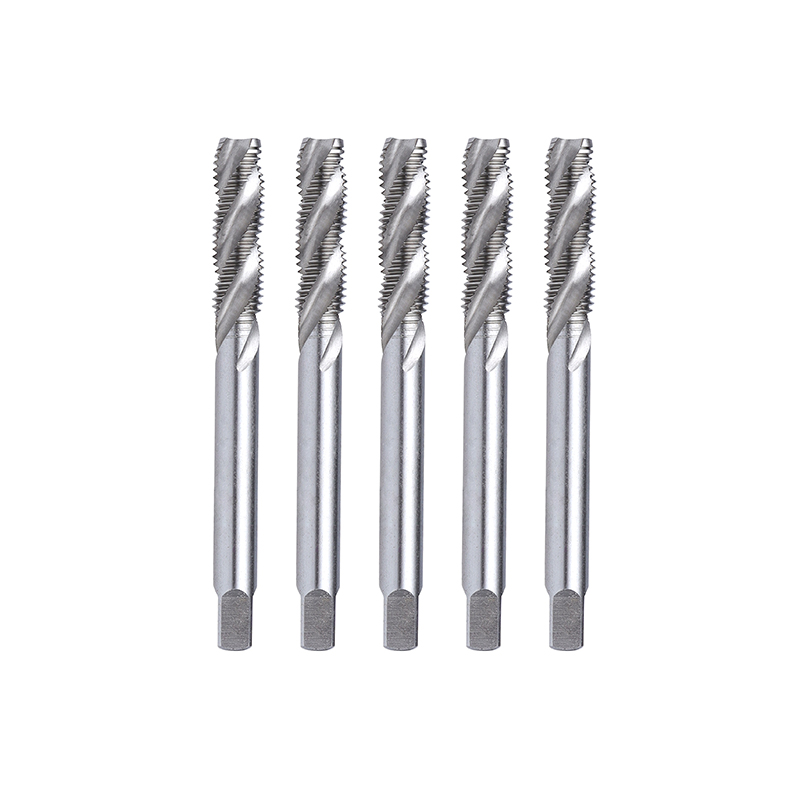 Spiral thread tap are designed for cutting deep internal threads. Unlike straight thread tap, spiral taps have helical g...
-
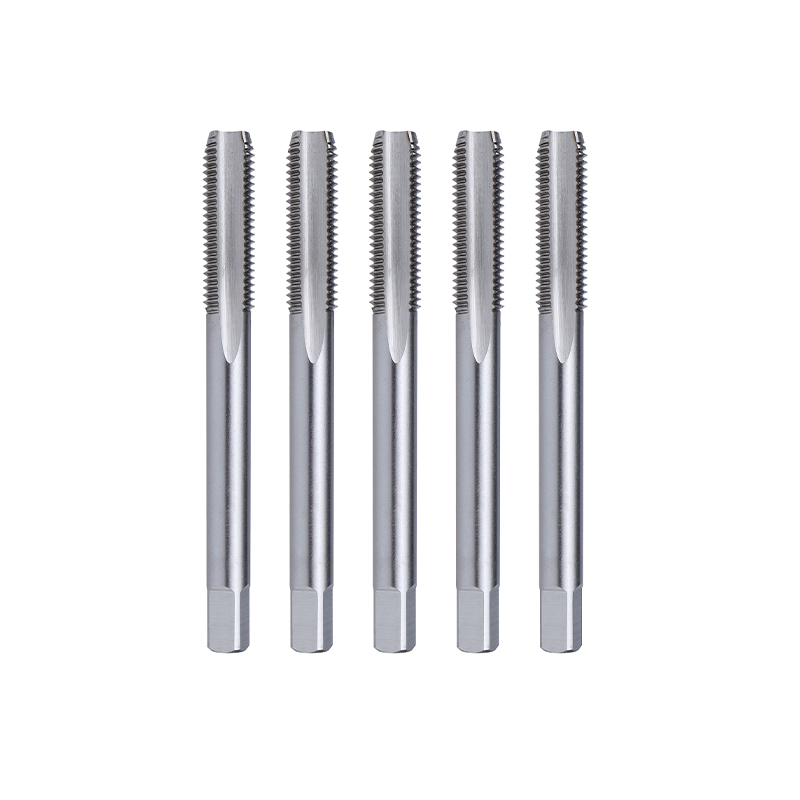 Straight thread tap are common internal thread cutting tools, mainly used for general-purpose thread machining. They are...
Company Profile

Dongtai Jinzhize Metal Products Co., Ltd.
As Thread Tapping Tool Manufacturer and Taper Tap Factory, Dongtai Jinzhize Metal Products Co., Ltd. is a specialized manufacturing facility dedicated to threaded connection products for the automotive and aerospace sectors. We primarily produce Helical Wire Inserts, Self-Tapping Inserts, Key Locking Inserts, Threaded Adapters, Oil Plugs, as well as matching installation taps and tools.
Established in 2015, the company operates from a 10,000-square-meter-owned manufacturing plant equipped with hundreds of machine tools and automated production systems. Through years of development, we have built an experienced team of design, development, and production specialists, complemented by a rigorous quality management system and comprehensive after-sales service mechanism.
Our products are widely utilized in the automotive industry (including engines and transmissions for both passenger and commercial vehicles), the aerospace industry, and rail vehicle manufacturing.
With an annual output value of 153 million RMB in 2024, we possess the capability for a large-scale, stable supply. We are committed to providing customers with highly consistent, traceable products and reliable service support.
News
-
-
What Is a Thread Tap? A thread tap is a specialized cutting tool designed to create internal threads within pre-drilled holes. It functions by removing material (cutting taps) or displacing material ...
READ MORE -
A wire thread insert is a helically coiled fastening device made from high-tensile stainless steel wire (typically Type 304 or 316) with a diamond-shaped cross-section. It is inserted into a pre-tapp...
READ MORE -
In the era of high-precision industrial manufacturing, the reliability and durability of threaded connections have become a key factor affecting the performance and safety of equipment. Recently, thr...
READ MORE -
In the era of high-precision industrial manufacturing, the reliability and durability of threaded connections have become a key factor affecting the performance and safety of equipment. Recently, thre...
READ MORE
Related Products
-
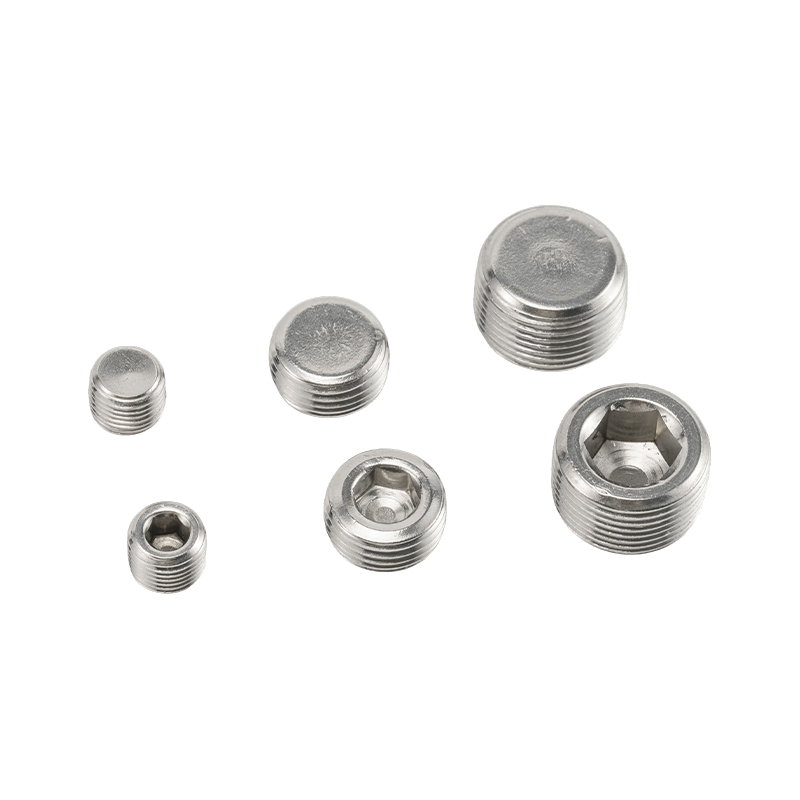
The Straight Thread Plug (Hex Socket Plug) is a high-performance sealing solution engineered for precision closure in industrial piping, reservoirs, and mechanical equipm...
-
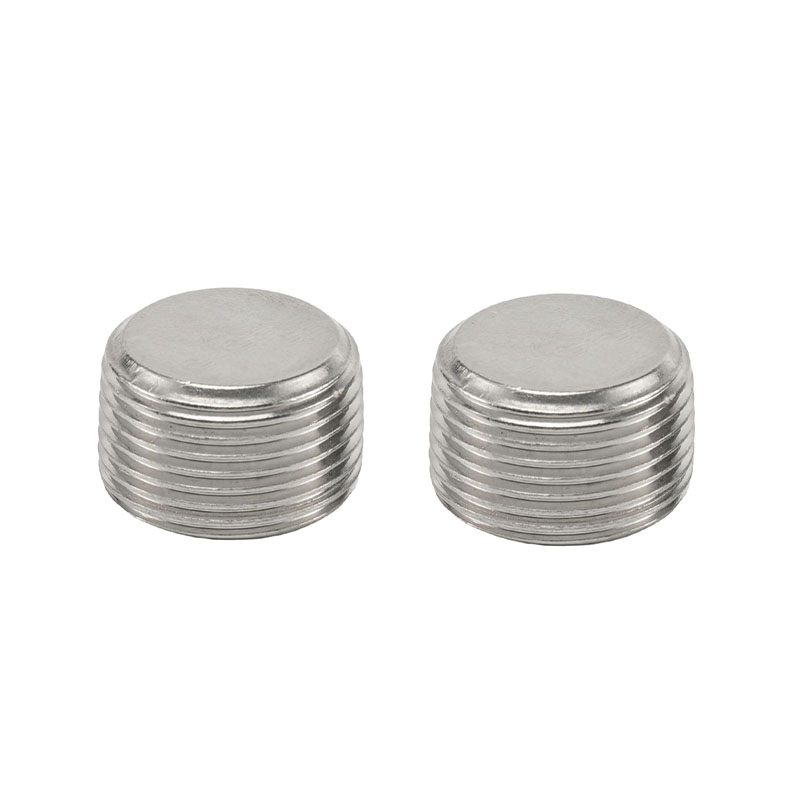
In the field of piping prefabrication and installation, precise port closure and testing are of paramount importance. The Tapered Plug is a specialized pipe fitting desig...
-
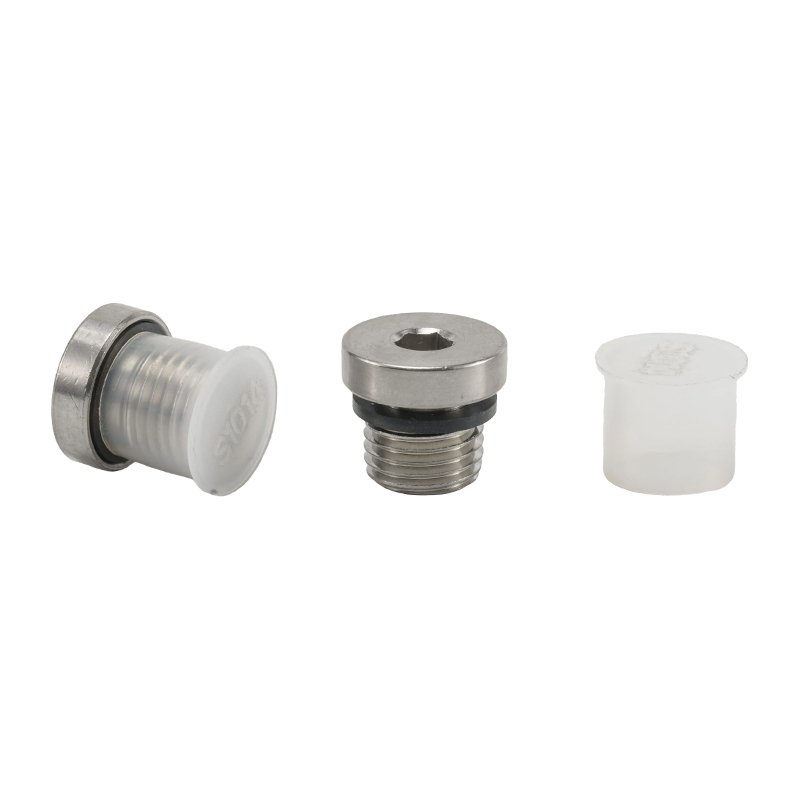
In applications such as pipeline termination, pressure testing, or equipment maintenance, there is a critical need for a sealing component that is structurally robust, re...
-
Spiral thread tap are designed for cutting deep internal threads. Unlike straight thread tap, spiral taps have helical grooves that efficiently remove chips during machin...

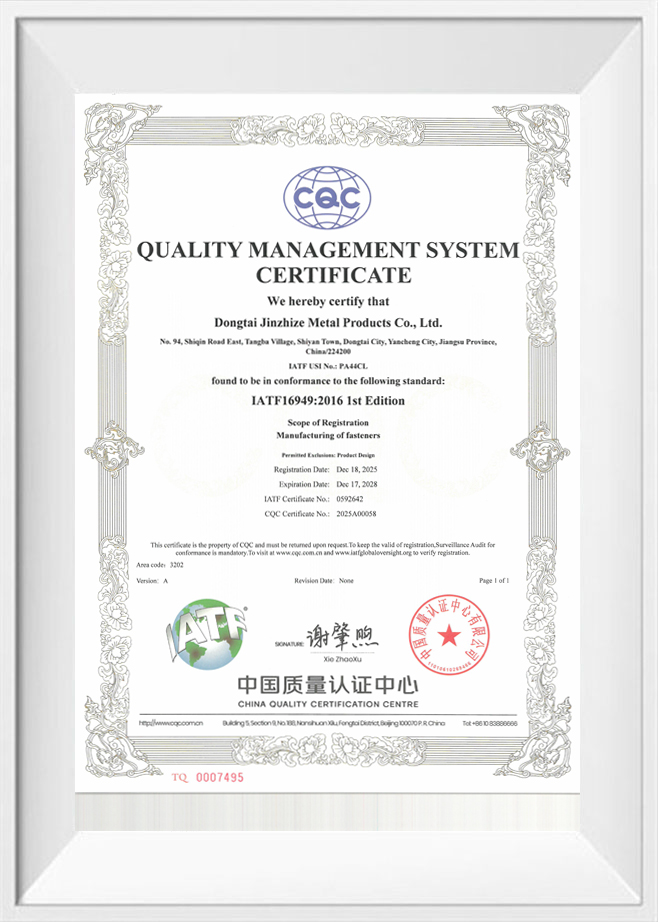
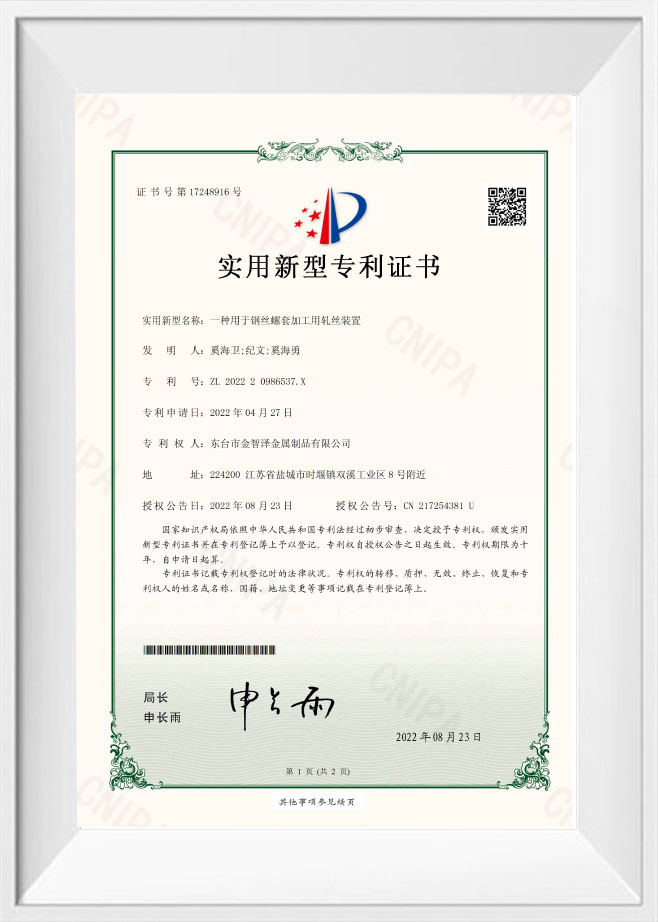
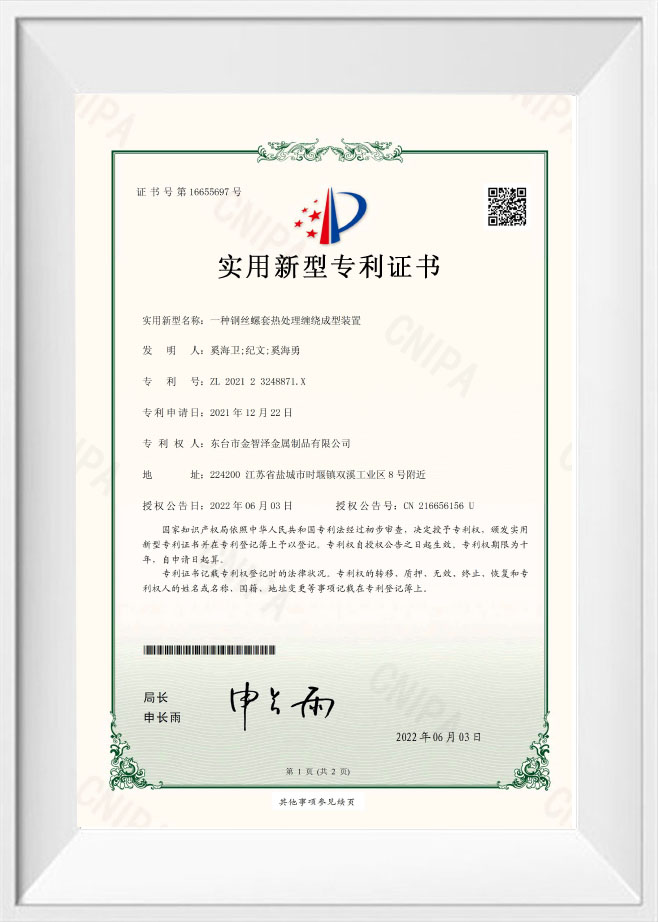
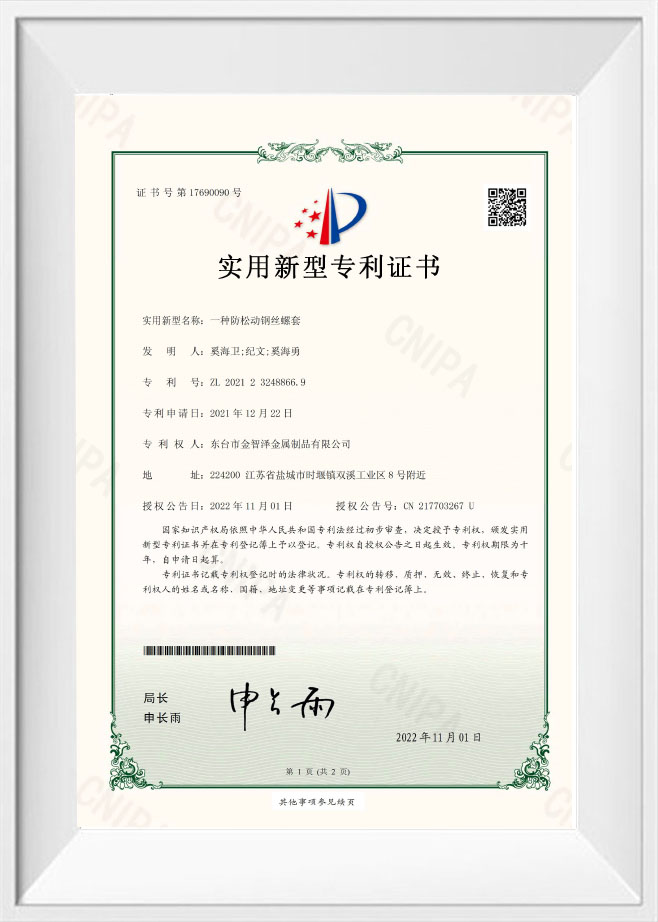
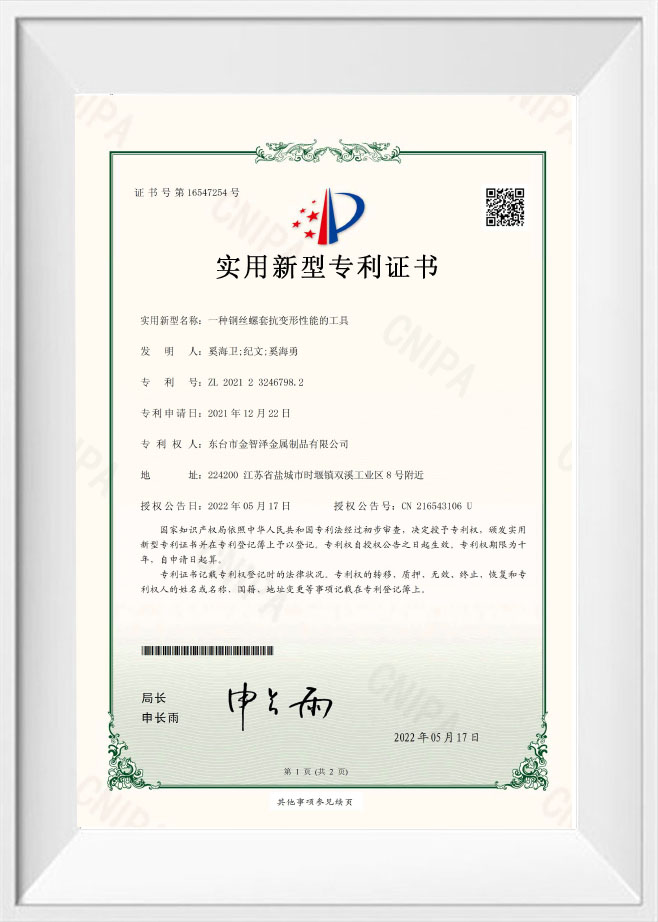
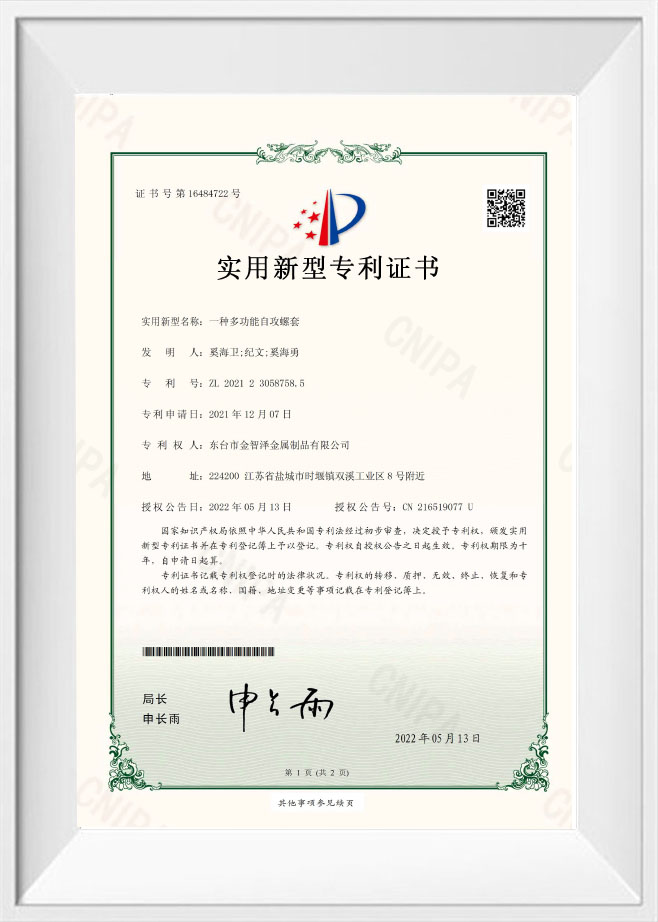
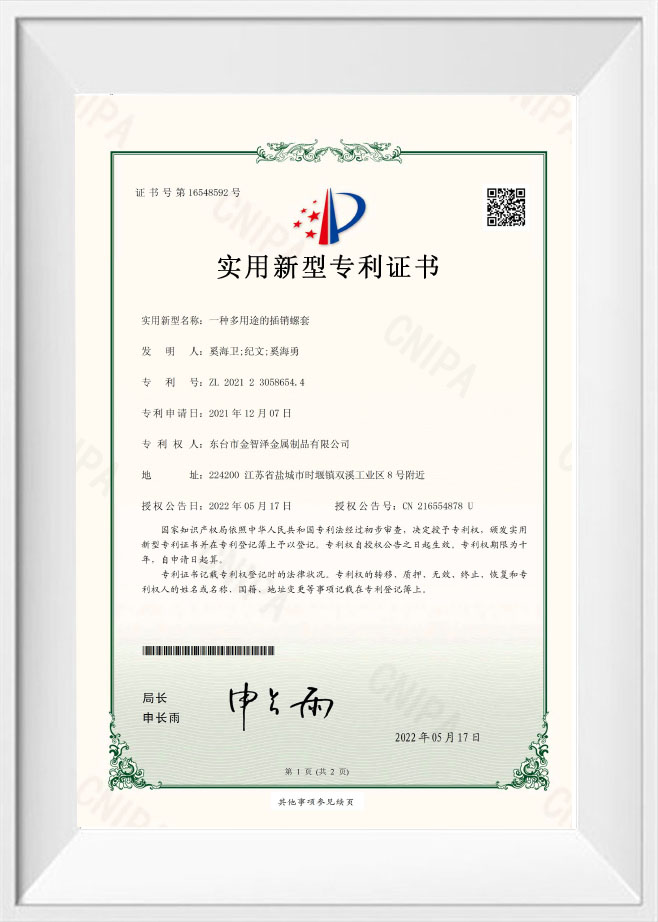
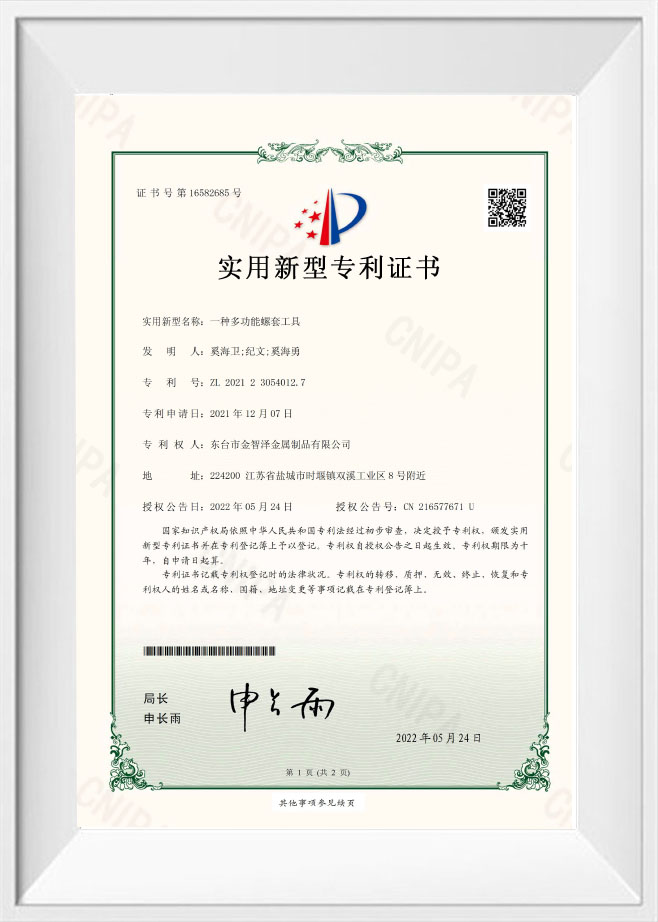
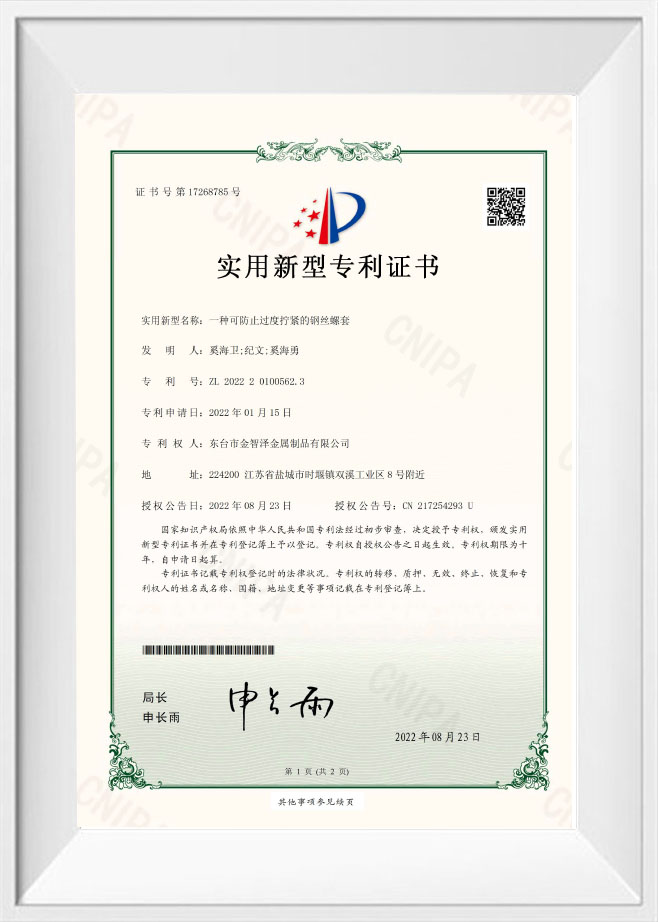
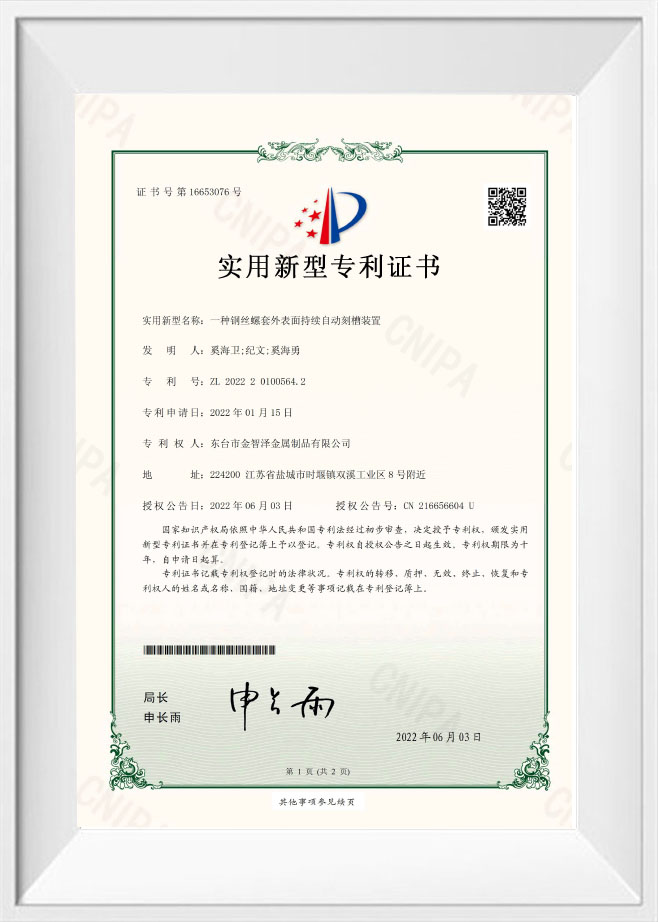
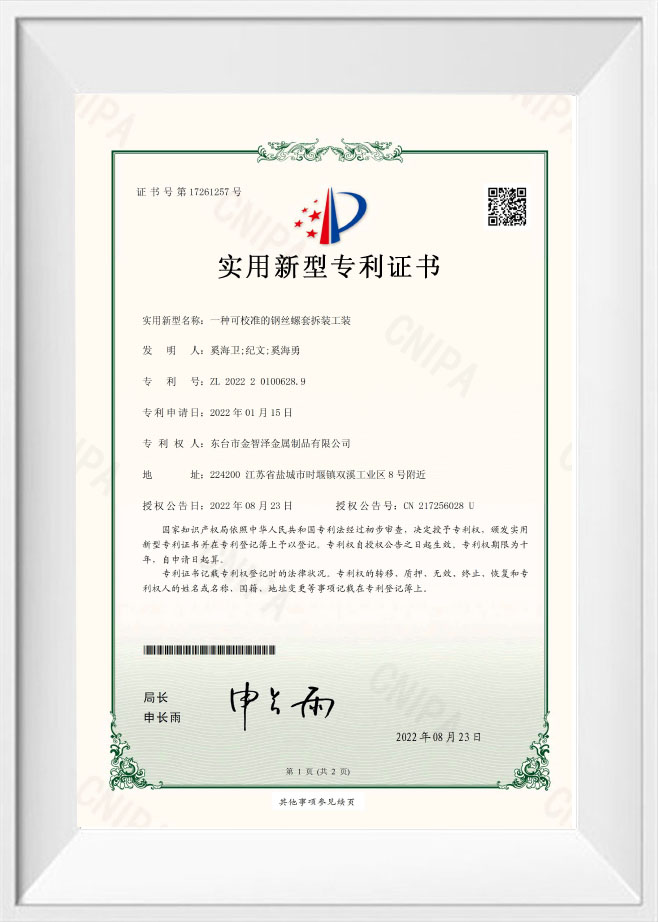
Certificate Of Honor

Thread Tap Industry knowledge
Differences and Applications of Taper Taps and Bottling Taps
In precision thread machining, taper taps and botting taps are two key types of pre-threading tools. Although both are used for cutting internal threads, they differ fundamentally in structural design and application scenarios.
1. Structural Design and Cutting Characteristics
Taper Tap
Features: The tip of the tap is a long cone (typically 7-10 teeth taper), with the cutting groove gradually increasing in size from the tip.
Function: The tapered tip is designed to "guide" the tap into the hole, effectively removing chips and reducing cutting resistance at startup, preventing the tip from breaking due to excessive force upon initial contact.
2. Botting Tap
Features: The tip of the tap is essentially flat, retaining only a very short tip angle.
Function: This design is intended to "punch to the bottom," used to complete the cutting of the entire thread at the bottom of blind or shallow holes, ensuring the thread penetrates to the bottom of the hole without leaving any uncut residual threads.
3. Comparison of Applicable Scenarios
Taper Tap: Suitable for:
Through-Hole Initial Machining: After drilling the pilot hole, use a tapered tap to open the thread entry point and establish a stable thread path.
Deep Hole Machining: Its spiral point design is ideal for long-distance chip removal, preventing chip jamming.
Blind Hole Guiding: Used for pre-tapping blind holes, utilizing the tapered tip to ensure smooth tap entry.
Bottoming Tap: Suitable for:
Bottoming Blind Hole: In blind hole machining, when a tapered tap or intermediate tap cannot reach the bottom of the hole, use a bottoming tap to punch to the bottom, ensuring the thread penetrates the entire hole diameter.
Shallow Hole Full Thread: Used in situations where the hole depth is shallow and precise thread termination is required.
| Table 1: Structural Differences and Application Scenarios Between Taper Tap and Bottoming Tap | ||
| Attribute | Taper Tap | Bottoming Tap |
| Tip Structure | Features a long conical tip (typically 7-10 threads in length) to guide the tap smoothly into the hole. | Has a nearly flat tip with only a minimal cutting angle, designed to reach the bottom of blind holes. |
| Main Function | Used to open the thread entry, reduce starting resistance, and prevent breakage; suitable for long-distance chip evacuation. | Used in blind hole machining to ensure threads extend to the bottom, preventing residual uncut threads. |
| Applicable Scenarios | Initial machining of through holes, deep hole chip evacuation, and blind hole guidance. | Blind hole bottoming, full-depth threading in shallow holes. |
Choosing Between Taper Taps and Insert Taps
Thread insert taps are typically used for machining excessively large internal threads (such as taps for inserting helical coils). Their main function is to provide greater space and mechanical strength for the insert.
In practical applications, taper taps and insert taps are not direct substitutes, but rather two components used in conjunction, especially when using STI taper taps. The following is a detailed explanation of usage scenarios:
1. When to Prefer Taper Taps?
Initial Tapping: When you need to cut the first thread in a pre-drilled pilot hole, a taper tap must be used. Its tapered tip smoothly guides the tool into the hole, establishing the initial thread profile.
Long Holes or Blind Holes: If the hole is deep or blind, a taper tap can effectively remove chips, prevent chip jamming, and ensure smooth thread cutting.
2. When is an Insert Tap Needed?
Machining Extra-Large Threads: When a threaded hole needs to accommodate a helical coil insert (such as a reinforced thread in aerospace or high-end mechanical components), ordinary taps cannot cut a sufficiently large thread. In this case, a specially designed insert tap (such as an STI tap) is required. Its thread angle and tooth profile are specially designed to ensure the insert is securely locked in the thread, providing uniform stress distribution and preventing stripping.
3. Actual Machining Flow
In actual production, these two processes are often used consecutively:
First, use a tapered tap to open the thread entry (initial tapping).
Use an intermediate tap (Plug Tap) to continue cutting downwards, forming most of the thread.
Use a bottoming tap to punch to the bottom of the hole, ensuring the thread is complete.
Use an insert tap (such as an STI tap) to machine the final extra-large thread, preparing it for the helical coil insert.
| Table 2: When to Choose Taper Tap Over Insert Tap (Thread Insert Tap) | ||
| Usage Scenario | Why Choose Taper Tap | Why Choose Insert Tap |
| Initial Thread Cutting | After drilling a pilot hole, a Taper Tap is used to open the thread entry and establish the initial profile. | Not suitable for the initial stage; primarily used for forming oversized threads. |
| Deep or Blind Holes | The conical tip and chip evacuation design prevent clogging, ensuring smooth machining. | Not suitable for the initial deep hole machining; typically used later for forming oversized threads. |
| Machining Oversized Threads | A Taper Tap cannot cut threads large enough for certain inserts. | Specifically designed to machine oversized internal threads required for helical coil inserts, ensuring strength and durability. |
Core Competencies of Dongtai Jinzhize Metal Products Co., Ltd.
In the field of thread processing, Dongtai Jinzhize Metal Products Co., Ltd. is a professional manufacturer specializing in providing high-precision threaded connection products for the automotive and aerospace industries. Its core advantages in the research and development, and production of tapered taps and insert taps are as follows:
1. Comprehensive Product Matrix
The company not only produces tapered taps, but also possesses a complete line of supporting tools and thread products:
Taper Taps: Used for precision initial tapping and deep hole machining, ensuring smooth tapping processes.
Insert Taps (STI Taps): Specifically designed for machining excessively large internal threads (such as helical wire inserts in aerospace components), providing stronger locking strength and durability.
Helical Wire Inserts: Used in conjunction with STI taps to ensure long-term reliability of threaded connections.
2. High Precision and High Quality
High-Precision Machining: The company's STI tapered taps utilize high-precision cutting technology, enabling the machining of threads conforming to international standards on high-strength materials (such as aerospace aluminum alloys and titanium alloys), ensuring the reliability of threaded connections.
Load Balancing: Through special tooth profile design (such as STI threads), uniform stress distribution is achieved, preventing thread stripping and deformation, significantly extending the service life of components.
3. Strong Production and Service Capabilities
Large-Scale Production: With a 10,000-square-meter self-owned manufacturing plant equipped with hundreds of machine tools and automated production systems, the company can stably supply high-precision taps in large quantities.
Wide Industry Applications: Its products are widely used in key components in automotive engines, transmissions, and aerospace fields, meeting stringent quality standards.
| Table 3: Core Competitiveness of Dongtai Jinzhize Metal Products Co., Ltd. | |
| Core Element | Detailed Description |
| Product Portfolio | In addition to providing high-precision Taper Taps, the company offers specialized STI Thread Insert Taps and helical coil inserts for aerospace components. |
| Technical Expertise | Focuses on high load-balanced thread designs, especially STI threads, which achieve uniform stress distribution and significantly prevent stripping and deformation. |
| Production Scale | Possesses a 10,000-square-meter proprietary factory equipped with hundreds of machine tools and automated production lines, enabling a large-scale, stable supply. |
| Industry Position | Products are widely used in automotive engines, transmissions, and critical aerospace components, with an annual output value of 15.3 billion RMB and a rigorous quality management system. |
FAQ
Q: What are the main functions of Thread Tap?
A: Thread Tap provides several core modules:
Product Finder: Helps users quickly locate the corresponding tap or thread plug gauge based on thread specifications.
Hole Size Calculator: Quickly calculates drilling dimensions or thread diameter.
Thread Designer: Supports thread geometry visualization and numerical analysis (including number of threads, pitch, etc.), allowing viewing of symbol geometry or numerical displays.
Engineering Data: Provides detailed application notes, engineering drawings, and technical documents.
Q: How to perform thread calculations using Thread Tap?
A: Users can operate by following these steps:
Select Calculation Tool: Enter the "Hole Size Calculator" or "Thread Designer" module.
Input Parameters: Enter the thread standard (e.g., M 1/2-13, M 5-6, UNC/UNF) and the required accuracy class (e.g., 2H, 3H).
View Results: The application instantly displays the recommended drilling dimensions, thread cutting diameter, or optimal parameters for thread repair.
Q: Which thread standards does Thread Tap support?
A: The application has a built-in library of extensive thread standards, including but not limited to:
Metric threads: such as M 1/2-13, M 5-6.
Imperial threads (UN/UNC/UNF): such as 1/2-13, UNC, UNF.
Fine threads: such as MF (Metric fine-pitch thread).
Q: Does Thread Tap provide product images and engineering drawings?
A: Yes. The platform not only provides technical data but also integrates product images, drawings, and application notes. Users can...
Let's Talk Affiliate Marketing
-
ADDRESS
No. 94, Shiqin Road East, Tangba Village, Shiyan Town, Dongtai City, China E-mail : [email protected] Tel : +86-15061682958 -
QUICKLINKS
-
POPULAR PRODUCT
Self-tapping Thread Insert Internal-external Thread Conversion Nut Wire Thread Insert Three-hole threaded insert Key-locking Insert Oil plug Installation tools Thread Tap -
MEDIA
Copyright © Dongtai Jinzhize Metal Products Co., Ltd. All Rights Reserved.
 Wholesale Spiral Flute Tap Manufacturer
Wholesale Spiral Flute Tap Manufacturer