
 Français
 Español
 Deutsch

What Is an Oil Plug and Its Primary Function An oil plug (also known as an oil drain plug) is a threaded fastener that seals the drain port of an oil pan or reservoir. Its primary function is to prov...
READ MORE
Stainless Steel Wire Thread Insert Manufacturer
Wire Thread Insert
Threaded wire inserts are precision-embedded fasteners designed to repair, reinforce, or enhance thread strength. They are made from high-strength, high-elasticity cold-rolled stainless steel wire, accurately coiled into a diamond-shaped cross-section. When installed into pre-tapped holes in the base material, they form durable, wear-resistant standard internal threads.
These inserts are mainly used in low-strength materials such as aluminum, magnesium alloys, plastics, and wood, or for repairing damaged threads in cast iron and steel components. They significantly improve the load-bearing capacity, fatigue resistance, and wear resistance of threaded connections while ensuring thread standardization and interchangeability.
Applications
Threaded wire inserts are widely applied in industries requiring high-precision and highly reliable threaded connections, including:
Automotive: Engine components, chassis parts, and structural assemblies requiring strong, durable threads.
Aerospace: Lightweight alloy parts that need high-strength and fatigue-resistant threads.
Marine: Corrosion-resistant threaded connections for shipbuilding and marine equipment.
Precision Machinery: Critical components in machines and molds requiring long-lasting threaded connections.
Electronics: Plastic or metal housings in electronic devices where secure thread reliability is essential.
-
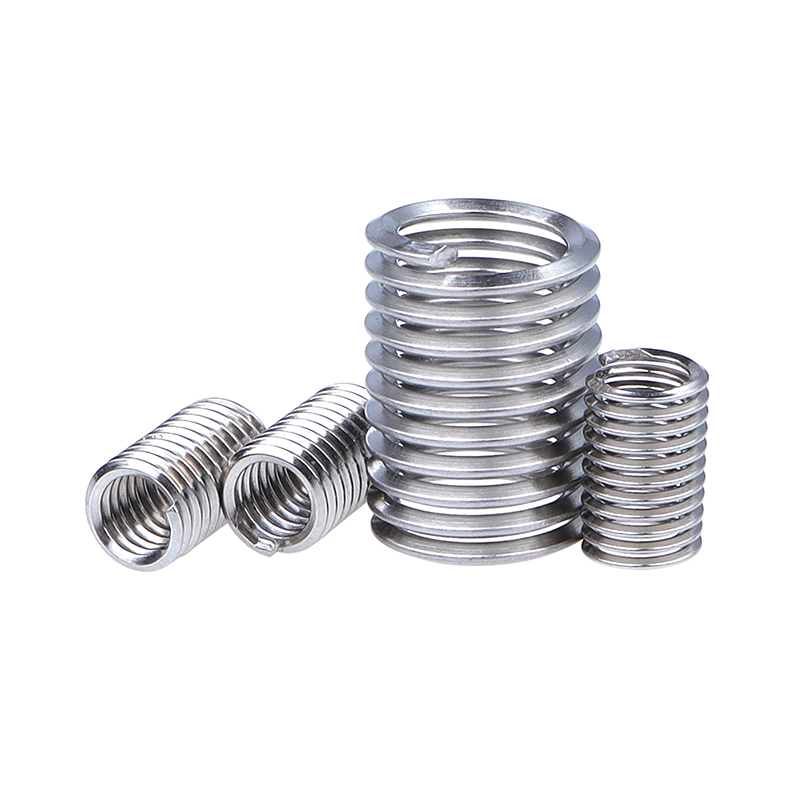 Tangless wire thread insert, also known as "steel wire screw sleeve without mounting handle", is a type of steel wire sc...
-
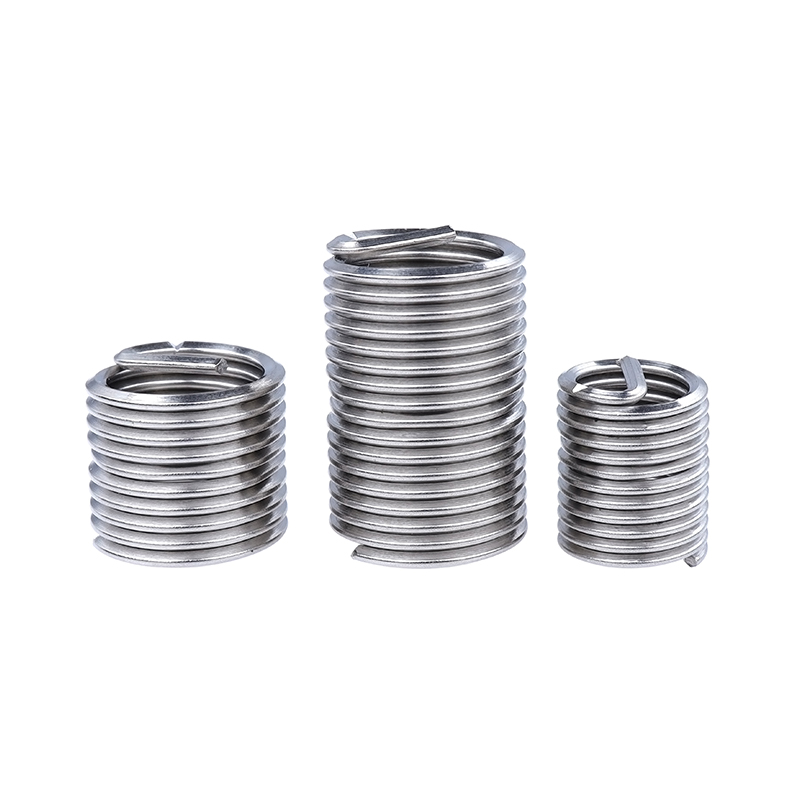 Screw-Lock Insert is a threaded insert with anti-loosening functionality. Compared to standard inserts, it features a se...
-
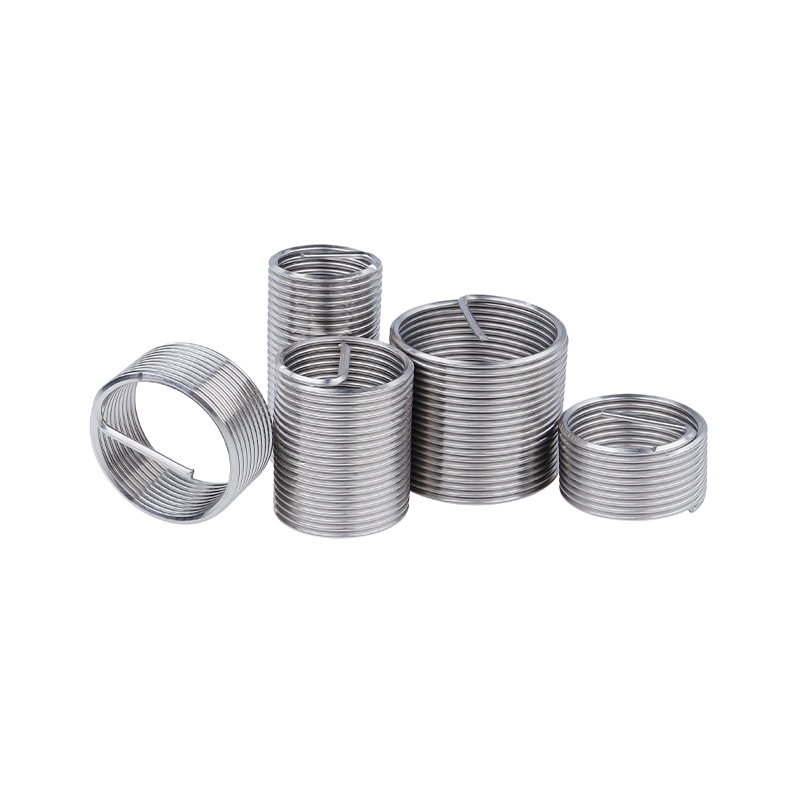 Fine Pitch Wire Thread Insert is a wire thread insert with a fine-pitch thread design. Compared with coarse-pitch wire t...
Company Profile

Dongtai Jinzhize Metal Products Co., Ltd.
As Wire Thread Insert Manufacturers and Wire Thread Insert Factory, Dongtai Jinzhize Metal Products Co., Ltd. is a specialized manufacturing facility dedicated to threaded connection products for the automotive and aerospace sectors. We primarily produce Helical Wire Inserts, Self-Tapping Inserts, Key Locking Inserts, Threaded Adapters, Oil Plugs, as well as matching installation taps and tools.
Established in 2015, the company operates from a 10,000-square-meter-owned manufacturing plant equipped with hundreds of machine tools and automated production systems. Through years of development, we have built an experienced team of design, development, and production specialists, complemented by a rigorous quality management system and comprehensive after-sales service mechanism.
Our products are widely utilized in the automotive industry (including engines and transmissions for both passenger and commercial vehicles), the aerospace industry, and rail vehicle manufacturing.
With an annual output value of 153 million RMB in 2024, we possess the capability for a large-scale, stable supply. We are committed to providing customers with highly consistent, traceable products and reliable service support.
News
-
-
What Is a Thread Tap? A thread tap is a specialized cutting tool designed to create internal threads within pre-drilled holes. It functions by removing material (cutting taps) or displacing material ...
READ MORE -
A wire thread insert is a helically coiled fastening device made from high-tensile stainless steel wire (typically Type 304 or 316) with a diamond-shaped cross-section. It is inserted into a pre-tapp...
READ MORE -
In the era of high-precision industrial manufacturing, the reliability and durability of threaded connections have become a key factor affecting the performance and safety of equipment. Recently, thr...
READ MORE -
In the era of high-precision industrial manufacturing, the reliability and durability of threaded connections have become a key factor affecting the performance and safety of equipment. Recently, thre...
READ MORE
Related Products
-
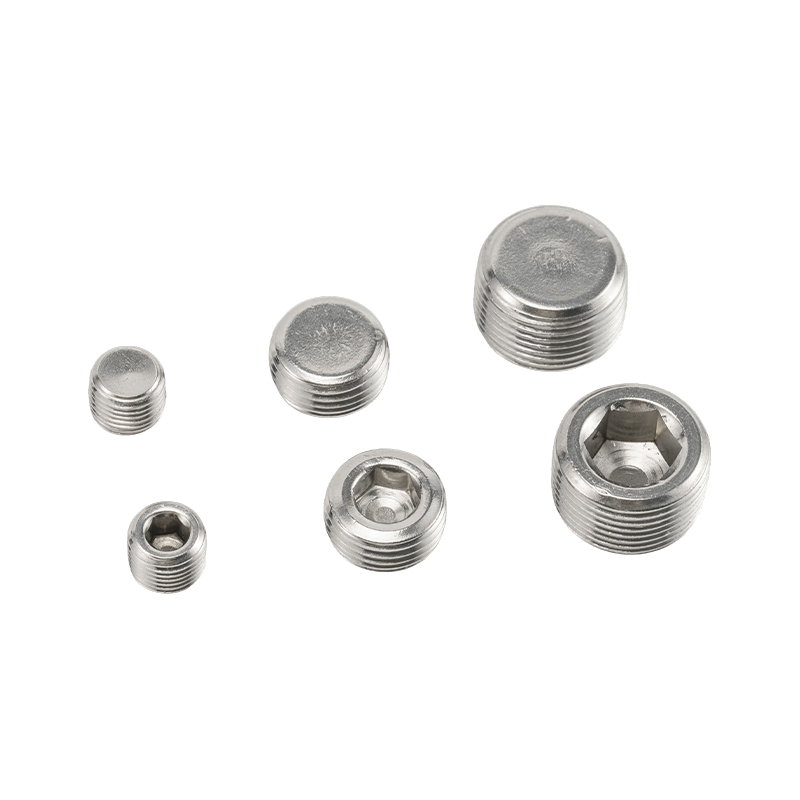
The Straight Thread Plug (Hex Socket Plug) is a high-performance sealing solution engineered for precision closure in industrial piping, reservoirs, and mechanical equipm...
-
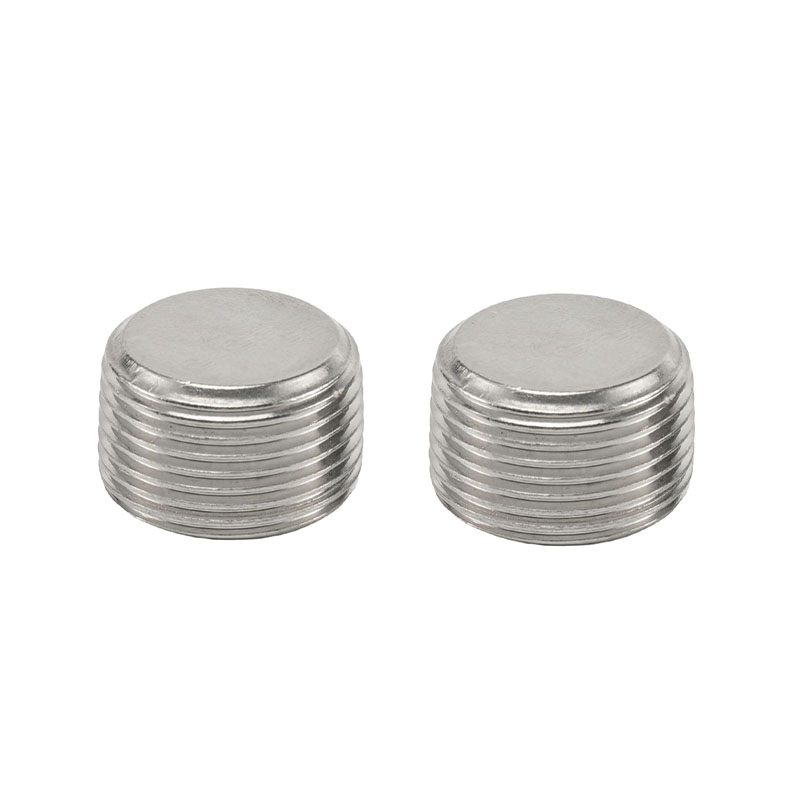
In the field of piping prefabrication and installation, precise port closure and testing are of paramount importance. The Tapered Plug is a specialized pipe fitting desig...
-
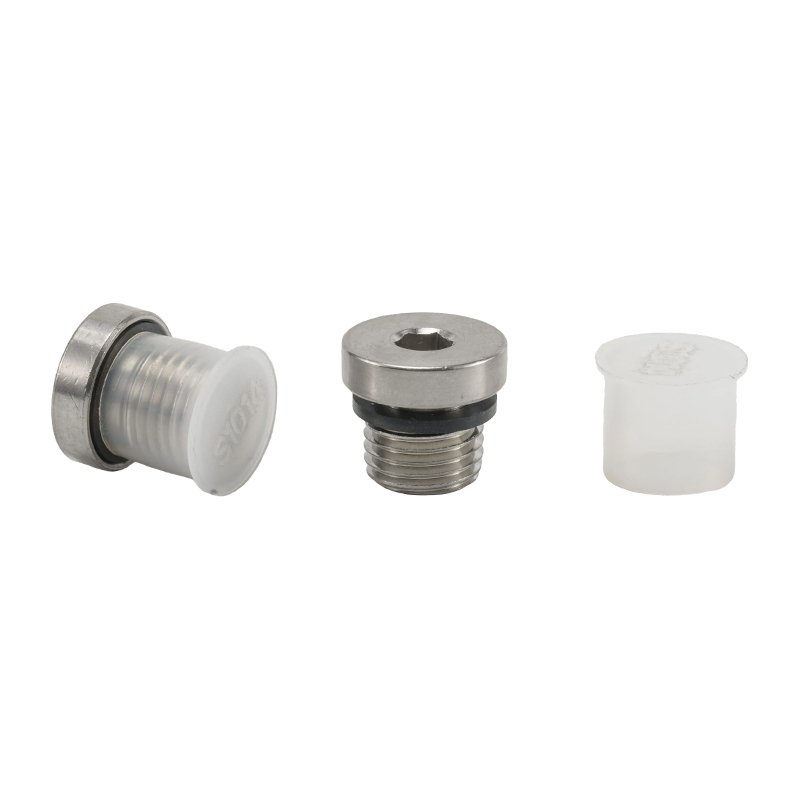
In applications such as pipeline termination, pressure testing, or equipment maintenance, there is a critical need for a sealing component that is structurally robust, re...
-
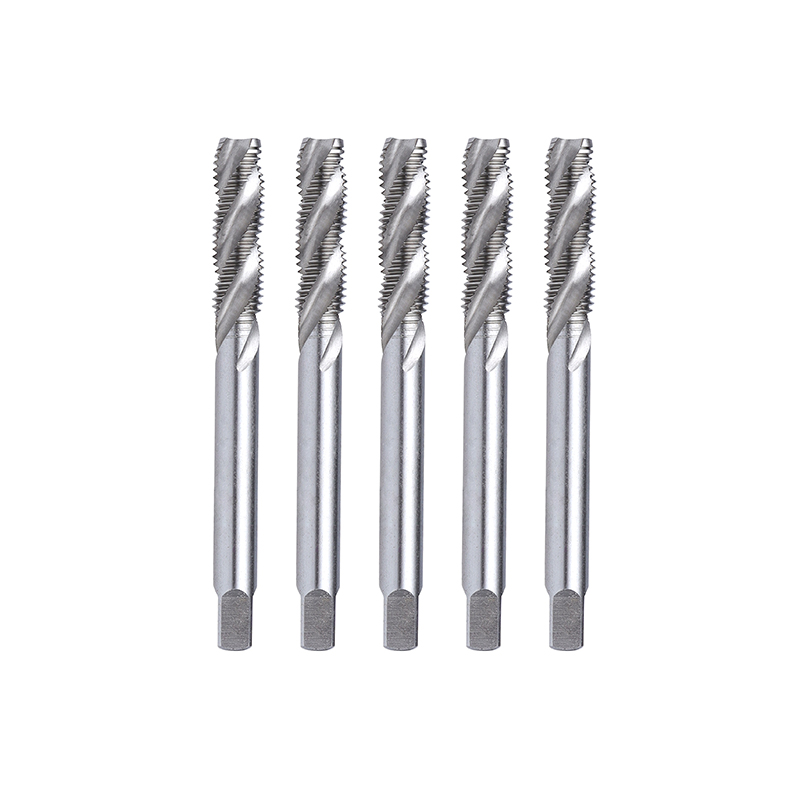
Spiral thread tap are designed for cutting deep internal threads. Unlike straight thread tap, spiral taps have helical grooves that efficiently remove chips during machin...

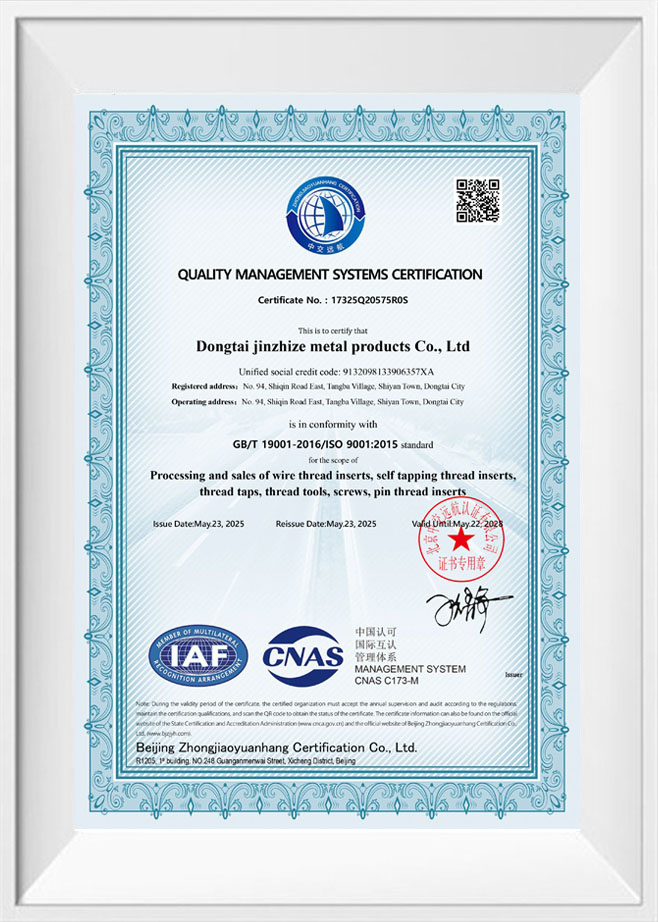
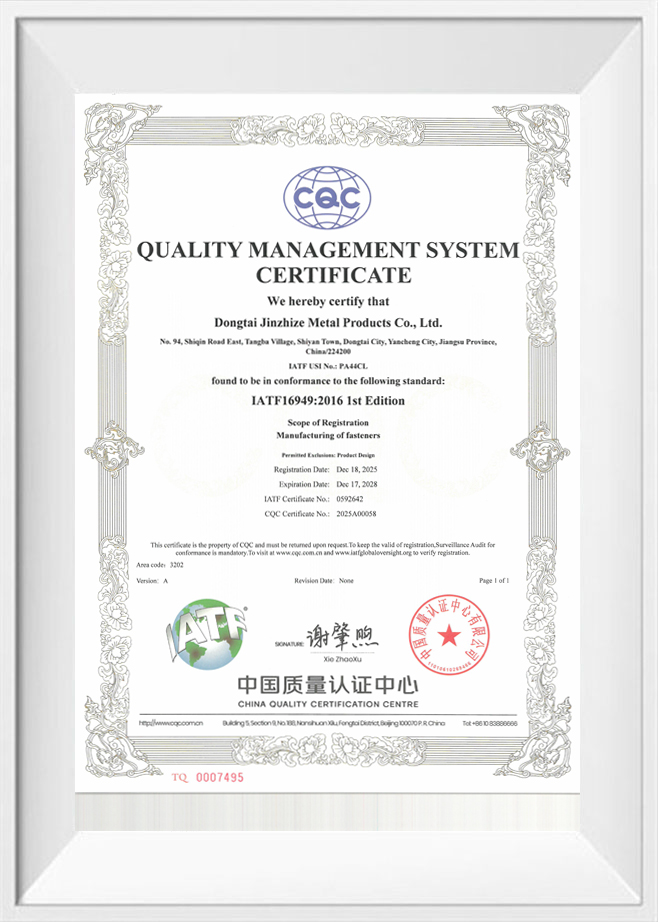
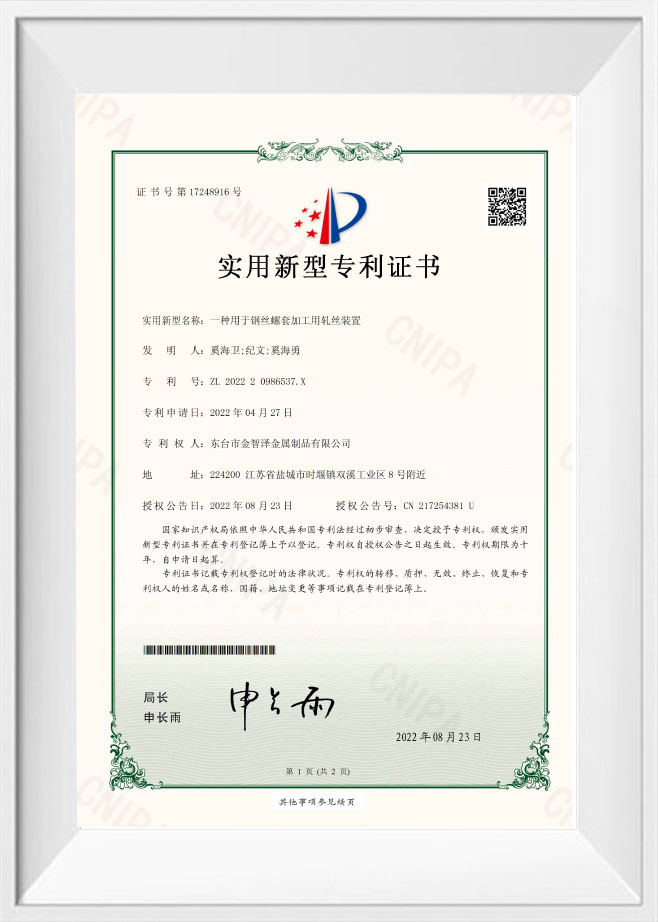
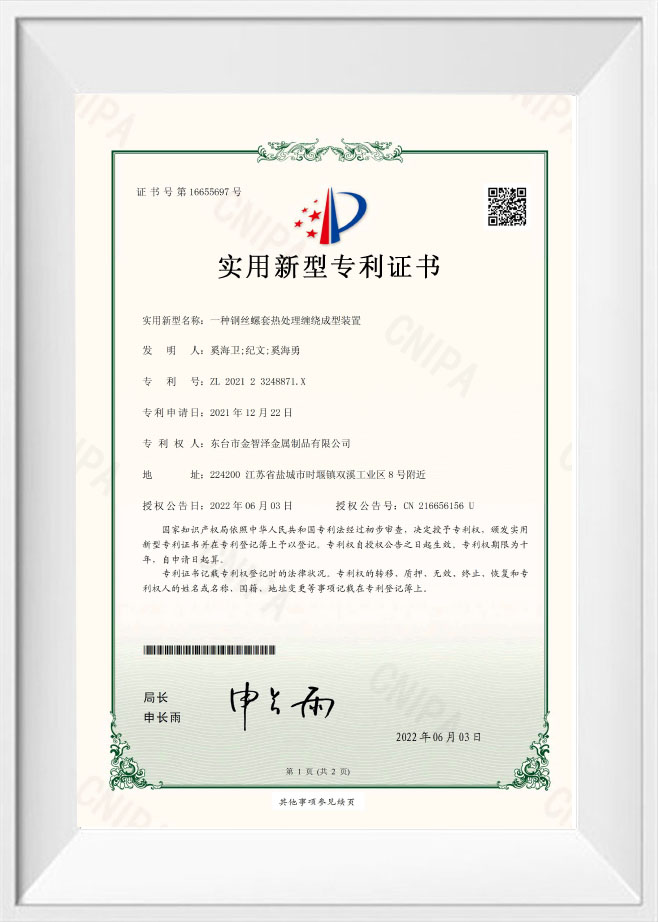
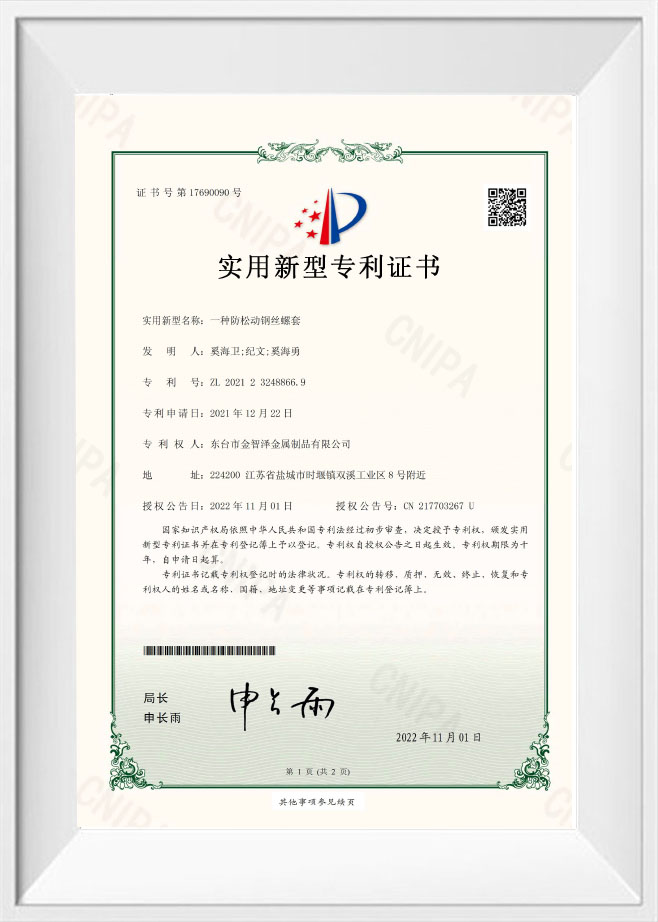
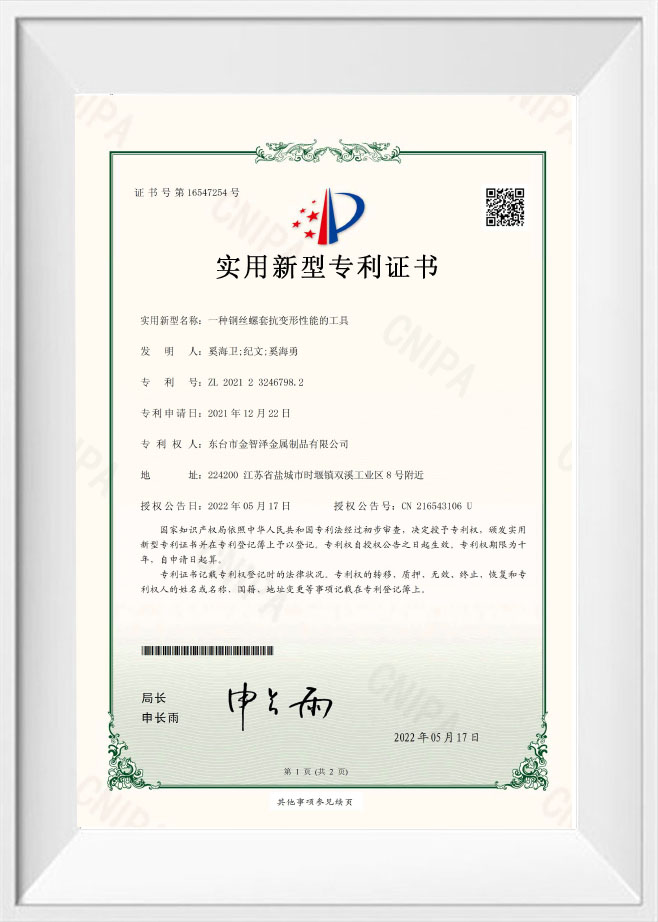
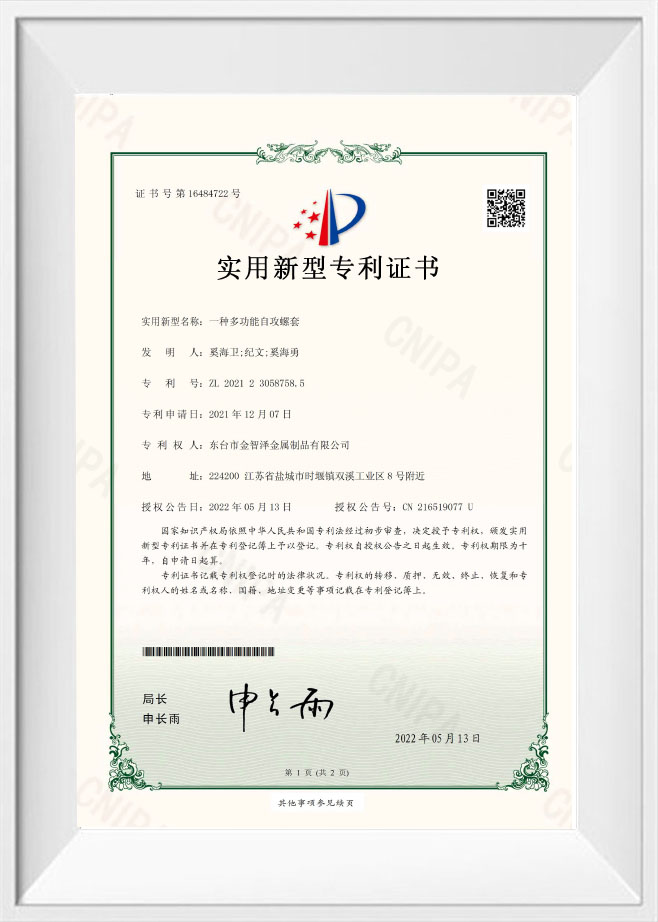
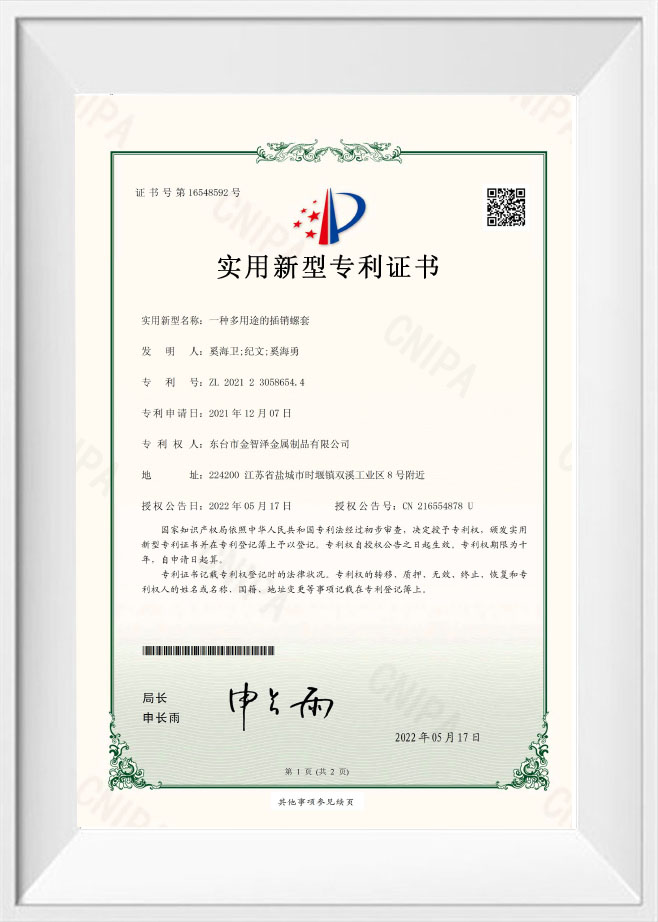
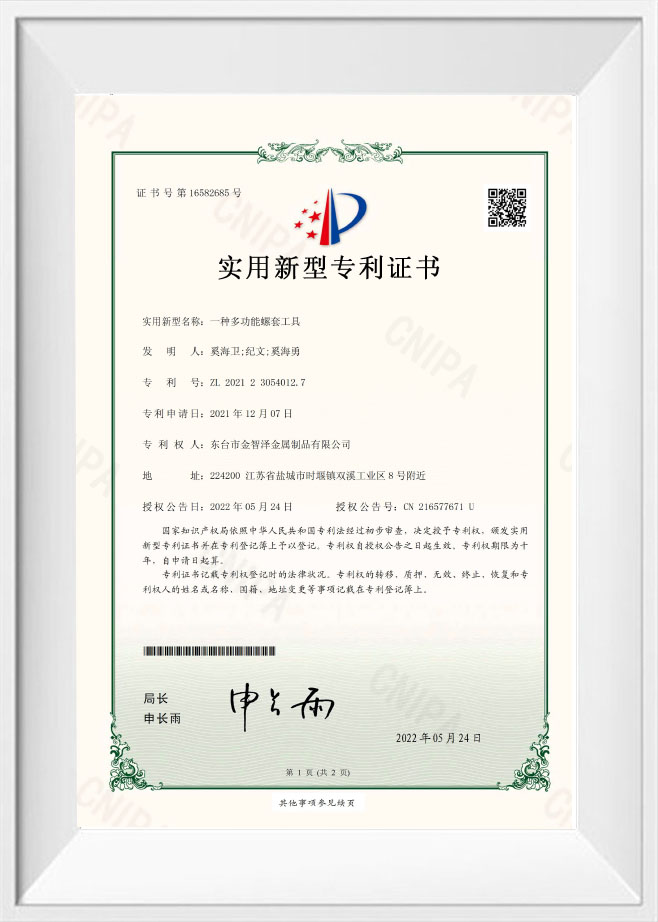
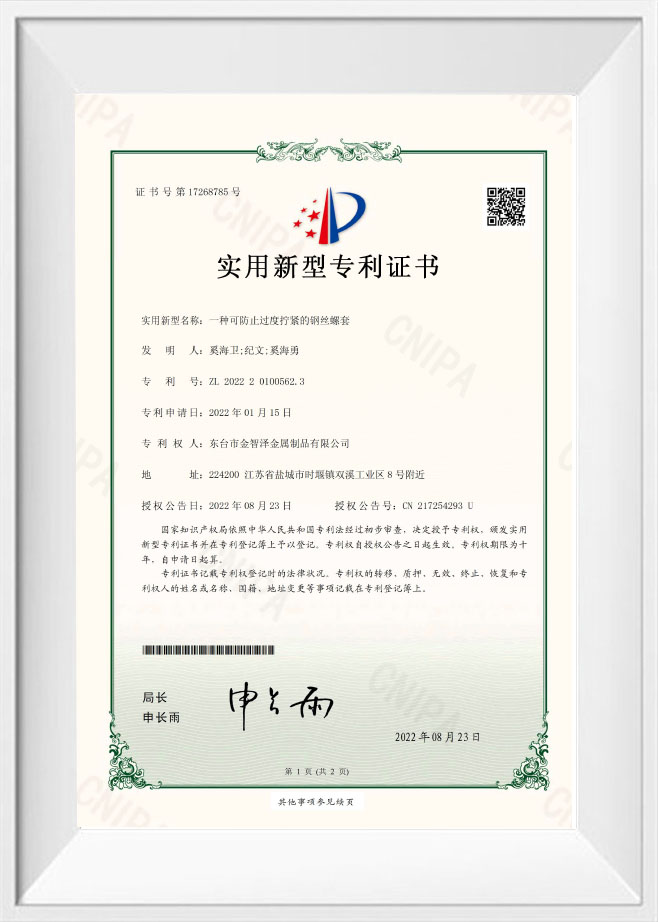
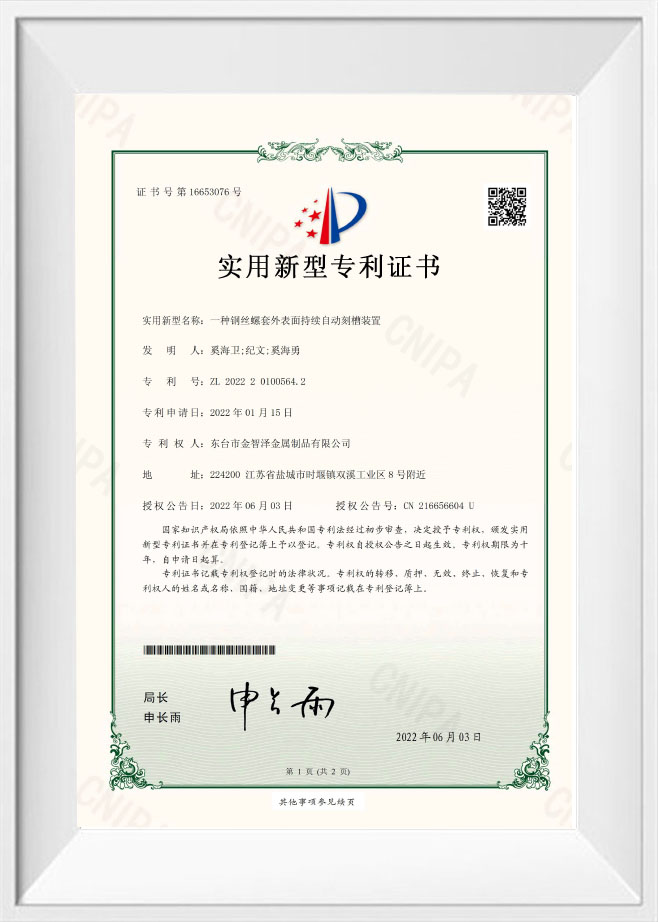
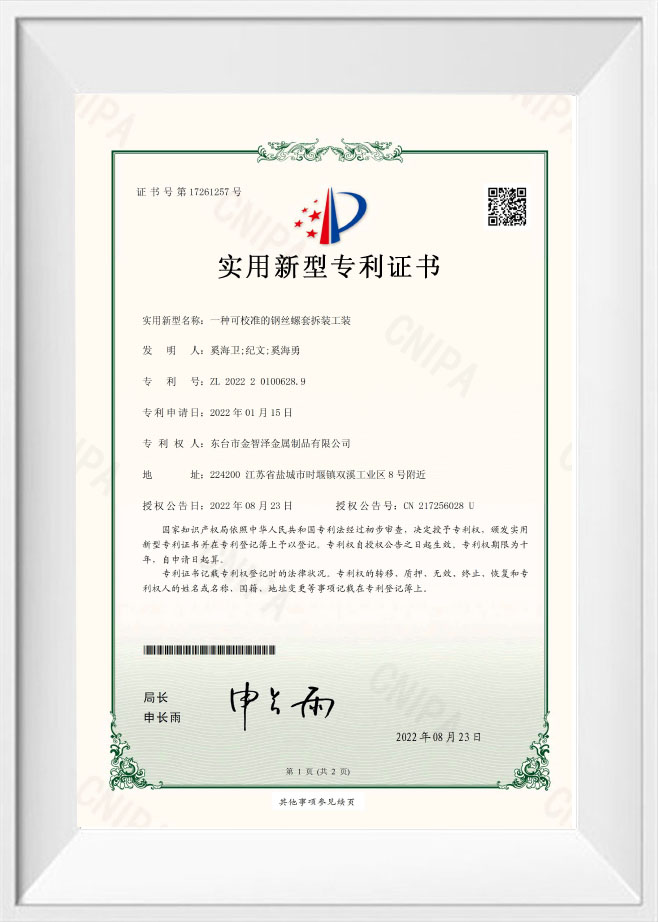
Certificate Of Honor
Wire Thread Insert Industry knowledge
How effective are the vibration resistance features of BS threaded inserts?
BS threaded inserts inherently possess excellent vibration resistance due to their design and material selection:
1. Flexible Structural Design: BS threaded inserts typically employ a cold-rolled steel wire coil structure with a diamond cross-section. This helical spring-like structure inherently possesses extremely high elasticity and vibration absorption capacity. Even if the base material (such as aluminum alloy or low-strength metal) undergoes minor deformation due to external vibration, the metal wire inside the threaded insert maintains a strain state, ensuring that the internal threads always remain in a standard fit, preventing loosening caused by vibration.
2. Anti-Loosening Design: For BS standard self-locking inserts (such as Key Locking Inserts), their internal "key locking" structure forms a mechanical lock at the threaded connection, eliminating the risk of thread slippage or stripping caused by vibration. This design is particularly common in aerospace and high-vibration environments.
| Table 1: Vibration Resistance Performance of BS Wire Thread Inserts | |
| Metric | Description |
| Structural Elasticity | Diamond-section cold-rolled wire coil structure with high elasticity and shock absorption. |
| Anti-Loosening Design | Self-locking (Key Locking) inserts feature an internal “key lock” structure. |
| Applicable Environments | Suitable for aerospace and high-vibration environments. |
What precautions should be taken when installing Whitworth inserts?
1. Use a dedicated pre-drilling tool: Whitworth threads have a different tooth profile angle (55 degrees) than metric threads (60 degrees), requiring the use of a dedicated Whitworth specification (BSW) installation tool with a prewinder. Standard metric pre-drilling tools cannot guarantee proper tooth profile fit and can easily damage the threads.
2. Control the screw-in depth: Since Whitworth threads are typically used in precision mechanical connections, excessive or insufficient screw-in depth will affect clamping force. Strictly adhere to the manufacturer's recommended screw-in depth during installation, using a depth measuring tool if necessary.
3. Cleaning and inspection: Whitworth threads are often used in older machinery or repair applications. Before installation, clean the base material hole of oil, chips, and burrs, and check the hole's perpendicularity to ensure the insert can fully eject and form an effective lock.
| Table 2: Installation Precautions for Whitworth Inserts | |
| Precaution | Requirement |
| Use of Special Tools | Must use Whitworth specification (55° thread angle) pre-drilling taps. |
| Control Insertion Depth | Strictly follow the manufacturer's specified insertion depth; use depth gauges if needed. |
| Cleaning and Inspection | Clean the hole of oil, chips, and burrs; check for verticality before installation. |
Is the strength of the stainless steel insert sufficient?
Stainless steel threaded inserts (such as 304/316 stainless steel) exhibit excellent strength, sufficient to meet the needs of most industrial applications:
1. High inherent material strength: Stainless steel (such as AISI 304) has a very high yield strength (typically above 215 MPa), far exceeding that of ordinary steel wire or copper. It can withstand greater shear and tensile forces, making it suitable for applications requiring corrosion resistance and high load-bearing capacity.
2. Reinforced design: Stainless steel inserts typically employ a rhomboid cross-section coil structure. Compared to ordinary round wire, the rhomboid cross-section significantly increases the contact area, improving shear area and tensile strength, allowing it to withstand greater loads than the base material in practical applications.
3. Application scope: Stainless steel inserts are particularly suitable for environments requiring rust protection (such as marine and chemical environments), as their strength is not only sufficient but also does not weaken due to corrosion over time.
| Table 3: Strength Evaluation of Stainless Steel Inserts | |
| Evaluation Aspect | Description |
| Material Strength | Made of AISI 304/316 stainless steel, with a typical yield strength above 215 MPa. |
| Structural Reinforcement | Diamond-section coil structure increases contact area, enhancing shear and tensile strength. |
| Application Scope | Ideal for high-strength requirements and corrosion-resistant environments. |
Does the Thread Repair Kit include self-locking inserts?
Whether a thread repair kit includes self-locking inserts depends on the specific kit configuration:
1. Standard Kit Contents: Typically, a standard thread repair kit includes standard free-running thread inserts, corresponding installation tools (taps), and possibly core-pulling tools. These inserts provide basic thread repair functionality suitable for most repair needs.
2. Special Features of Self-Locking Inserts: Self-locking thread inserts (such as key locking inserts) are typically considered advanced features due to their unique internal locking mechanism. In industry standards (such as JB/T 7604.1-1994) and within Bossard's product line, self-locking inserts are a separate series.
| Table 4: Contents of a Thread Repair Kit | |
| Item | Inclusion |
| Standard Thread Inserts | Included (Free Running Type). |
| Self-Locking Inserts | Typically not included unless specifically labeled as a Locking Type kit. |
| Other Accessories | Includes corresponding installation taps and possibly removal tools. |
FAQ
Q: What are the main uses of a Wire Thread Insert?
A: Repair: Most commonly used to repair peeling or worn threaded holes, especially when enlarging the hole diameter is not possible.
High Strength Requirements: Suitable for applications requiring the creation of strong, permanent threads in metals (especially aluminum, titanium, and magnesium alloys) or plastics.
Lightweight: Due to its small size, it is often used in weight-sensitive fields such as aerospace.
Q: What is the difference between a Wire Thread Insert and a traditional Solid Bushing insert?
A: Space Occupancy: Wire Thread Inserts occupy a smaller original hole diameter, typically requiring only a slight enlargement of the original hole.
Material Compatibility: Wire Thread Inserts work exceptionally well in soft metals such as aluminum and titanium; while solid bushings are more versatile but require a larger hole diameter.
Locking Power: Some Wire Thread Inserts are designed with a "deformed coil" structure, providing additional locking power to prevent screw loosening.
Q: How to install correctly?
A: Pre-drilling: Drill holes according to the thread specification (e.g., M3, M4) and tap.
Using a special tool: A special wire thread insert installation tool (manual or electric) is usually required. Press the insert into the hole by rotating it.
Pay attention to clearance: Pay attention to the hole diameter tolerance (e.g., 0.2mm) during installation. An excessively large hole diameter may result in loose insertion, while an excessively small diameter may cause jamming or damage to the threads.
Q: How to remove after installation?
A: Although the Wire Thread Insert is designed for permanent connection, if removal is required:
Drilling: Drill into the Safety Flange until the external threads are reached.
Prying out the Flange: Use a pry bar or screwdriver to pry out the flange.
Using a special tool: Insert an internal thread tool (or adapter) and rotate counterclockwise to unscrew it.
Let's Talk Affiliate Marketing
-
ADDRESS
No. 94, Shiqin Road East, Tangba Village, Shiyan Town, Dongtai City, China E-mail : [email protected] Tel : +86-15061682958 -
QUICKLINKS
-
POPULAR PRODUCT
Self-tapping Thread Insert Internal-external Thread Conversion Nut Wire Thread Insert Three-hole threaded insert Key-locking Insert Oil plug Installation tools Thread Tap -
MEDIA
Copyright © Dongtai Jinzhize Metal Products Co., Ltd. All Rights Reserved.
 Wholesale Helical Coil Insert Manufacturer
Wholesale Helical Coil Insert Manufacturer