
 Français
 Español
 Deutsch

What Is an Oil Plug and Its Primary Function An oil plug (also known as an oil drain plug) is a threaded fastener that seals the drain port of an oil pan or reservoir. Its primary function is to prov...
READ MORE
Self-tapping Helical Insert Manufacturer
Self-tapping Thread Insert
Self-tapping thread inserts are high-performance tools for thread repair and reinforcement, widely used in industries such as automotive, aerospace, machinery, and electronics. By embedding the self-tapping insert into a pre-drilled hole, it effectively enhances the load-bearing capacity and durability of threaded connections, especially in soft metals and plastics that are prone to damage. It not only addresses thread wear but also provides higher longevity and corrosion resistance, ensuring a reliable connection over time.
Product Features:
Self-tapping design: The external threads of the insert are specially designed with cutting features, allowing it to be screwed directly into the hole, quickly forming a new threaded connection.
High-strength materials: Made from durable metals such as stainless steel or carbon steel, offering excellent corrosion resistance and wear resistance.
Repair function: Can restore damaged or worn threaded holes, avoiding the high cost of replacing the entire component.
Variety of sizes: Available in multiple specifications and types, including Helicoil and Key-lock, to meet the needs of different industries.
-
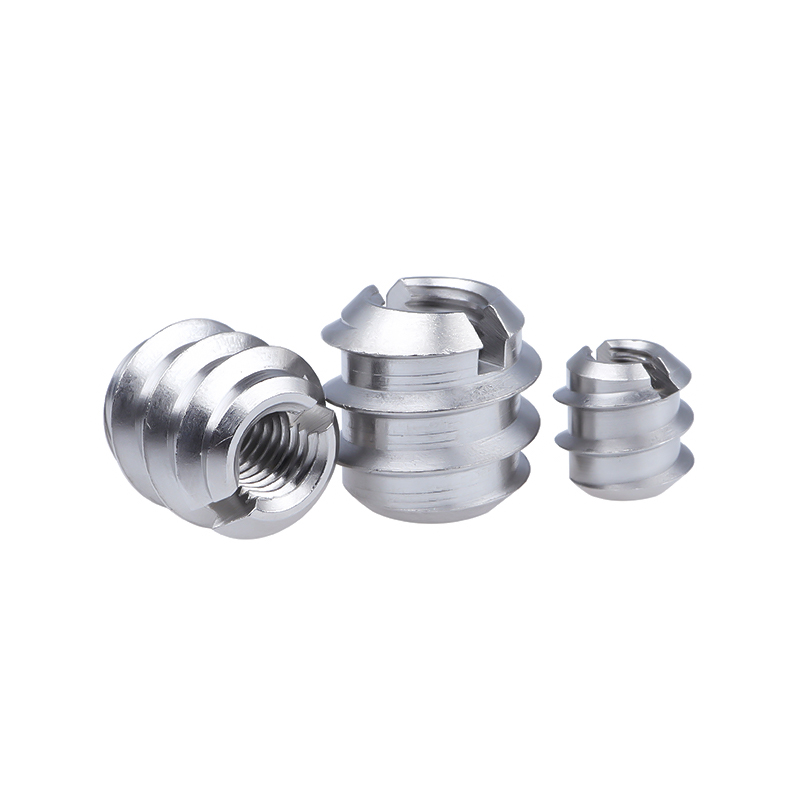 DIN 7965 screwed inserts are threaded fasteners manufactured according to the German DIN 7965 standard, ensuring strict ...
-
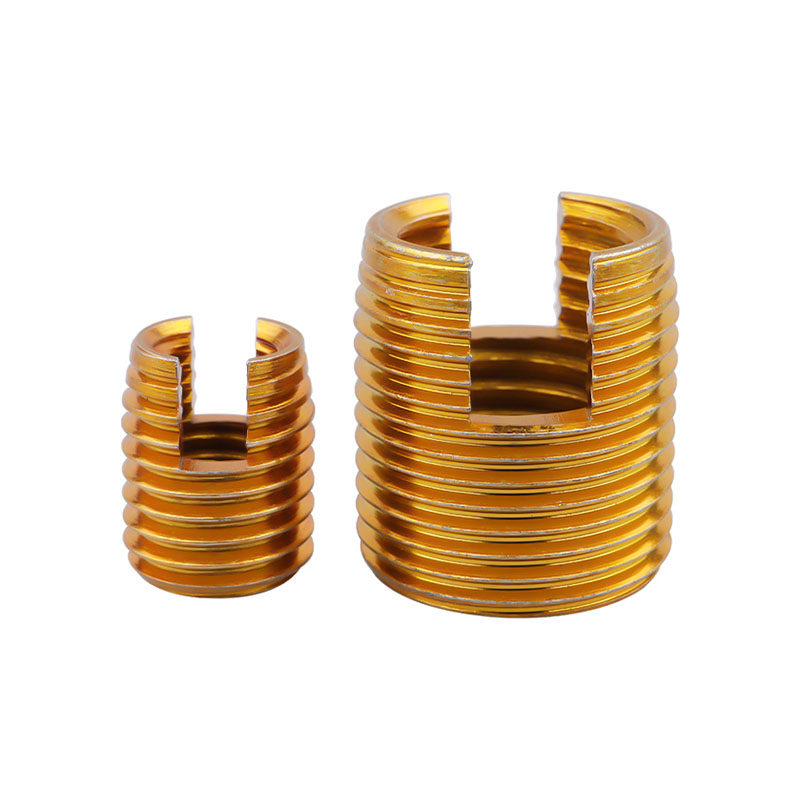 Carbon steel self-tapping thread inserts are made of high-strength carbon steel, offering mechanical robustness and cost...
-
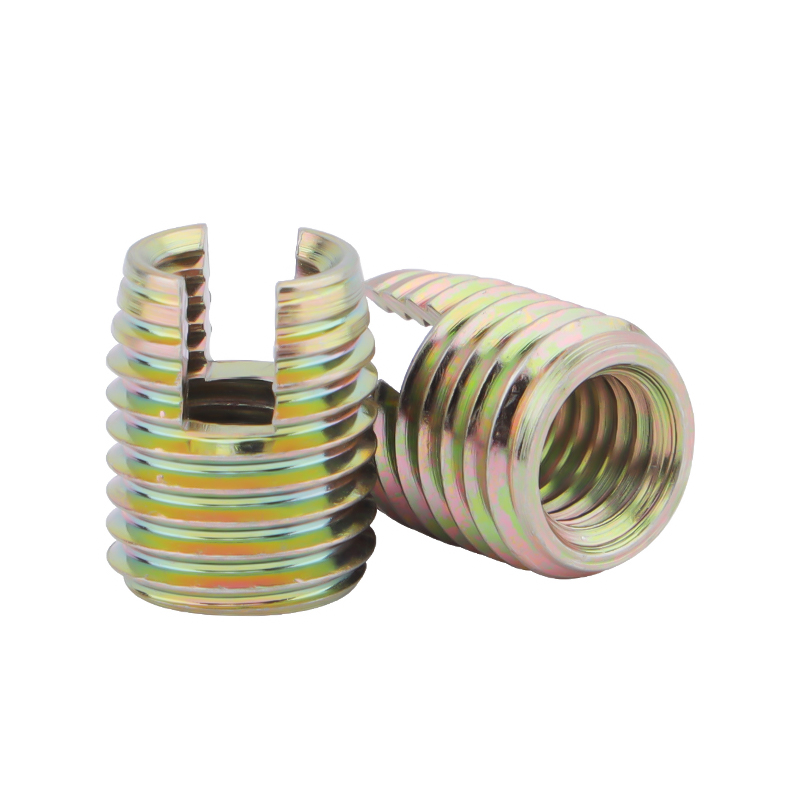 Color zinc plated self-tapping thread inserts feature a dual-protection coating combining a passivation layer for corros...
-
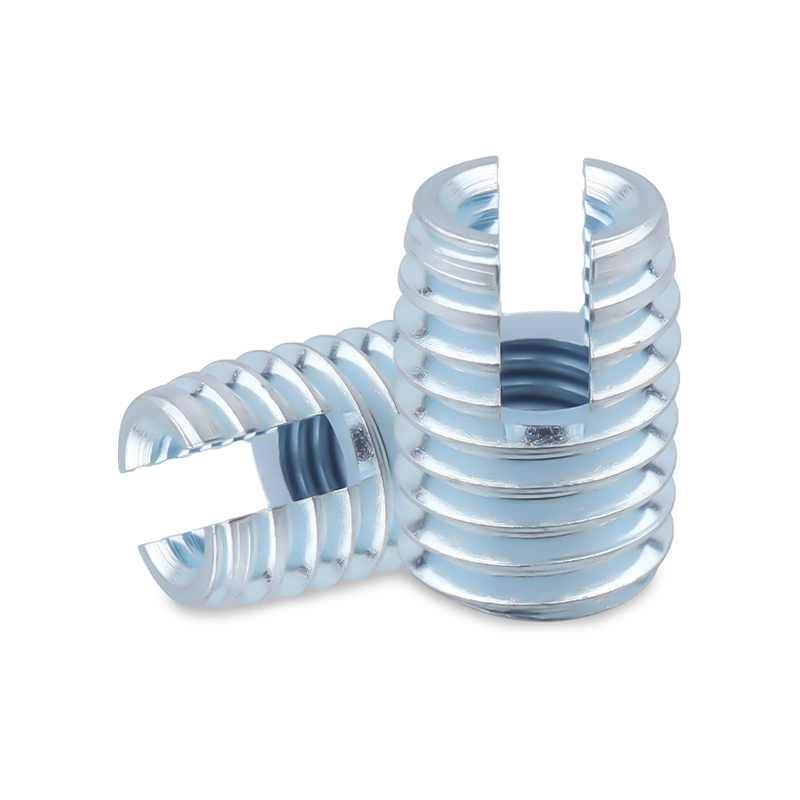 Blue zinc plated self-tapping thread inserts are fasteners with a surface treatment that provides excellent rust and oxi...
-
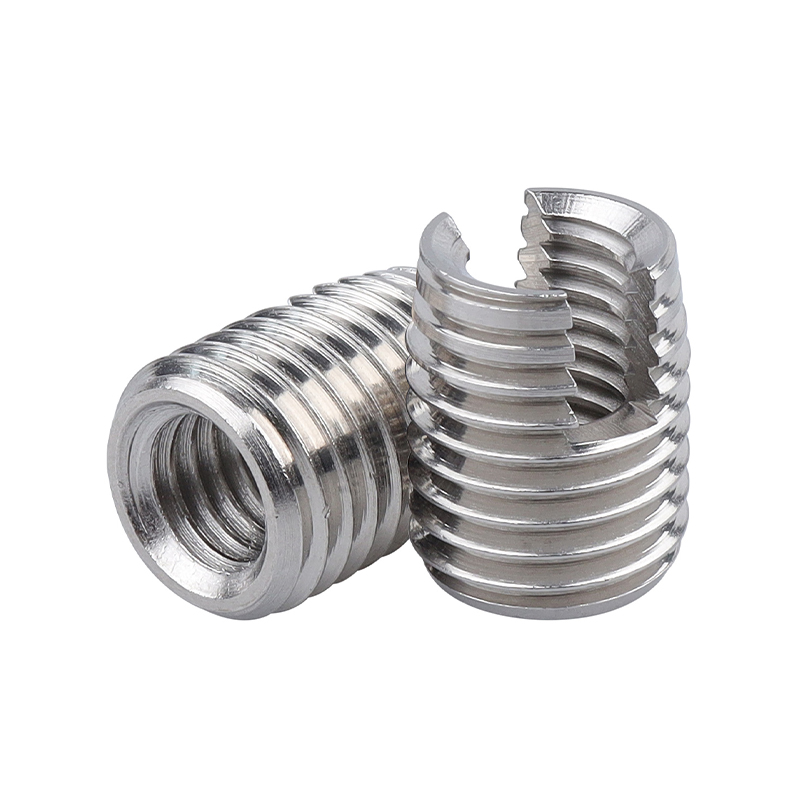 Stainless steel self-tapping thread inserts are fasteners designed to strengthen threaded connections. Unlike standard i...
Company Profile

Dongtai Jinzhize Metal Products Co., Ltd.
As Self-tapping Insert Manufacturers and Threaded Insert Self-tapping Factory, Dongtai Jinzhize Metal Products Co., Ltd. is a specialized manufacturing facility dedicated to threaded connection products for the automotive and aerospace sectors. We primarily produce Helical Wire Inserts, Self-Tapping Inserts, Key Locking Inserts, Threaded Adapters, Oil Plugs, as well as matching installation taps and tools.
Established in 2015, the company operates from a 10,000-square-meter-owned manufacturing plant equipped with hundreds of machine tools and automated production systems. Through years of development, we have built an experienced team of design, development, and production specialists, complemented by a rigorous quality management system and comprehensive after-sales service mechanism.
Our products are widely utilized in the automotive industry (including engines and transmissions for both passenger and commercial vehicles), the aerospace industry, and rail vehicle manufacturing.
With an annual output value of 153 million RMB in 2024, we possess the capability for a large-scale, stable supply. We are committed to providing customers with highly consistent, traceable products and reliable service support.
News
-
-
What Is a Thread Tap? A thread tap is a specialized cutting tool designed to create internal threads within pre-drilled holes. It functions by removing material (cutting taps) or displacing material ...
READ MORE -
A wire thread insert is a helically coiled fastening device made from high-tensile stainless steel wire (typically Type 304 or 316) with a diamond-shaped cross-section. It is inserted into a pre-tapp...
READ MORE -
In the era of high-precision industrial manufacturing, the reliability and durability of threaded connections have become a key factor affecting the performance and safety of equipment. Recently, thr...
READ MORE -
In the era of high-precision industrial manufacturing, the reliability and durability of threaded connections have become a key factor affecting the performance and safety of equipment. Recently, thre...
READ MORE
Related Products
-
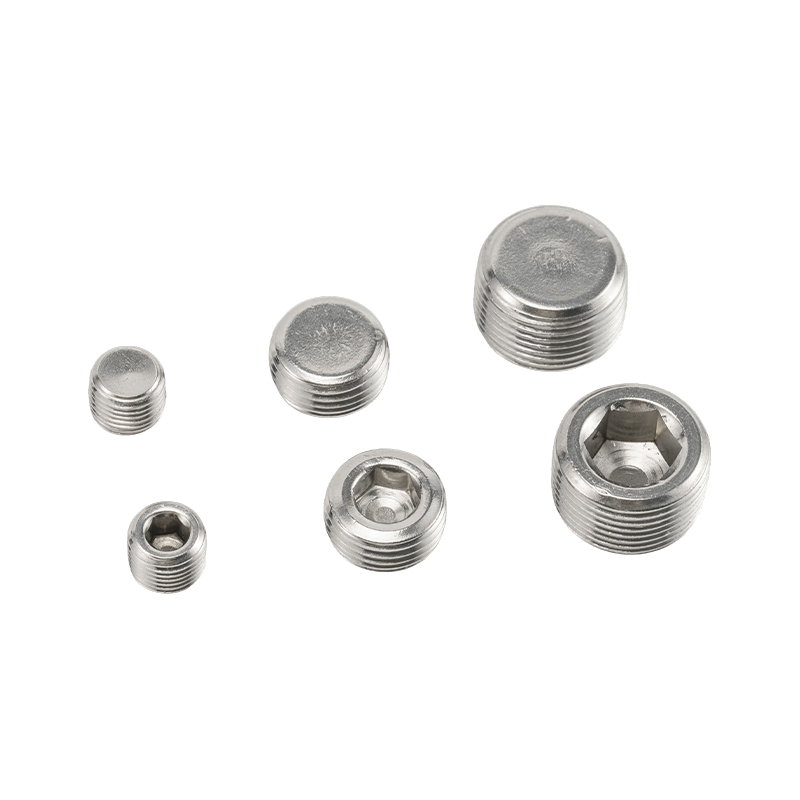
The Straight Thread Plug (Hex Socket Plug) is a high-performance sealing solution engineered for precision closure in industrial piping, reservoirs, and mechanical equipm...
-
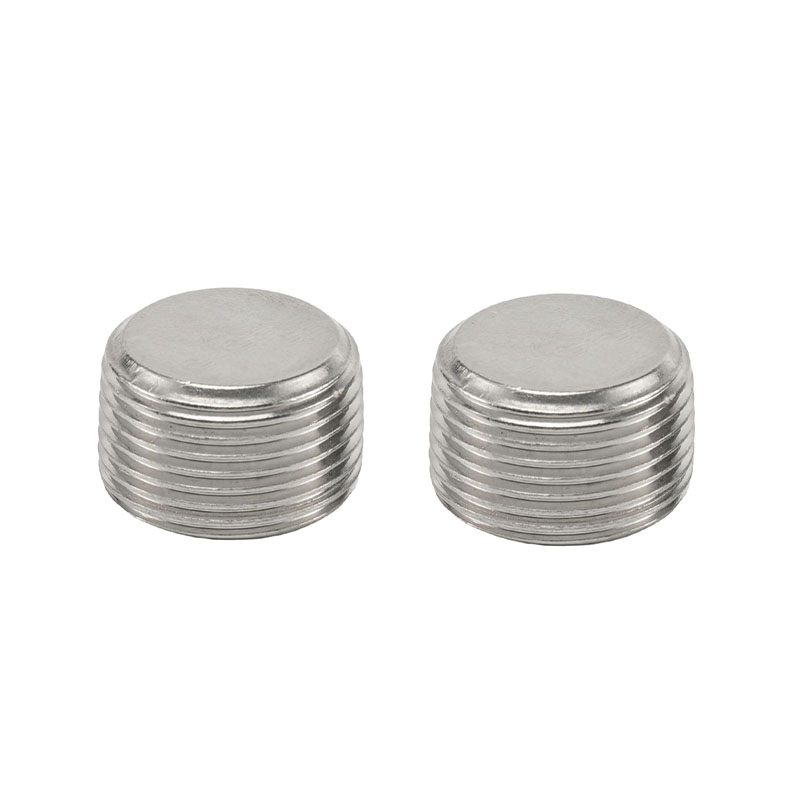
In the field of piping prefabrication and installation, precise port closure and testing are of paramount importance. The Tapered Plug is a specialized pipe fitting desig...
-
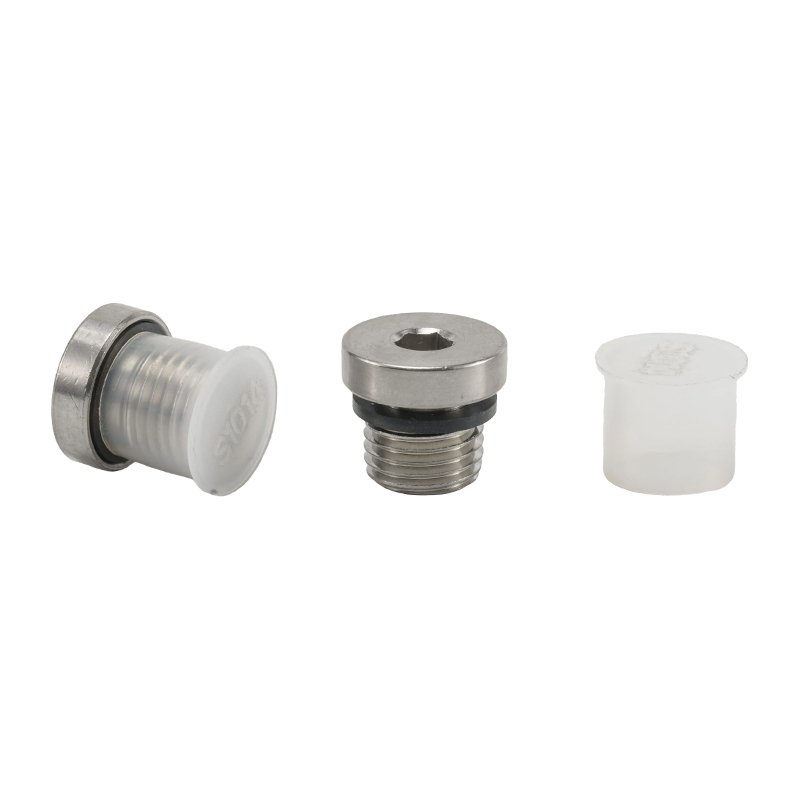
In applications such as pipeline termination, pressure testing, or equipment maintenance, there is a critical need for a sealing component that is structurally robust, re...
-
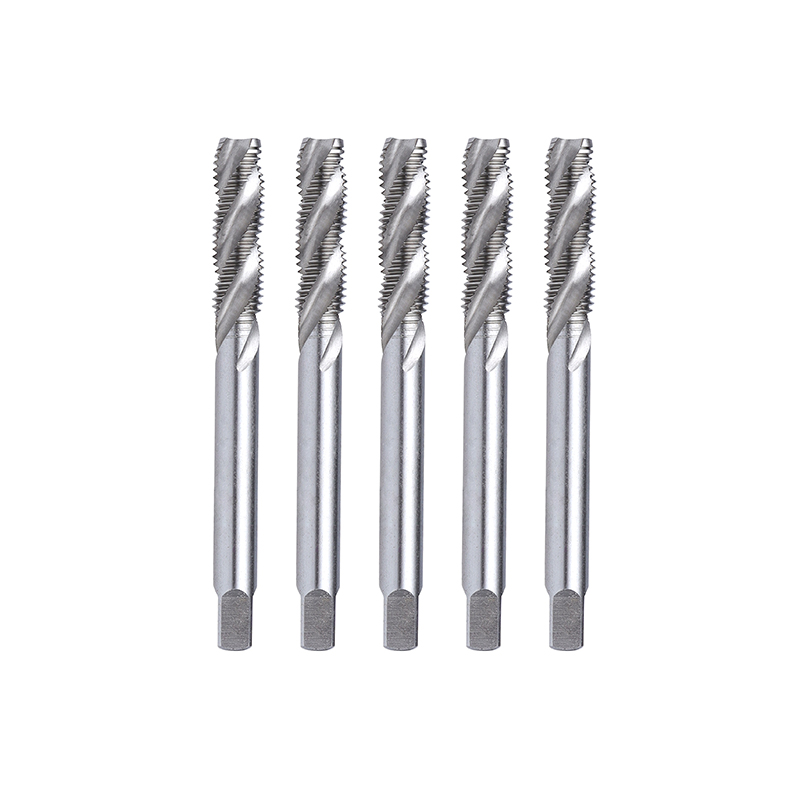
Spiral thread tap are designed for cutting deep internal threads. Unlike straight thread tap, spiral taps have helical grooves that efficiently remove chips during machin...

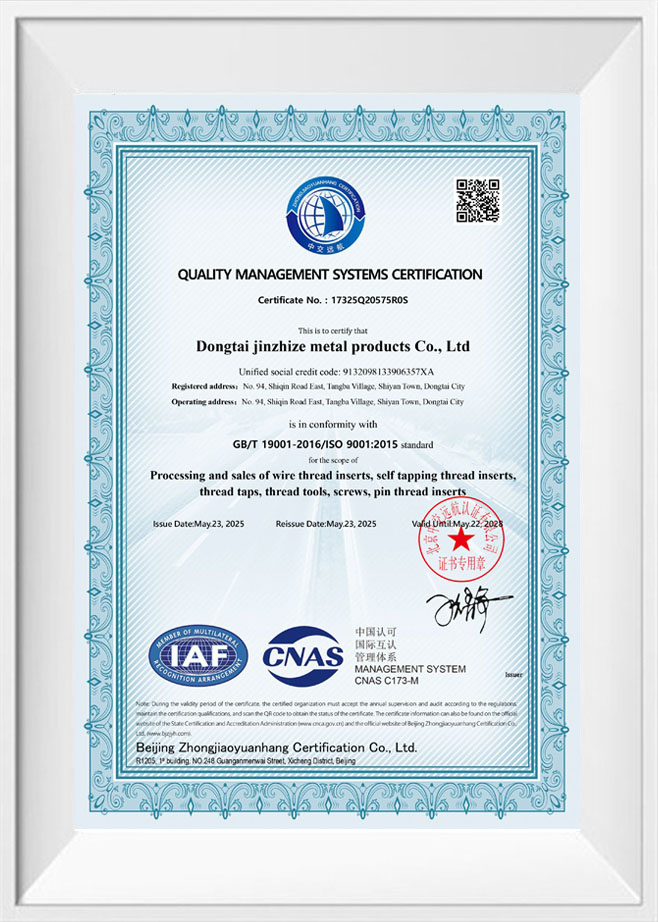
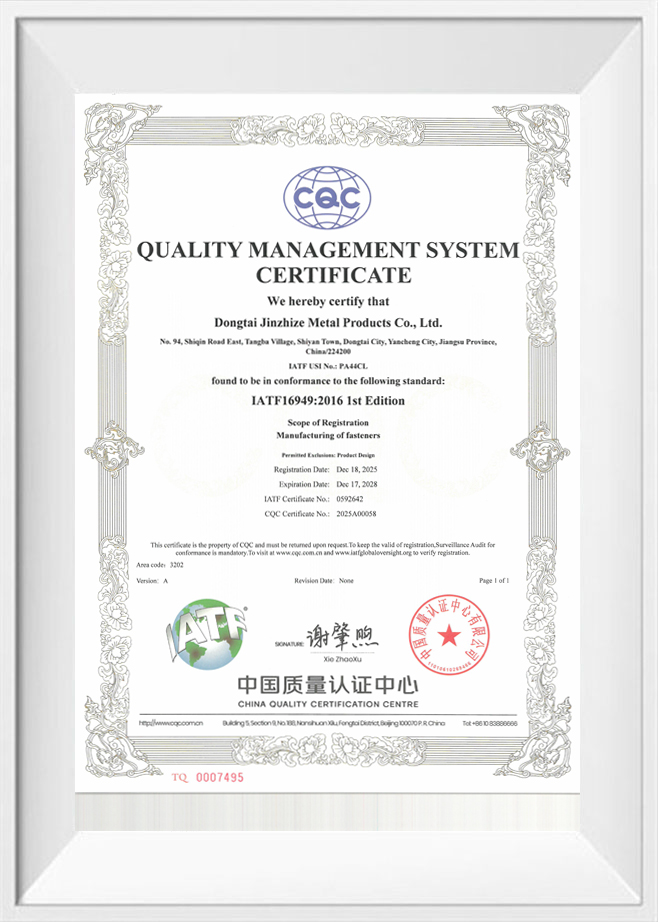
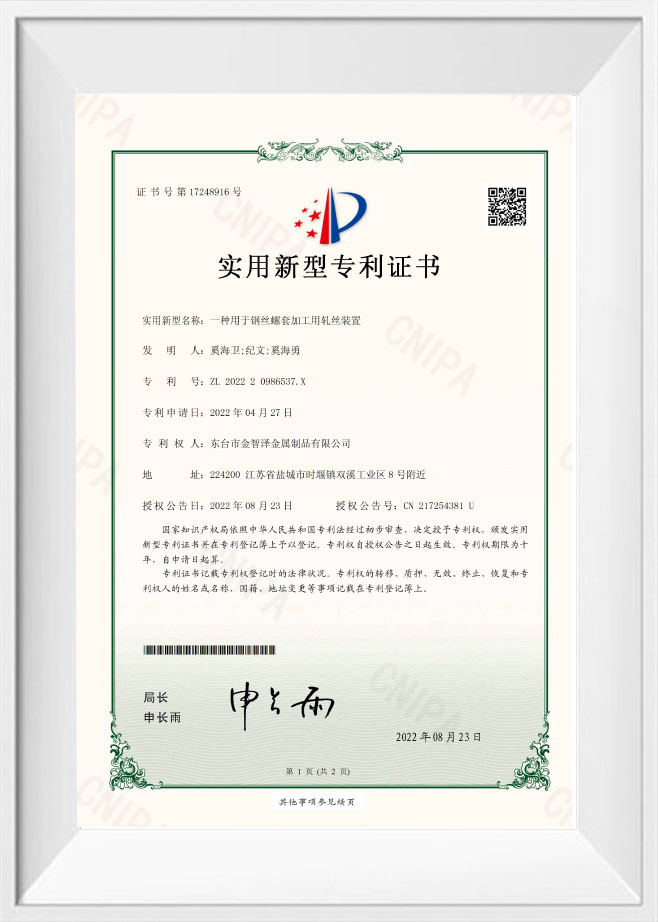
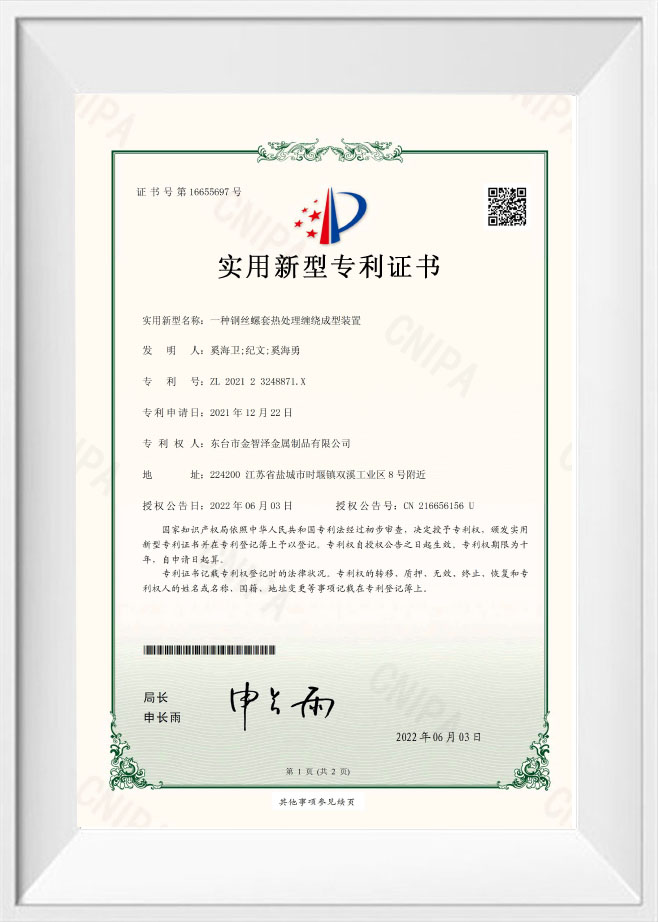
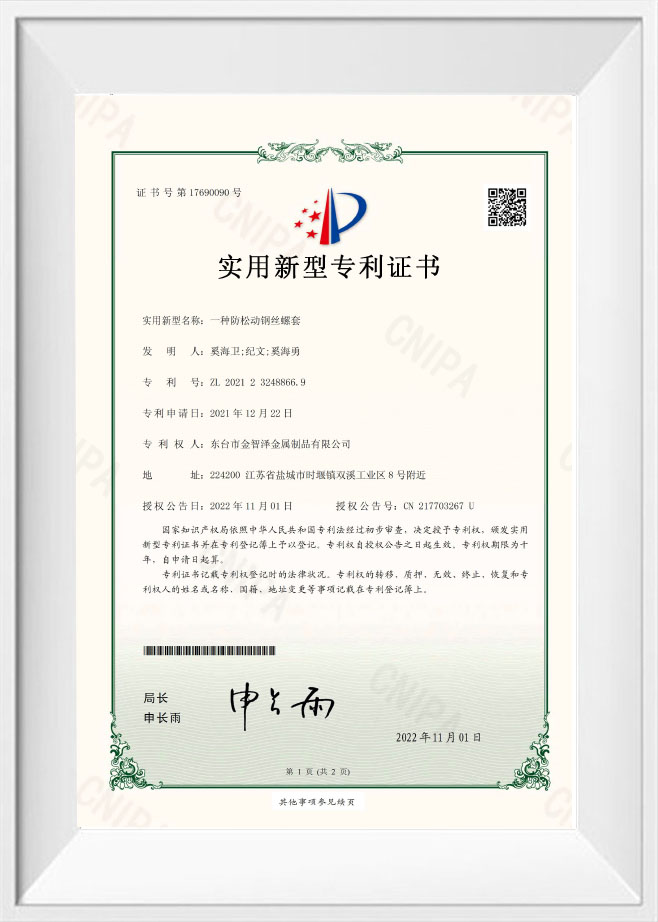
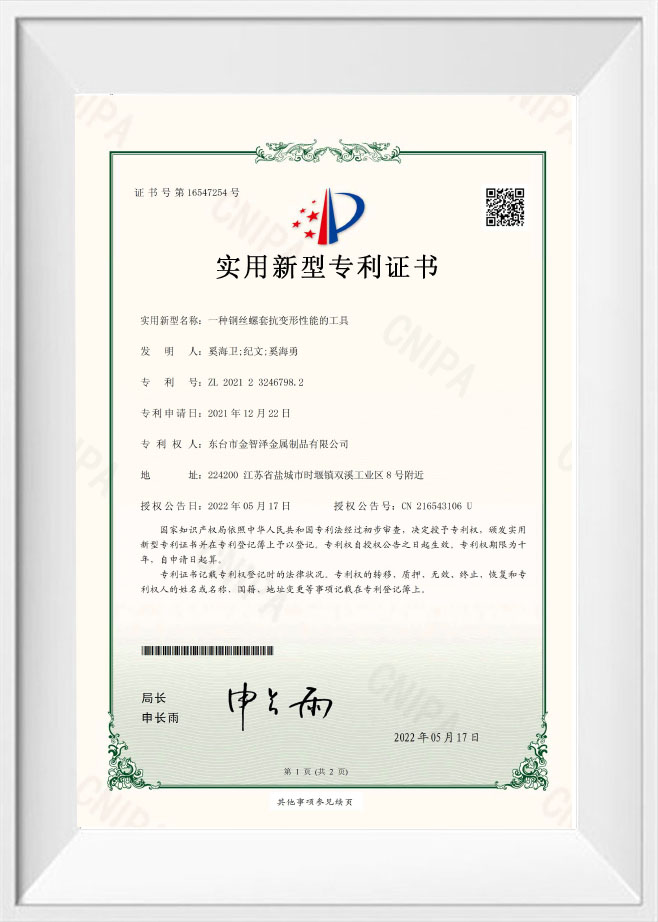
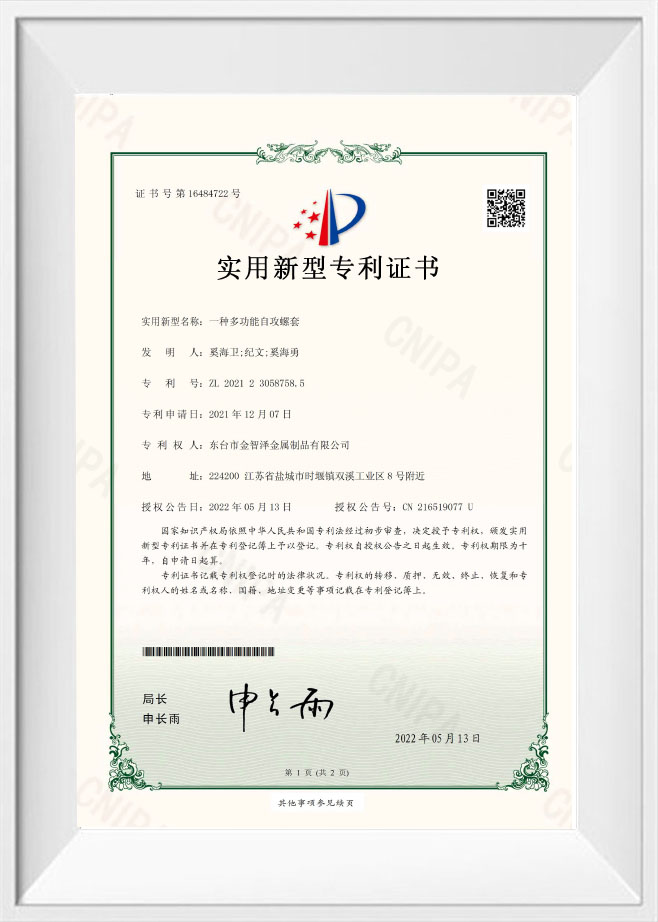
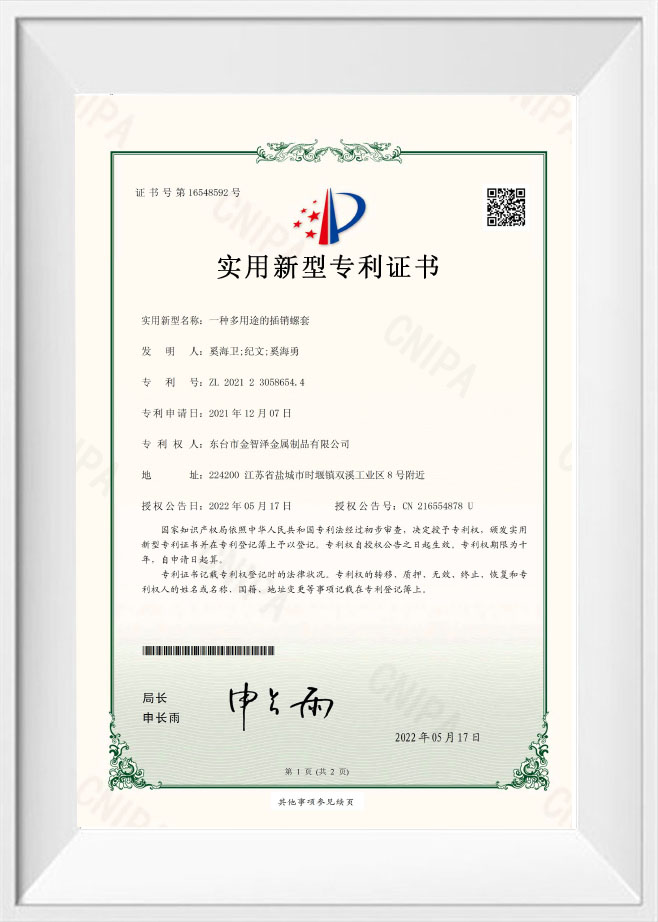
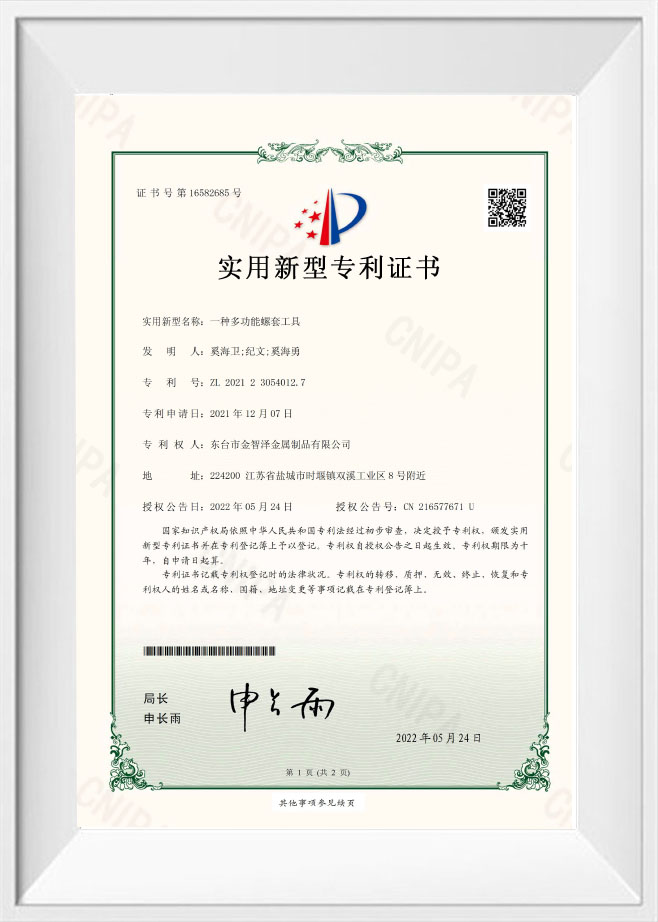
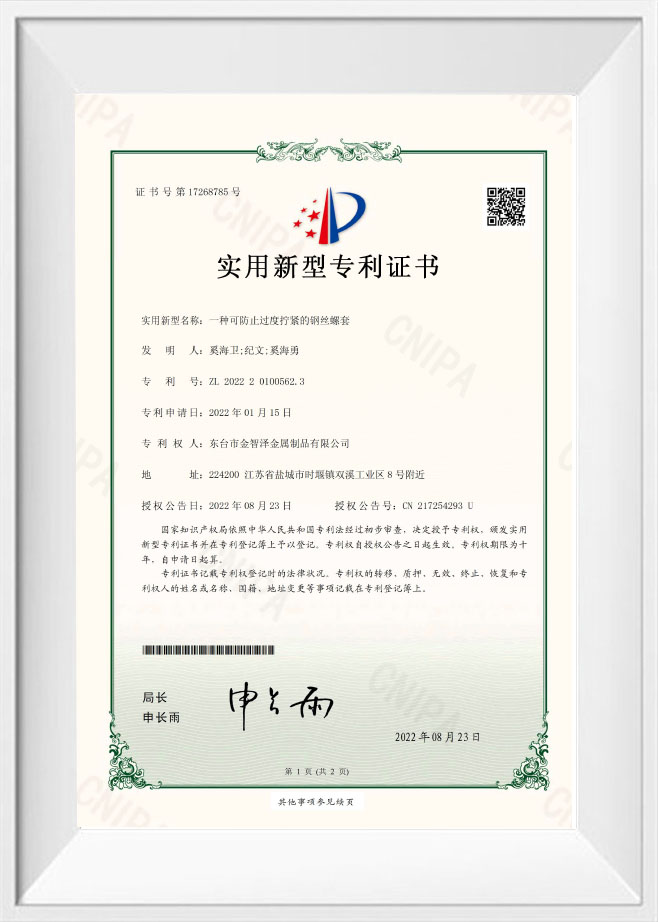
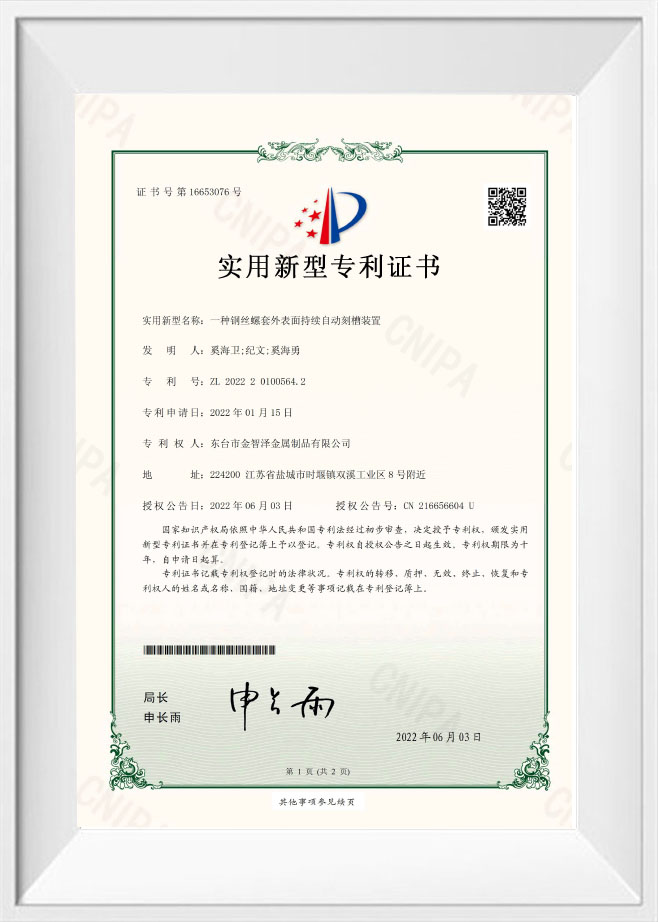
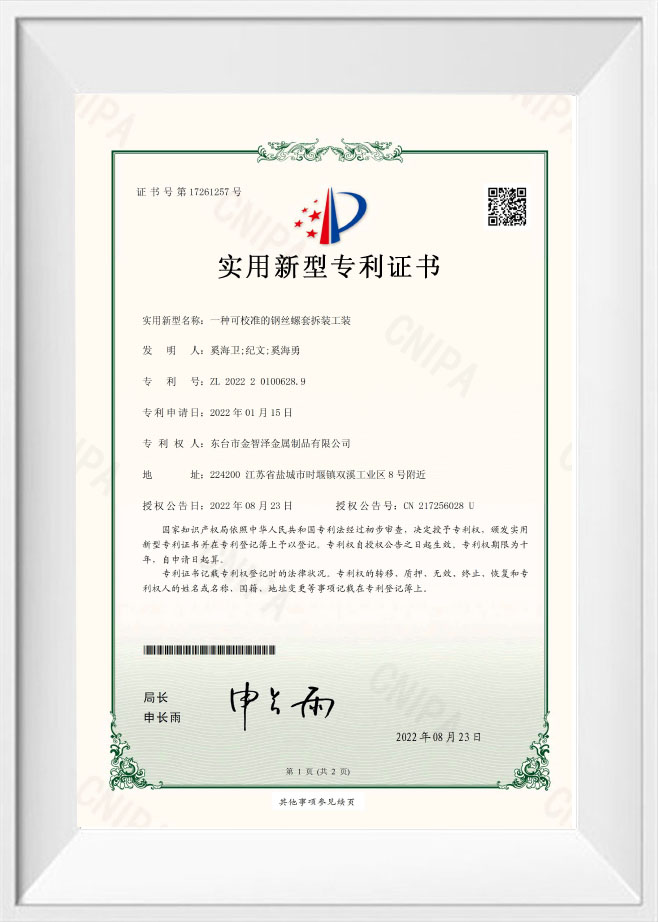
Certificate Of Honor
Self-tapping Thread Insert Industry knowledge
Differences between Self-tapping Helical Inserts and Regular Helical Inserts
Self-tapping helical inserts and regular helical inserts (such as traditional spiral sleeves) differ significantly in structural design and function.
1. External Thread Design: Self-tapping helical inserts have specially designed cutting grooves on their external threads, allowing them to cut mating threads in the drilled hole automatically. Regular helical inserts (such as classic helicoil) are typically manufactured using a roll-forming process, resulting in a smooth outer surface and lacking cutting capabilities, requiring pre-machining of the mating threads.
2. Installation Method: Self-tapping helical inserts can be screwed in directly like screws, while regular helical inserts usually require specialized installation tools (such as installation punches and cutting screws) to press them into pre-machined mating holes.
3. Applicable Materials: Self-tapping helical inserts are primarily used for soft materials (such as aluminum and plastics), allowing for thread repair and reinforcement without damaging the original hole walls. Ordinary helical inserts are typically used on metallic materials (such as steel) and are formed by rolling to enhance wear resistance.
| Table 1: Comparison Between Self-tapping Helical Insert and Standard Helical Insert | ||
| Attribute/Feature | Self-tapping Helical Insert | Standard Helical Insert |
| Core Function | Utilizes a self-tapping thread with cutting slots to directly cut mating threads in soft materials (e.g., aluminum, plastic). | Manufactured using a rolling process, with a smooth exterior lacking cutting slots, requiring a pre-machined mating hole. |
| Installation Method | Functions like a screw; it can be directly threaded into a pre-drilled hole without specialized tools. | Requires specialized installation tools (e.g., installation mandrel and cutting tap) to be pressed into a pre-machined hole. |
| Applicable Materials | Primarily for soft metals and plastics, used to repair damaged threaded holes. | Primarily for metal materials (e.g., steel), enhancing wear resistance through the rolling process. |
Can self-tapping screw inserts be used directly on carbide materials?
No, they cannot be used directly on carbide materials.
1. Material limitations: Self-tapping screw inserts are designed for light metals and soft materials (such as aluminum, copper, and plastics). Using them on carbide materials (such as steel and titanium alloys) will make thread cutting difficult and may even damage tools and workpieces.
2. Material strength requirements: The strength of carbide materials is much higher than the hardness of self-tapping screws (typically ≥ 45HRC), making it difficult to form effective self-tapping threads in carbide.
3. Alternatives: For carbide materials, it is usually necessary to use pre-cut mating threads (such as keyed thread inserts) or high-hardness self-tapping screws (such as carbide self-tapping screws) instead of ordinary self-tapping screw inserts.
| Table 2: Suitability of Self-tapping Screw Insert for Hard Alloy Materials | |
| Assessment | Detailed Explanation |
| Reasoning | Material Hardness Limitation: Self-tapping screw inserts are designed for light metals and soft materials. Hard alloys have a hardness far exceeding that of standard self-tapping screws, leading to cutting difficulties and potential damage to both the tool and the workpiece. |
| Strength Mismatch: The strength requirements of hard alloys are significantly higher, making it challenging for standard self-tapping screws to form effective threads. | |
| Recommended Alternatives | For hard alloy materials, it is advisable to use pre-cut mating threads or high-hardness self-tapping screws. |
The main differences between self-tapping thread inserts and tapered threaded inserts: Self-tapping thread inserts and tapered threaded inserts differ fundamentally in their installation mechanism and applicable scenarios.
1. Installation Mechanism:
Self-tapping thread inserts: These self-tapping thread inserts create a mating thread directly in the drilled hole through the cutting groove of the external thread. They are primarily used for quickly repairing and reinforcing threads in soft materials.
Taped threaded inserts: These have a tapered shape (such as NPT threads). They provide sealing and mechanical locking through the wedge effect of the tapered structure. They are mainly used for pipe connections and high-pressure sealing.
2. Functional Focus:
Self-tapping thread inserts: Focus on thread formation and reinforcement. They are suitable for applications requiring the formation of new threads.
Taped threaded inserts: Focus on sealing performance (such as NPT and BSPT standards). They are suitable for gas or liquid pipeline connections and require the use of a sealant.
| Table 3: Differences Between Self-tapping Thread Insert and Tapered Threaded Insert | ||
| Attribute/Feature | Self-tapping Thread Insert | Tapered Threaded Insert |
| Installation Mechanism | Directly cuts mating threads in the hole via self-tapping slots on the outer thread. | Features a conical shape that provides mechanical locking and sealing through a wedge effect. |
| Primary Function | Focuses on thread formation and reinforcement, suitable for quickly repairing threads in soft materials. | Focuses on sealing performance, often requiring the use of sealants. |
| Application Scenarios | Suitable for soft material applications where new threads need to be formed or damaged threads repaired. | Suitable for pipe connections and high-pressure sealing applications. |
As a partner of Dongtai Jinzhize Metal Products Co., Ltd., you will benefit from our professional manufacturing capabilities:
1. Area of Expertise: We specialize in manufacturing threaded connection products for the automotive and aerospace industries, including Helical Wire Inserts, Self-Tapping Inserts, and Key Locking Inserts.
2. Strong Production Capacity: With 10,000 square meters of self-owned factory space and hundreds of machine tools, our annual output exceeds RMB 153 million, enabling us to provide a stable, large-scale supply.
3. Quality Commitment: We adhere to a rigorous quality management system to ensure high product consistency and traceability, providing reliable after-sales service support to our customers.
FAQ
Q: What is "compression permanent deformation," and why is it important?
A: Compression permanent deformation refers to the inability of a seal to return to its original shape after prolonged pressure.
Impact: It causes the sealing lip to lose elasticity, failing to adhere tightly to the shaft surface, ultimately leading to leakage.
Solution: This problem can be mitigated through optimized design (e.g., changing cross-sectional shape, dimensional tolerances) and material selection (e.g., adding filler).
Q: Is the width of an oil seal really important?
A: As long as the seal is correctly fitted to the shaft and bore diameter, width is usually not a decisive factor.
Note: If the width is greater than the actual bore depth, it may interfere with surrounding equipment; if the width is less than the bore depth, there is usually no problem, but it is necessary to ensure that the cover plate can properly compress the seal.
Q: What are the special requirements for high-speed rotating seals (such as spindles)?
A: High-speed rotation generates extremely high frictional heat.
Common choices: PTFE high-speed shaft seals, metal skeleton oil seals, or mechanical seals.
Materials: High-temperature resistant and wear-resistant materials such as graphite and hard alloys.
Installation: Special attention must be paid to the cleanliness of the shaft and the pressing method of the seals to avoid damage.
Q: What is the typical lifespan of the seals?
A: Lifespan depends on the operating environment and maintenance.
Influencing factors: Temperature, pressure, media corrosiveness, and whether regular lubrication is performed.
Rule of thumb: For high-temperature or high-pressure environments, the preventative replacement cycle for seals is generally shorter than for low-temperature, low-pressure environments.
Let's Talk Affiliate Marketing
-
ADDRESS
No. 94, Shiqin Road East, Tangba Village, Shiyan Town, Dongtai City, China E-mail : [email protected] Tel : +86-15061682958 -
QUICKLINKS
-
POPULAR PRODUCT
Self-tapping Thread Insert Internal-external Thread Conversion Nut Wire Thread Insert Three-hole threaded insert Key-locking Insert Oil plug Installation tools Thread Tap -
MEDIA
Copyright © Dongtai Jinzhize Metal Products Co., Ltd. All Rights Reserved.
 Wholesale Self-Tapping Threaded Sleeve Manufacturer
Wholesale Self-Tapping Threaded Sleeve Manufacturer