

 Français
 Español
 Deutsch

Content
- 1 Why the 9/16 Tap Drill Size Controls Thread Strength and Tool Life
- 2 9/16 Tap Drill Size Chart: UNC, UNF, and Metric Equivalents
- 3 How to Calculate the 9/16 Tap Drill Size
- 4 9/16-12 UNC vs 9/16-18 UNF: Which Thread Should You Specify?
- 5 Where 9/16 Threads Appear in Real Engineering Applications
- 6 Tapping 9/16 Threads in Aluminum, Steel, Stainless Steel, and Plastics
- 7 Common 9/16 Tapping Mistakes and How to Avoid Them
- 8 Repairing Damaged 9/16 Threads with Thread Inserts
- 9 Choosing the Right Tap and Installation Tools for 9/16 Work
- 10 Related Guides and Resources
- 11 Frequently Asked Questions About 9/16 Tap Drill Sizes
- 11.1 What is the tap drill size for a 9/16-12 UNC thread?
- 11.2 What is the tap drill size for a 9/16-18 UNF thread?
- 11.3 Can I use a 1/2 inch drill bit to tap a 9/16-12 thread?
- 11.4 What is the metric equivalent drill for 9/16 threads?
- 11.5 Are 9/16-12 UNC and M14 x 2.0 threads the same?
- 11.6 What does 75 percent thread engagement mean for a 9/16 tap?
- 11.7 Which tap should I use for a 9/16-12 UNC blind hole?
- 11.8 How do I repair a stripped 9/16 thread?
- 12 Final Decision Summary for Your 9/16 Tapping Job
If you are about to tap a 9/16 thread, the first specification you need is the 9/16 tap drill size. For a 9/16-12 UNC coarse thread, the standard tap drill is 31/64 inch (0.4844 inch), and for a 9/16-18 UNF fine thread, the standard tap drill is 33/64 inch (0.5156 inch). These figures assume a thread depth of about 75 percent of the full thread form, which is the convention used by most tap manufacturers, machine shops, and engineering handbooks. Selecting a different drill changes the depth of engagement, the torque on the tap, and the load the finished thread can carry, so this dimension should be treated as an engineering decision rather than an afterthought.
In the sections below, we explain how the 9/16 tap drill size is derived, how it changes when you tap aluminum, alloy steel, stainless steel, cast iron, or plastics, and how to choose between UNC and UNF series for a given application. We also cover the most common mistakes, including confusion between 9/16 and M14 metric threads, and the practical repair methods available when a 9/16 thread strips. If you are an engineer, a purchasing professional, or a maintenance specialist comparing taps, thread inserts, and installation tools from different suppliers, the information here will help you make a more reliable specification the first time, every time.
Why the 9/16 Tap Drill Size Controls Thread Strength and Tool Life
A tap cuts internal threads by removing material from the walls of a drilled hole. The diameter of that hole determines how much metal remains between the hole and the nominal thread diameter, and therefore how deep the thread form will be. If the drill is smaller than the recommended value, the tap has to cut more material, which raises cutting torque, increases heat, and makes chip evacuation harder. In a coarse thread such as 9/16-12, the pitch is relatively large, so a small error in drill diameter has a measurable effect on the cutting load.
The 75 percent thread depth standard is a compromise. Testing has consistently shown that a 75 percent internal thread carries almost as much load as a 100 percent thread, typically 90 to 95 percent of the stripping strength, while requiring noticeably less tapping torque. A full 100 percent thread is rarely used in production because it demands an exceptionally accurate hole and creates heavy cutting forces that can break taps, especially at diameters where the tap is already being used near its limit. For maintenance tapping, where the workpiece may be held in position and alignment is not always perfect, the 75 percent convention also provides a small margin for drill oversize.
When the drill is too small, the symptoms are predictable: the tap tightens as it advances, chips pack, and the flutes clog. In stainless steel, the work-hardened surface can quickly ruin a tap. When the drill is too large, the thread becomes shallow and the stripping torque drops, which can allow the fastener to pull out or leak in a fluid system. Because the difference between a functional thread and a failed thread is often only a few thousandths of an inch, shops should not attempt to improvise a drill size for 9/16 threads without checking a reliable chart.
9/16 Tap Drill Size Chart: UNC, UNF, and Metric Equivalents
The table below lists the recommended 9/16 tap drill sizes for the two imperial thread series most commonly encountered in automotive, aerospace, and general machinery work, together with the closest metric equivalents. The imperial values are taken from standard tap drill charts that assume 75 percent thread depth. The metric rows are included because M14 is the closest standard size to 9/16 inch, and a 9/16 hole is sometimes used as a substitute for M14 or vice versa in prototype work, even though the two threads are not interchangeable.
| Thread designation | Pitch or TPI | Recommended drill | Decimal inches | Metric equivalent |
|---|---|---|---|---|
| 9/16-12 UNC | 12 TPI | 31/64 in | 0.4844 | 12.3 mm |
| 9/16-18 UNF | 18 TPI | 33/64 in | 0.5156 | 13.1 mm |
| M14 x 2.0 | 2.0 mm | 12.2 mm | 0.4803 | 12.2 mm |
| M14 x 1.5 | 1.5 mm | 12.7 mm | 0.4999 | 12.7 mm |
| M14 x 1.25 | 1.25 mm | 12.8 mm | 0.5039 | 12.8 mm |
Before you choose a drill, compare the thread series carefully. A 9/16-12 UNC tap requires a 31/64 inch hole, while a 9/16-18 UNF tap requires a 33/64 inch hole, and the two drills are not interchangeable. The chart below puts these values in perspective by showing the drill diameter as a percentage of the nominal thread diameter.
The best way to understand these numbers is to compare them visually as a ratio rather than as absolute diameters. The horizontal bar chart that follows plots the drill diameter as a percentage of the nominal thread diameter for the five threads in the table above. It makes the difference between coarse and fine series easy to see at a glance.
This percentage view is more useful than raw decimal values when you are evaluating threads of slightly different nominal sizes. It also helps when you are estimating a probe drill for a non-standard pitch. Notice that the coarse threads cluster near 86 to 87 percent, while the fine threads rise to about 91 percent.
The percentages confirm a pattern that applies across the entire tap drill chart. The 9/16-12 UNC drill at 31/64 inch equals 86.1 percent of the 0.5625 inch nominal diameter, leaving material for a deep but sturdy thread. The fine 9/16-18 UNF drill at 33/64 inch equals 91.7 percent of the same nominal diameter, so the hole is visibly larger and the thread form is shallower. A larger hole for the fine pitch means the tap removes less material and encounters less torque, which protects the tap in harder materials. The metric M14 x 2.0 thread, the nearest standard size to 9/16, uses a 12.2 mm drill, equal to about 87.1 percent of its 14 mm diameter. The M14 x 1.5 fine variant takes a 12.7 mm drill, or 90.7 percent, closely matching the behavior of the imperial fine thread. The M14 x 1.25 variant sits between 1.5 and the other fine pitches at 91.4 percent, reflecting the smaller pitch. Across the industry, coarse threads generally sit in the 86 to 88 percent band, while fine threads stay near 91 percent. This ratio explains why you cannot use a single drill for all 9/16-size threads. If the drill is too small, the tap overloads and breaks, especially in stainless steel. If the drill is too large, the thread form is too shallow and may strip under working load. Understanding the percentage relationship also lets you estimate a reasonable drill size for unusual pitches that are not printed in a standard chart. For procurement teams, this comparison reinforces why taps and drills should be purchased as a matched system from an engineering supplier rather than as unrelated tooling.
How to Calculate the 9/16 Tap Drill Size
The quickest formula for estimating a tap drill size is to subtract the pitch from the nominal diameter. For imperial threads, the pitch is the reciprocal of the number of threads per inch, so the formula becomes drill diameter = major diameter - (1 / TPI). This calculation gives a theoretical value that corresponds to roughly 75 percent thread engagement for most common thread forms, and the result is then rounded up to the nearest standard drill size.
For the 9/16-12 UNC thread, which appears on many older drawings as 9/16-12 NC, the nominal diameter is 0.5625 inch and the pitch is 1/12 inch, or 0.0833 inch. Subtracting the pitch gives 0.4792 inch, and the nearest standard fractional drill is 31/64 inch, which measures 0.4844 inch. That is the value that appears in every reliable 9/16 tap drill chart. If you calculate this yourself, you will find the result falls between a 15/32 inch drill (0.4688 inch) and a 31/64 inch drill (0.4844 inch), and the chart value picks the closer of the two.
For the 9/16-18 UNF thread, the pitch is 1/18 inch, or 0.0556 inch. The formula gives 0.5625 - 0.0556 = 0.5069 inch. The nearest standard drill is 33/64 inch, which measures 0.5156 inch, and this is the value used across the industry for 9/16-18 tapping. It is worth noting that the calculated value sits between 1/2 inch and 33/64 inch, and different chart publishers choose based on their internal testing and the depth of engagement they want to deliver.
For metric threads the same logic applies. An M14 x 2.0 thread has a 14 mm major diameter and a 2.0 mm pitch, so the simple formula gives 12.0 mm, while the recommended drill in standard charts is 12.2 mm. The slightly larger value accounts for the geometric height of the thread form and the way a sharp drill tip actually cuts in a drilled hole.
The 75 percent engagement value can be adjusted when you work with hard materials or thin walls. The table below shows how the target engagement changes the recommended drill for a 9/16-12 UNC thread. For difficult materials such as stainless steel or hardened alloy steel, reducing the engagement to about 65 percent lowers tapping torque and reduces the risk of tap breakage, while still leaving enough thread contact area for most static loads.
| Target engagement | Calculated drill diameter | Nearest standard drill | Actual engagement |
|---|---|---|---|
| 75% (standard) | 0.4858 in | 31/64 in (0.4844 in) | 76% |
| 65% (hard material) | 0.4961 in | 1/2 in (0.5000 in) | 61% |
| 60% (thin wall) | 0.5012 in | 1/2 in (0.5000 in) | 61% |
Notice that the standard 31/64 inch drill is already very close to the 75 percent engagement target. When you step down to 65 percent, the practical result is a 1/2 inch drill, which lowers the thread depth to about 61 percent. This is a common practice in stainless steel tapping, where the reduced cutting load more than compensates for the slightly lower thread strength. Always verify the engagement requirement of your end customer before deviating from the standard chart value, especially for pressure-containing joints.
9/16-12 UNC vs 9/16-18 UNF: Which Thread Should You Specify?
The 9/16 diameter is available in both coarse and fine series, and the choice affects the drill size, the tap type, and the performance of the joint. Coarse threads have a larger pitch, which creates a deeper thread form in a given wall thickness and is more forgiving in applications with poor lubrication. Fine threads have a smaller pitch, which gives a slightly larger minor diameter, better resistance to vibration loosening, and finer adjustment capability.
9/16-12 UNC coarse series
|
9/16-18 UNF fine series
|
In practice, the coarse 9/16-12 thread is preferred when the joint is frequently disassembled, when the material is relatively soft, or when the hole is blind and chip evacuation is difficult. The fine 9/16-18 thread is preferred for applications with heavy vibration, thin-walled housings, or where a precise preload adjustment is required. Fine threads also make it easier to tap in hardened materials because the smaller pitch reduces the cutting force per revolution.
One important nuance is that a fine thread has a larger minor diameter, which means the cross-section of the threaded hole is larger and the stress concentration is lower. That is why many hydraulic components with 9/16 ports use the -18 UNF series rather than coarse threads. The trade-off is that fine threads are more easily damaged during handling and cross-threading, so operators must be more careful when starting the tap or the bolt.
Where 9/16 Threads Appear in Real Engineering Applications
The 9/16 thread size is common in automotive engineering. In passenger cars and commercial vehicles, 9/16-18 UNF threads appear in brake caliper mounting bolts, tie rod ends, transmission valve bodies, and oil cooler lines, where the fine pitch provides vibration resistance and a compact form. The 9/16-12 UNC thread is more common in engine mounts, suspension links, and heavy equipment fasteners, where coarse threads hold up better in service conditions with dirt or intermittent loading.
In aerospace, the 9/16-18 UNF series is frequently specified for structural fasteners and hydraulic fittings made to AN, MS, or SAE standards. Aircraft components are often produced in aluminum alloy, where the fine thread engages well and the larger minor diameter contributes to fatigue performance. Any decision about the 9/16 tap drill size in this industry is governed by engineering standards and repair manuals, so the chart value should never be altered without approval from the design authority.
Hydraulic systems are a major user of 9/16-18 UNF threads. The SAE straight thread O-ring boss port used on many valves, manifolds, and pumps for a -6 size fitting is machined with a 9/16-18 UNF thread. When that port strips during maintenance, the repair cost is high, because the manifold may serve several circuits and replacement is expensive. This is why many maintenance teams keep a wire thread insert kit in the exact 9/16 size on hand.
Railway rolling stock and general machinery rely on 9/16-12 UNC for less critical structural joints, clamp plates, and adjustable fixtures. The coarse thread offers a degree of forgiveness when threads are cut in cast iron or mild steel housings on site. For fixture plates used in CNC machining, the 9/16-12 tapped hole is popular because it accepts a heavy-duty socket cap screw and leaves enough wall thickness for aluminum tooling plates.
Tapping 9/16 Threads in Aluminum, Steel, Stainless Steel, and Plastics
The same 9/16 tap drill size does not always produce the ideal thread when the base material changes. Soft and gummy materials like aluminum need sharp taps and a reliable hole size, work-hardening materials like stainless steel benefit from a slightly larger drill, and brittle materials like cast iron are generally forgiving. The table below summarizes the practical settings for the most common base materials.
| Base material | Recommended drill | Tap type | Lubrication | Notes |
|---|---|---|---|---|
| Aluminum 6061 | 31/64 in | Spiral flute or form tap | Light oil or kerosene | Sharp tap required; excellent threads |
| Mild steel | 31/64 in | Spiral point | Soluble cutting oil | Standard practice |
| Alloy steel 4140 | 1/2 in | Spiral flute, TiN coated | Sulfurized oil | Reduces tapping torque |
| Stainless 304/316 | 1/2 in | Spiral flute, TiN/TiCN | High-pressure paste | Avoid work hardening |
| Cast iron | 31/64 in | Straight flute | Dry or light oil | Short powdery chips |
| Plastics and nylon | 31/64 to 33/64 in | Straight flute | Dry or air | Use inserts for repeated assembly |
In aluminum, the standard 31/64 inch hole gives a clean thread when the tap is sharp and the spindle speed is moderate. The chip tends to be long and stringy, so a spiral flute tap is useful in blind holes. If the aluminum component will be assembled and disassembled several times, a self-tapping thread insert or a wire insert should be considered from the design stage, because an aluminum thread has a limited stripping threshold.
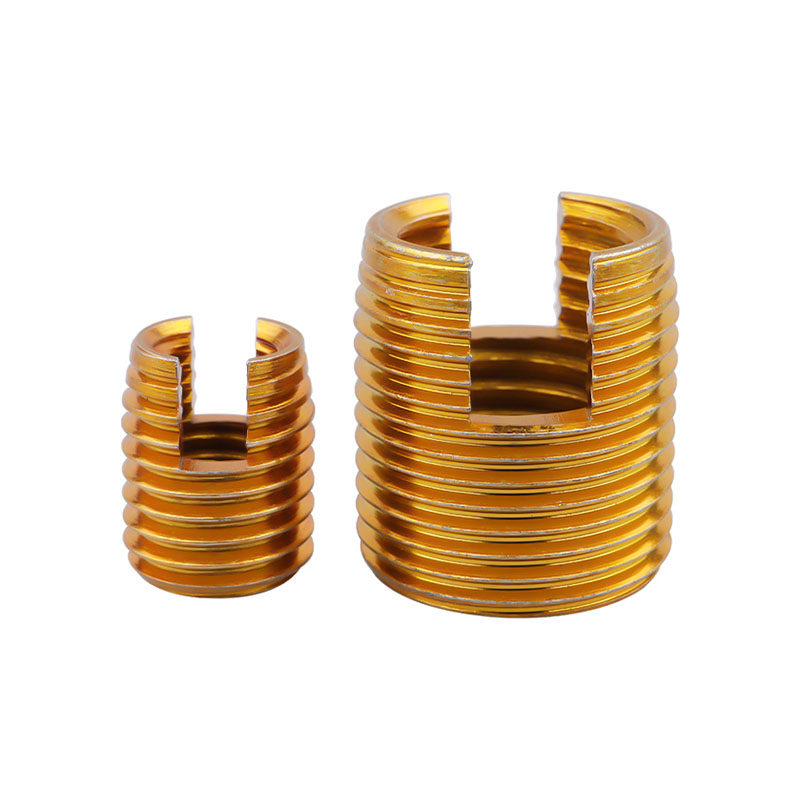 Carbon Steel Self-Tapping Thread Insert for AluminumThis self-tapping thread insert strengthens internal threads in soft materials like aluminum without pre-tapping, reducing the risk of stripping during repeated assembly and disassembly.View Product →
In alloy steel and stainless steel, dropping to a 1/2 inch drill reduces the thread engagement from about 76 percent to 61 percent. This reduction lowers the cutting torque and the risk of work hardening. The tap should have a high performance coating, and the operation should run at a conservative speed with plenty of cutting fluid. Many machine shops use a peck tapping cycle in blind holes to break the chips and clear the flutes.
For cast iron, the standard 31/64 inch drill is preferred because the material produces fine chips that do not pack easily. The main concern is keeping the thread start clean so the tap does not skid on the chamfer. For plastics, the choice depends on the wall thickness and the load. A larger drill reduces the risk of cracking the part, while a thread insert improves the load capacity and allows repeated assembly without wearing out the plastic.
Common 9/16 Tapping Mistakes and How to Avoid Them
A surprising number of 9/16 thread failures come not from a bad tap but from a simple selection error before the tap touches the workpiece. The list below covers the most frequent mistakes we see in production and repair environments.
- Using the UNC drill for a UNF tap or the reverse. A 9/16-12 tap in a 33/64 inch hole cuts a thin, weak thread that will strip, while a 9/16-18 tap in a 31/64 inch hole will jam and break. Confirm the series before you pick a drill.
- Confusing 9/16 with M14. The 9/16 inch thread has a nominal diameter of 0.5625 inch, while M14 measures 0.5512 inch. The pitch values are different, so a 9/16-12 tap cannot be used in an M14 hole, even though a 12.2 mm drill is numerically similar to 31/64 inch.
- Ignoring the drill tolerance. A worn or low-grade 31/64 inch drill can cut a hole that is several thousandths of an inch oversize, which changes the engagement and weakens the thread. Use a quality drill and check the hole size on critical jobs.
- Tapping blind holes without clearing chips. A 9/16 thread in a blind hole traps chips at the bottom, and the tap will bind the moment the flutes fill. Use a spiral flute tap and a pecking cycle instead of forcing the tap deeper.
- Skipping cutting fluid in stainless steel. Stainless work-hardens quickly. Without fluid, the surface becomes harder than the tap, and the tap wears or breaks within a few turns. Use a high-pressure paste or a dedicated stainless tapping fluid.
- Using a worn tap. A tap that has already completed many holes will cut oversize threads or suddenly break at the root. Track tap life and replace taps before the thread quality degrades.
Repairing Damaged 9/16 Threads with Thread Inserts
A stripped 9/16 thread does not always mean a new housing, a new manifold, or an expensive downtime. If the thread in an aluminum cylinder head, a gearbox case, or a hydraulic valve body is damaged, a wire thread insert can restore the connection to a reliable condition in a few minutes. The repair process uses a tap drill that is specific to the insert, not the standard 9/16 tap drill size, because the insert occupies the original thread envelope and an oversized tap thread is required.
The standard repair sequence is straightforward. First, drill out the old thread with the drill size recommended by the insert manufacturer. Second, tap the new hole with a special STI tap, which is ground oversize relative to the standard 9/16 tap so that the insert fits after installation. Third, wind the insert into the tapped hole using an installation tool. Finally, if the insert has a tang, break it off after installation. The finished bore is a 9/16 internal thread that matches the original dimensions and accepts the same bolt.
- Drill out the damaged thread to the insert body diameter
- Tap the hole with the STI tap using the STI tap drill size
- Install the wire insert with a dedicated installation tool
- Break off the tang and inspect the final thread with a plug gauge
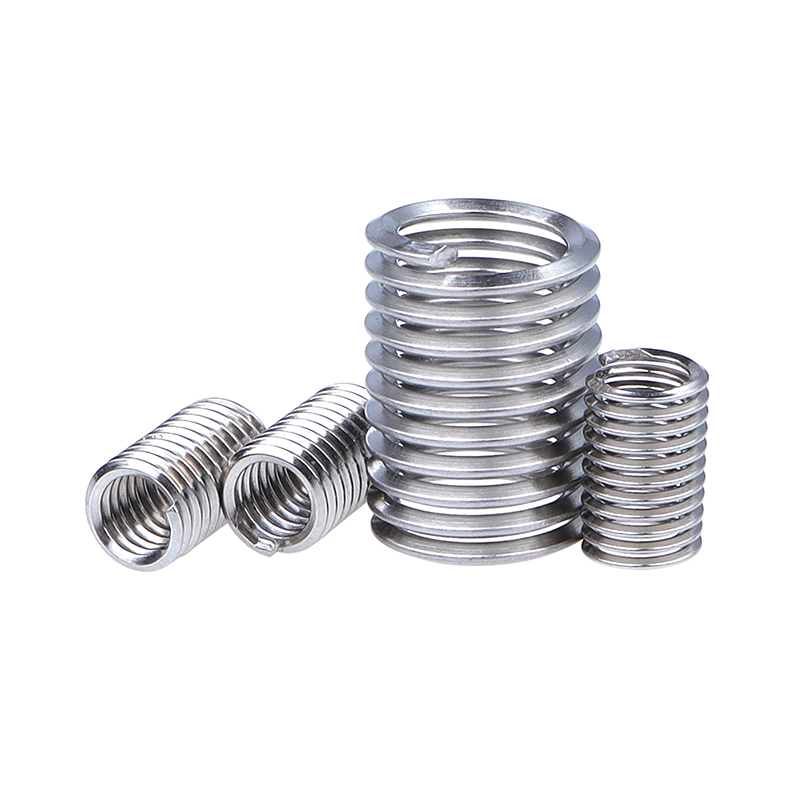 Helical Insert Supplier for Thread RepairOffering a range of wire, key-locking, and screw-lock inserts, this supplier provides reliable solutions for restoring damaged threads and handling high-vibration applications.View Product →
The insert material and coating matter in service. Stainless steel wire inserts are the default choice for corrosion resistance and strength, and carbon steel inserts with zinc plating are a lower-cost option for indoor machinery. For high-cycle or high-vibration applications, the screw-lock style inserts with a locking segment can prevent the bolt from backing out. Key locking inserts are another option when the insert itself must be mechanically locked into the parent material.
When you buy wire inserts, the supplier should provide the correct STI tap drill size for each insert size. Because the 9/16 UNC and 9/16 UNF series use different inserts, the repair kit must match the original thread series exactly. A reliable thread insert manufacturer will document the drill, the tap, and the installation tool as a single kit, which reduces the risk of an incorrect repair.
Choosing the Right Tap and Installation Tools for 9/16 Work
The tap you select for 9/16 work determines the thread quality as much as the drill does. For a 9/16-12 UNC through hole, a spiral point tap, sometimes called a gun tap, pushes chips ahead of the cut and is the fastest choice. For a blind hole, a spiral flute tap pulls chips out of the hole and prevents packing at the bottom. A straight flute tap is adequate for shallow blind holes in cast iron but struggles with long chips in aluminum or steel.
The coating matters even when the geometry is correct. A bright uncoated tap works in cast iron and short-chip materials. A TiN coated tap handles alloy steel and reduces adhesion. A TiCN or TiAlN coated tap performs better in aluminum and stainless steel, where the coating lowers friction and prevents localized welding on the cutting edge. For the coarse 9/16-12 pitch, the cutting torque is relatively high, so the correct coating and a sharp cutting edge are essential for consistent results.
Cutting speed should be conservative. In alloy steel, a surface speed around 30 to 50 SFM is a safe starting point for hand tapping, while aluminum can be tapped at higher speeds with a rigid tap holder. The key is to keep the feed synchronized with the lead of the tap so that the tap does not act as a cutting tool under compression. Using a tap holder or a tapping head with appropriate torque protection can prevent breaking, especially in blind holes.
If you are still comparing methods, our guide on how to choose a thread tap explains the difference between straight flute, spiral point, and spiral flute taps in more depth, including the practical limits of each geometry.
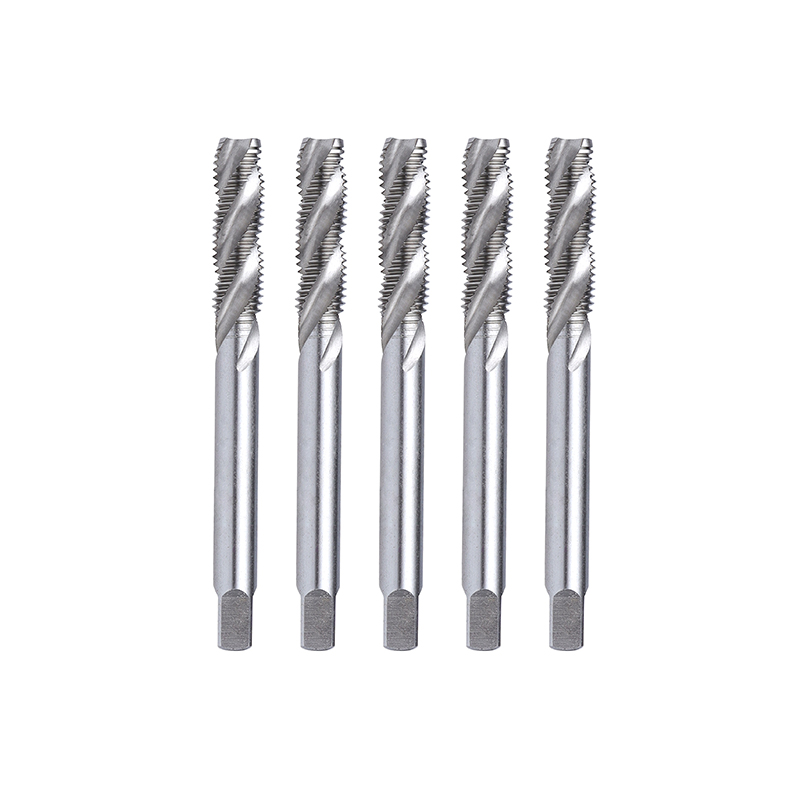 Spiral Thread Tap for Deep Hole ThreadingWith helical flutes for efficient chip evacuation, this tap reduces clogging and breakage risk, making it ideal for deep holes, hard metals, and automated mass production.View Product →
For thread insert installations, the installation tool is just as important as the insert. A correctly sized installation tool winds the insert into the hole with the right tension, preventing the insert from expanding or distorting. Extraction tools are available when an insert must be removed for rework. These accessories should come from the same supplier as the inserts to guarantee a matched product set.
Related Guides and Resources
If you need to verify the specifications or evaluate a specialist supplier for taps, thread inserts, and installation tools, the following resource connects you to the manufacturer's engineering background and product experience.
Frequently Asked Questions About 9/16 Tap Drill Sizes
What is the tap drill size for a 9/16-12 UNC thread?Use a 31/64 inch drill, which equals 0.4844 inch or about 12.3 mm. This drill produces roughly 75 percent thread engagement in steel and is the value printed on standard tap drill charts for the 9/16-12 UNC coarse thread. |
What is the tap drill size for a 9/16-18 UNF thread?Use a 33/64 inch drill, which equals 0.5156 inch or about 13.1 mm. The fine pitch leaves a larger hole, which lowers tapping torque and creates a shallower but vibration-resistant thread. |
Can I use a 1/2 inch drill bit to tap a 9/16-12 thread?Technically yes, but only when you want to reduce the thread engagement. A 1/2 inch drill produces about 61 percent engagement instead of the standard 75 percent, which is useful in stainless steel or hardened alloy steel. For general purpose work, the 31/64 inch drill is the safer choice. |
What is the metric equivalent drill for 9/16 threads?The closest metric thread size is M14. An M14 x 2.0 thread uses a 12.2 mm drill, and an M14 x 1.5 thread uses a 12.7 mm drill. These are close to the imperial 9/16 values but the threads themselves are not interchangeable. |
Are 9/16-12 UNC and M14 x 2.0 threads the same?No. The 9/16-12 UNC has a nominal diameter of 0.5625 inch (14.2875 mm) and a pitch of 12 TPI, while the M14 x 2.0 has a nominal diameter of 14 mm and a pitch of 2 mm. The diameters are close, but the pitch and thread form are different, so the taps and bolts are not interchangeable. |
What does 75 percent thread engagement mean for a 9/16 tap?It means the internal threads occupy 75 percent of the theoretical full thread depth. This is the industry compromise between thread strength and tapping torque. A 75 percent thread carries nearly the full load of a 100 percent thread but requires significantly less cutting force. |
Which tap should I use for a 9/16-12 UNC blind hole?Use a spiral flute tap, which pulls chips out of the hole as it cuts. For a through hole, a spiral point tap is faster because it pushes chips ahead of the tap. Always use a tapping fluid matched to the base material. |
How do I repair a stripped 9/16 thread?Drill out the damaged thread to the insert manufacturer's recommended diameter, tap the hole with an STI tap, and install a wire thread insert using a proper installation tool. The STI tap is ground oversize compared with a standard 9/16 tap, so the original bolt still fits after the insert is installed. |
Final Decision Summary for Your 9/16 Tapping Job
Selecting the correct 9/16 tap drill size is the difference between a clean, reliable thread and a broken tap or a stripped hole. For most jobs, 31/64 inch for 9/16-12 UNC and 33/64 inch for 9/16-18 UNF are the numbers to remember. When the material demands a lower engagement, move to a 1/2 inch drill for the coarse series, but confirm the application requirement first. The metric M14 threads are close neighbors, but they are not substitutes for 9/16.
For procurement and engineering teams, working with a specialist manufacturer also reduces the risk of specification errors. Dongtai Jinzhize Metal Products Co., Ltd. is a professional thread insert manufacturer and supplier that produces wire thread inserts, self-tapping inserts, key locking inserts, internal-external thread conversion nuts, oil plugs, and the taps and installation tools that go with them. Wholesale buyers who need consistent quality across high-volume orders can source the complete tapping and repair solution as a matched system rather than assembling tooling from multiple vendors.
Use the standard tap drill chart as your starting point, adjust for the material and the service condition, verify the thread series on the drawing, and equip your operators with quality taps and cutting fluid. A 9/16 thread is a reliable and cost-effective connection when the hole is drilled correctly the first time.



